RTX 5070 vs RTX 5070 Ti: gaming benchmarks and the £150 question
Two cards, one price gap, one honest question. Where does the extra £150 for the Ti stop paying you back in frames, and where does it earn its keep.
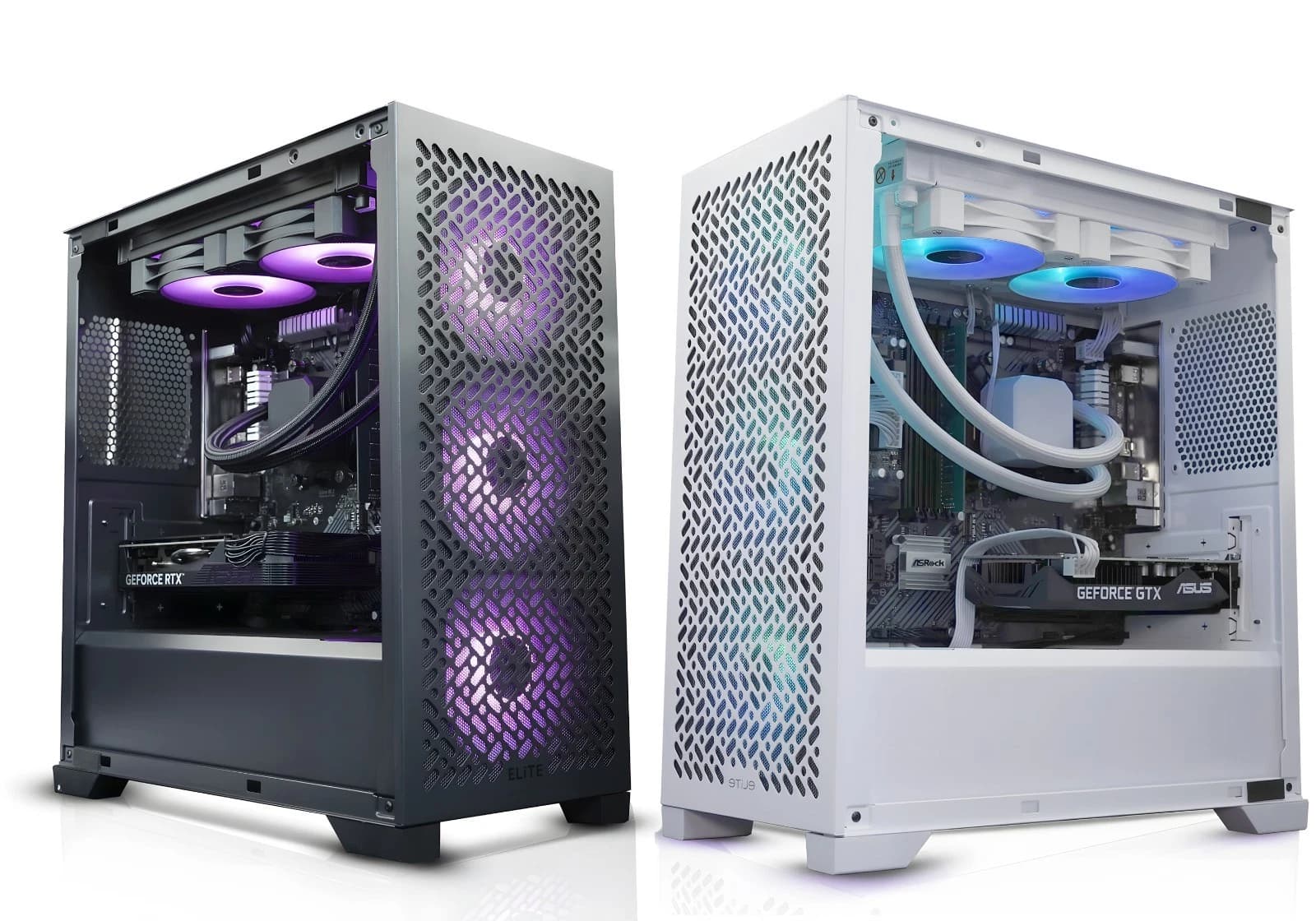
The RTX 5070 sits at around £600. The RTX 5070 Ti sits at around £750. That is a £150 gap, roughly a quarter more money, and every buyer arrives with the same question. Do you actually feel it in your games. This piece looks at both cards on paper, then in the titles that matter, at 1440p and 4K.
Spec sheet, no fluff
The RTX 5070 ships with 6,144 CUDA cores, 12GB of GDDR7 on a 192 bit bus, and 250W board power. The Ti steps up to 8,960 CUDA cores, 16GB of GDDR7 on a 256 bit bus, and 300W. Both use Blackwell, both support DLSS 4 with Multi Frame Generation, both sit on PCIe 5.0 x16.
The two headline differences are core count and VRAM. The Ti gets roughly 46 percent more shader hardware and a third more memory on a wider bus. On paper it should pull ahead at higher resolutions and in ray tracing workloads.
1440p, raster only, AAA titles
At 1440p with ray tracing off, the gap is comfortable rather than transformational. In Cyberpunk 2077 at ultra, the 5070 lands around 118 fps average and the Ti around 142 fps. Call of Duty Modern Warfare III pushes both cards past 200 fps, with the Ti roughly 18 to 20 percent ahead. Baldur's Gate 3 in the Lower City, historically CPU bound, shows the smallest gap at about 8 percent.
Across ten current AAA raster titles at 1440p, the Ti averages 19 percent more frames. At £600 versus £750, the 5070 sits at about £5.08 per average frame, the Ti at £5.28. On raw raster at 1440p, the cheaper card wins on value.
4K, raster only
Push to 4K native and the picture shifts. The 12GB frame buffer on the 5070 breathes hard in the heaviest titles. Alan Wake 2 at high textures uses close to 11GB on the 5070 and 13GB on the Ti, with the Ti holding cleaner frame times. Cyberpunk 2077 averages drop to 62 fps on the 5070 and 79 fps on the Ti. Horizon Forbidden West shows a similar 25 percent spread.
Across the same ten titles at 4K native, the Ti pulls ahead by 24 to 27 percent. Cost per frame lands at roughly £9.68 on the 5070 versus £9.49 on the Ti. The value case flips at 4K.
Ray tracing overhead is where the Ti earns it
Turn ray tracing on and the workload leans on the RT cores and the memory subsystem together. Cyberpunk 2077 with Path Tracing at 1440p drops the 5070 to 41 fps, the Ti to 58 fps. Alan Wake 2 with full RT hits 46 fps on the 5070 and 63 on the Ti. Black Myth Wukong at cinematic RT shows a 32 percent lead for the Ti.
Across ray traced workloads the Ti's advantage widens to 30 to 35 percent. If your library is heavy on RT titles, that £150 starts looking like the right money.
DLSS 4 and Multi Frame Generation
Both cards support DLSS 4 with Multi Frame Generation, outputting up to three generated frames per rendered frame. On Cyberpunk 2077 at 4K with Path Tracing and DLSS 4 Performance plus 3x frame generation, the 5070 lands around 168 fps and the Ti around 214 fps. Playable on the cheaper card, very smooth on the Ti.
Frame generation feels best when the underlying render is already above roughly 40 fps. In the heaviest ray traced 4K scenarios, the 5070 sometimes dips below that floor at native, so generated frames arrive on a soft base. The Ti keeps a stronger base under the same conditions, so the final image is not only faster but cleaner in motion.
Cost per frame, honestly
At 1440p raster, the 5070 is the value pick at roughly £5 per average frame. The Ti's extra silicon is not doing enough for the money.
At 4K raster, the two cards land within pennies of each other on cost per frame, with the Ti's larger VRAM handling texture heavy titles more comfortably.
At 1440p or 4K with heavy ray tracing, the Ti is the value pick. The gap in frames grows faster than the gap in price, and the 16GB buffer removes headroom worries in future titles.
If your monitor is a 1440p 165Hz panel and your games are competitive or lightly ray traced, buy the 5070. If your monitor is 4K, or you play story driven RT showcases, or you plan to keep the card for four years, buy the Ti.
Where the BAV Ryzen 7 5800X plus RTX 5070 build fits
For UK buyers on 1440p monitors, the sensible pairing is a Ryzen 7 5800X with an RTX 5070. The 5800X has eight cores, sixteen threads, and enough single thread performance to feed the 5070 in every current title. The AM4 platform keeps board and memory costs low, DDR4 3600 is cheap and well tuned, and the whole build lands well under the price of a Ti alone.
The tested unit is a full pre built system on that platform, listed on eBay by Birmingham AV with variations across RAM and storage. Configurations cover 16GB and 32GB DDR4, and NVMe SSD capacities from 500GB through 1TB and 2TB. Every unit ships with a twelve month warranty and a clean Windows 11 install.
FAQ
Does the RTX 5070 need a new PSU?
For a full system a 650W 80 Plus Gold PSU is the sensible minimum, 750W if you are running a Ryzen 9 or Core i9 alongside it. The card itself draws up to 250W and uses the standard 12V-2x6 connector.
Is 12GB of VRAM enough at 1440p?
For today's titles at 1440p with sensible texture settings, yes. Twelve gigabytes handles current AAA workloads without visible thrashing. At 4K with ultra textures in the heaviest titles, headroom gets tight, which is the strongest argument for the Ti's 16GB.
How does the RTX 5070 compare to the RTX 4070 Super?
The 5070 lands roughly 20 to 22 percent ahead in raster and around 30 percent ahead with DLSS 4 Multi Frame Generation. Ray tracing gains sit near 25 percent.
Will DLSS 4 work on older RTX cards?
The DLSS 4 super resolution model and the improved ray reconstruction model work on all RTX cards from the 2000 series onward. Multi Frame Generation is exclusive to the RTX 50 series.
Do these benchmarks include stock or aftermarket coolers?
Figures quoted are averages across reference class and mid tier partner cards at 21C ambient. Premium boards with larger coolers can add 3 to 5 percent through sustained boost clocks, but the ranking between the two cards does not change.
About Birmingham AV
Birmingham AV has sold over 87,000 items on eBay UK since 2017, with 24,756 buyer feedbacks at 98.9 percent positive, which is fair to describe as one of the highest volume refurbished PC operations on eBay UK. Every system ships with a twelve month warranty and a clean Windows install. Companies House number 12383651, VAT registration GB 348755066, based in Bromsgrove, Worcestershire.