Homelab starter guide: pick your first refurbished server class PC
The 2026 homelab community has quietly moved past Raspberry Pi clusters. Here is how a used Lenovo Tiny or HP EliteDesk Mini earns its place as the sensible first node.
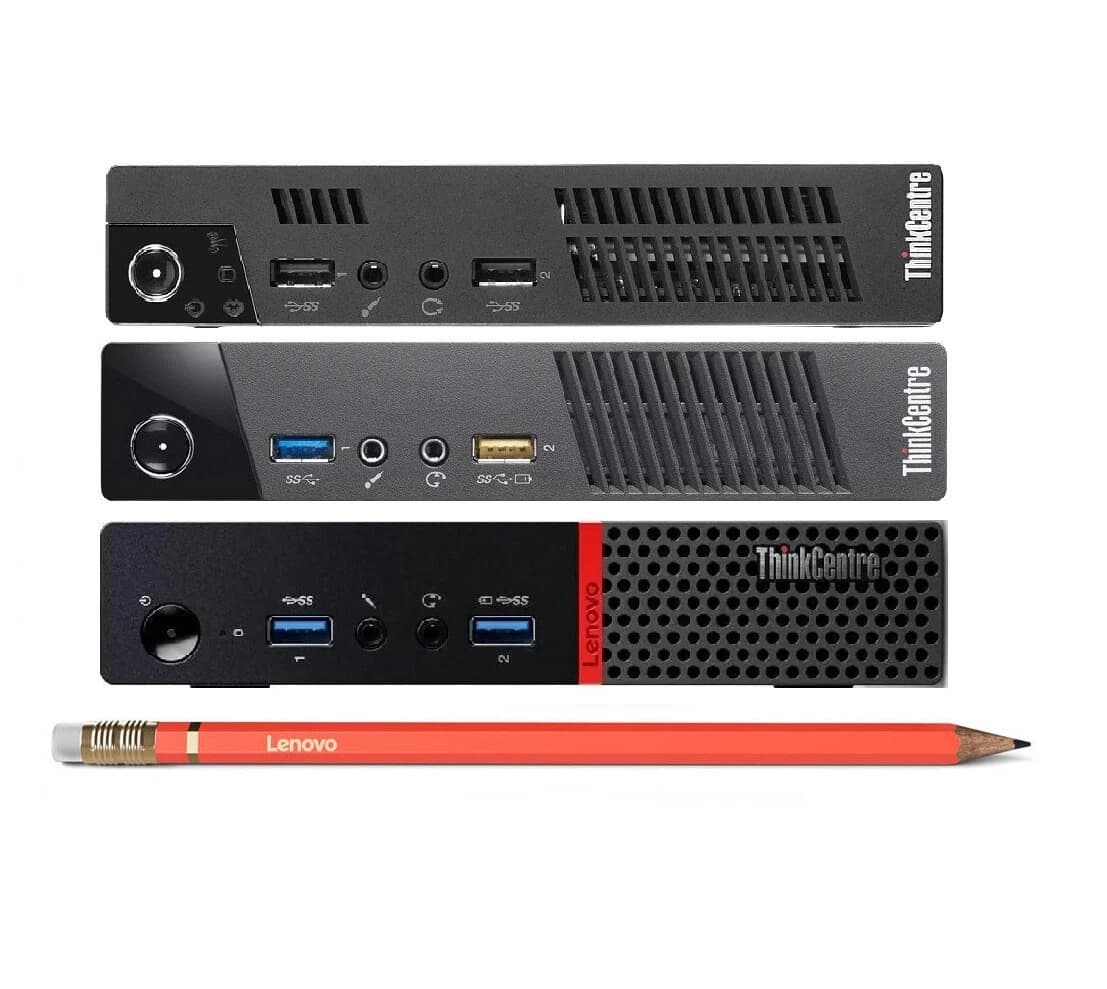
The homelab community in 2026 looks very different to the one that grew up around Raspberry Pi boards five years ago. Corporate leasing cycles keep dumping first tier ex office kit onto the secondary market, and tiny form factor machines from Lenovo, HP and Dell now cost less than a decent Pi 5 kit. For a first homelab, a refurbished server class small form factor PC is almost always the better starting point.
Why the community moved on from Pi clusters
A Pi 5 with 8GB, a case, active cooling, an SSD hat and a power supply lands close to £120 posted. Four of those, plus a switch, plus PoE hats and cabling, gets you a cluster that peaks around 32GB of shared RAM and struggles with x86 binaries.
For the same outlay you can buy one refurbished Lenovo ThinkCentre M920q Tiny with a Core i7, 64GB of DDR4 and a proper NVMe slot. That single node runs Proxmox happily, hands out a dozen LXC containers, hosts a TrueNAS Scale VM, and still leaves headroom for a k3s single node cluster to learn on.
The two chassis worth knowing
Two families dominate the used market in 2026.
The Lenovo ThinkCentre M910q, M920q and M720q Tiny series is the most common recommendation on r/homelab and selfhosted forums. A 1 litre chassis, a 65W CPU option, two SODIMM slots taking up to 64GB DDR4, one M.2 2280 NVMe slot, one M.2 2242 slot, and a 2.5 inch SATA bay.
The HP EliteDesk 800 G4 and G5 Mini is the closest rival. Same footprint, same DDR4 ceiling, a slightly better idle acoustic profile, and a Flex IO port that accepts a second DisplayPort or a 2.5GbE NIC.
Dell OptiPlex 7060 and 7070 Micro units belong in the same conversation. The main gotcha is the proprietary Dell PSU connector.
The specifications that actually matter
Homelab workloads are not gaming workloads, so the order of priority changes.
RAM headroom comes first. Proxmox, TrueNAS Scale, Home Assistant OS, Nextcloud, a Jellyfin container and a couple of network tools will eat 32GB before you notice. Buy the 64GB configuration if it is available at sensible money.
Storage tiering comes second. One NVMe drive for the hypervisor and hot VMs, one SATA SSD in the 2.5 inch bay for bulk container storage, and external USB for cold data. The Tiny chassis is not the place to build a media archive; that is what a separate NAS is for.
Networking comes third. The stock 1GbE port is fine for a first lab. If you want 2.5GbE, the HP Flex IO NIC or a USB C dongle both work.
CPU generation is fourth, not first. An 8th or 9th generation Core i7 is more than enough headroom, and the used pricing is far kinder than 12th or 13th generation Tiny units.
Proxmox, TrueNAS, Docker or k3s
A sensible default in 2026 looks like this.
Proxmox VE as the base hypervisor. It handles LXC containers and full VMs from the same interface, does ZFS on the boot drive if wanted, and clusters cleanly when you add a second node later.
TrueNAS Scale as a VM for a proper NAS control plane. On a Tiny you are passing through USB storage rather than a shelf of spinners, so treat it as a learning environment for now.
Docker under an LXC container or a Debian VM for the day to day self hosted apps: Immich, Vaultwarden, Home Assistant, Uptime Kuma, Pi hole.
k3s if you want to learn Kubernetes without cloud fees. A single node cluster fits in 8GB of allocated RAM and lets you practise Helm charts, ingress controllers and persistent volume claims.
Power draw, noise and the electricity bill
A four node Pi cluster with switch and PoE draws 30 to 40 watts idle and closer to 60 when busy. A single M920q with an i7 and 64GB idles at 8 to 12 watts and peaks around 45 during a container rebuild. Over a year at UK domestic rates that is roughly £15 for the Tiny against £30 to £50 for the cluster.
Noise is the other quiet win. A refurbished Tiny with a clean fan sits well under 30dB at idle. A stack of Pi fans and a small switch does not.
The recommended first node
The build to point first timers at on the eBay store is a Lenovo ThinkCentre Tiny with a Core i7, 64GB of DDR4 and NVMe storage. RAM configurations across the current listings range from 16GB up to 64GB, and storage from a 256GB NVMe up to 1TB depending on the exact SKU, so check the variation before committing. For a homelab, go straight to the 64GB variant.
See the tested Lenovo Tiny i7 64GB build on eBay
Every unit is tested end to end, arrives with Windows 11 Pro licensed so it can be wiped cleanly to Proxmox, and carries a twelve month return to base warranty.
Growing the lab from one node to three
The natural upgrade path is a second identical Tiny, then a third. Proxmox clustering wants an odd number for quorum, so three is the sweet spot. Three M920q class units with 64GB each gives you 192GB of pooled RAM, live migration between hosts, and proper high availability.
FAQ
Is a refurbished Tiny PC really enough for Proxmox?
Yes, comfortably. Proxmox itself uses very little RAM. A 64GB Tiny with an i7 will host more containers and VMs than most first labs ever fill.
Can I run TrueNAS bare metal on a Lenovo Tiny?
You can, but the Tiny limits you to one 2.5 inch bay and one M.2 slot, so it is not ideal as a dedicated NAS. Most people run TrueNAS Scale as a VM under Proxmox and keep bulk storage on a separate box.
Will 64GB of DDR4 SODIMM be a problem later?
DDR4 SODIMM pricing has softened as laptops move to DDR5 and LPDDR5X. Matched 32GB kits are widely available second hand, so upgrading a 16GB or 32GB unit later is realistic.
Do I need 2.5GbE for a homelab in 2026?
Not for a first node. 1GbE is fine for most self hosted services. Move to 2.5GbE when you add a second host and start doing live migration or shared storage.
What about Ryzen mini PCs like Beelink or Minisforum?
Capable machines, but they land at new prices around £400 to £600 with shorter warranties, and do not benefit from the corporate refresh cycle that keeps refurbished Lenovo and HP kit cheap.
About Birmingham AV
Birmingham AV Ltd has sold more than 87,000 items on eBay since 2017 and holds 24,756 buyer feedbacks at 98.9% positive, making the business one of the highest volume refurbished PC operations on eBay UK. Every PC ships with a twelve month return to base warranty. Companies House 12383651, VAT GB 348755066, registered in Bromsgrove, Worcestershire.