Custom PC versus pre-built: when each option makes sense in 2026
The custom build discount cracked in 2025, and the numbers now favour tested pre-builts for most UK buyers. Here is when a self-build still wins.
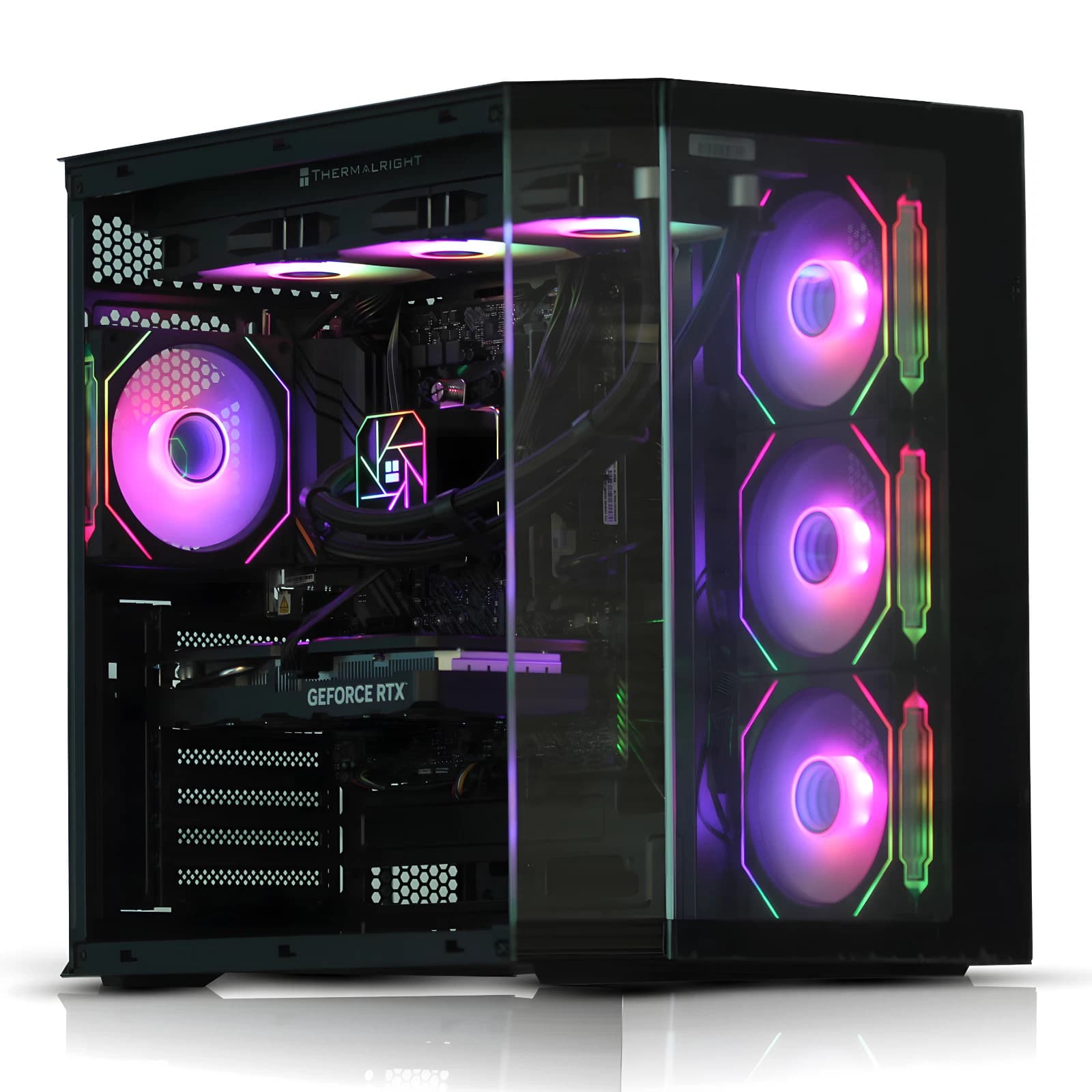
The old rule was simple. Build it yourself, save 20%, and get exactly the parts you want. That rule held for a decade. It stopped holding in the second half of 2025, and by mid 2026 the maths has shifted enough that most UK buyers should check the receipt before ordering boxes from four retailers.
This is not a hit job on self-building. There are still real cases where a custom build is correct.
The 2026 price arbitrage has narrowed
For years, the DIY discount came from cutting out labour and buying components on rolling promotions. That gap has closed. RTX 5080 and 5090 class cards sit within 4 to 7% of pre-built system pricing once you add the Windows 11 licence, thermal paste, cable extensions, and extra fans. A £1,850 self-build once beat a £2,100 tested equivalent by a comfortable margin. In 2026 the same spec often lands within £80 either way, and the pre-built includes 12 months of single point warranty.
Where the arbitrage still exists is at the edges. Ryzen 7000 series chips and RTX 4070 Super cards are being cleared through channel stock at 25 to 35% below launch pricing. A self-build using clearance stock can undercut a comparable pre-built by £200 to £350. That is the honest case for DIY in 2026.
Where pre-builts have quietly overtaken
Three things changed. First, component-level warranty stacking. A modern gaming PC contains parts from six to nine manufacturers, each with its own RMA process. When a system fails at month 14, the buyer has to diagnose which component is at fault before they know who to contact. Pre-builts collapse that into one phone call.
Second, DDR5 memory compatibility has become fussier than DDR4 ever was. QVL lists on mid range motherboards routinely omit half the kits sold at retail, and posting failures with unsupported RAM speeds are the most common self-build issue reported this year.
Third, shipping. A self-builder ordering from four retailers pays £24 to £40 in delivery and absorbs the risk of a courier misrouting a £600 GPU. A pre-built ships once, in a foam-lined box tested to survive a 76cm drop.
The time cost most buyers underestimate
A first-time builder should budget 6 to 9 hours for the build, plus 2 to 4 hours for BIOS updates, driver installs, and the "why will it not post" diagnostic loop. An experienced builder compresses that to about 3 hours.
At £22 an hour, a first build absorbs £176 to £286 of the buyer's evening. That rarely appears in the DIY versus pre-built spreadsheets on Reddit. Include it honestly, and the pre-built lead widens.
Buy the tested unit if you want the shortcut. This is a Ryzen and RTX pre-built, stress tested and shipped ready with a 12 month warranty and a single point of contact if anything fails.
Where a custom build still wins in 2026
Four cases where self-building is still the correct answer.
First, the last generation deal. Ryzen 7 7800X3D chips at £280, down from £449 launch, remain one of the strongest gaming chips available. Pair one with a discounted B650 board and a clearance RTX 4070 Super, and a self-builder hits 1440p high settings for around £1,150 all in.
Second, case aesthetics. If a buyer wants a specific Fractal North in walnut, a Lian Li O11 Vision in white, or a wood-panelled Ssupd Meshroom, that is easier as a custom build. Pre-built ranges standardise on two or three chassis.
Third, specialised workstations. Threadripper Pro builds, dual GPU rendering rigs, or systems with more than four NVMe drives are rarely offered pre-built.
Fourth, learning. Some buyers want to build because they want to learn how it works. No pricing maths overrides that.
Real world spec comparisons
Pricing across three tested configurations in June 2026.
Entry gaming, Ryzen 5 7600, RTX 5060 Ti 16GB, 32GB DDR5 6000, 1TB Gen 4 NVMe. Self-build: £1,020 to £1,080. Pre-built with warranty: £1,099 to £1,149. Gap wiped out by the Windows licence.
Mid range 1440p, Ryzen 7 9700X, RTX 5070 Ti, 32GB DDR5 6400, 2TB Gen 4 NVMe. Self-build: £1,620 to £1,720. Pre-built: £1,750 to £1,850. Gap of £130, roughly two hours of the buyer's time plus shipping.
High end 4K, Ryzen 9 9950X3D, RTX 5090, 64GB DDR5 6400, 2TB Gen 5 NVMe. Self-build: £3,780 to £3,950. Pre-built: £3,999 to £4,199. Gap of £220, but the pre-built includes a 1200W Platinum PSU sized for the 5090 correctly.
Test conditions: 1080p Ultra in Cyberpunk 2077 with DLSS Quality on, 108 to 122 FPS on the mid range. 1440p Ultra in Baldur's Gate 3, 96 to 110 FPS on the same spec.
How to decide in ten minutes
If the buyer values evenings, wants one warranty contact, and is buying current generation parts at retail, the pre-built wins on total cost. If the buyer wants clearance last generation silicon, a particular chassis, or a workstation no one sells pre-built, self-build wins.
Frequently asked questions
Is it still cheaper to build my own PC in 2026?
Only in specific cases. For current generation parts at retail, the gap has narrowed to £70 to £220 depending on tier, and usually disappears once you add the Windows licence, shipping, and extra fans. Where DIY still wins by £200 or more is on last generation clearance stock, particularly Ryzen 7000 chips and RTX 4070 Super cards.
How long does a custom PC build take a first-time builder?
Budget 6 to 9 hours for the build, plus 2 to 4 hours for BIOS and driver setup. Experienced builders compress this to 3 hours. Add 1 to 3 hours of diagnostics if the system fails to post, which is common with unsupported DDR5 kits.
What happens if a component fails in a self-built PC after a year?
The buyer diagnoses which component is faulty, then contacts that manufacturer. RMA turnaround varies from 5 to 21 working days, and the buyer covers outbound shipping in most cases. Pre-built systems collapse this into one contact and one courier collection.
Do pre-built PCs use worse components than custom builds?
Not at the specialist end. Reputable pre-built specialists use the same tier of PSU, motherboard, and cooling as an informed self-builder would pick. Where quality drops is in supermarket-tier pre-builts, which cut cost on the PSU, fans, and thermal solution.
Can I upgrade a pre-built PC later?
Yes, provided the specialist uses standard ATX or micro ATX components. Check that the PSU is standard ATX rather than proprietary, and that the motherboard is a retail model with a documented BIOS. Both are true of the Birmingham AV range.
About Birmingham AV
We are Birmingham AV, an independent AV and computing specialist based in Bromsgrove, Worcestershire. We have sold 87,000 items with 24,756 buyer feedbacks at 98.9% positive, and every desktop, gaming PC, and laptop we ship carries a 12 month warranty as standard. Companies House 12383651. VAT GB 348755066.