Behind the scenes of a Birmingham AV custom build
A single custom build passes through six hands and eleven checkpoints before it leaves Bromsgrove. Here is what actually happens on the bench.
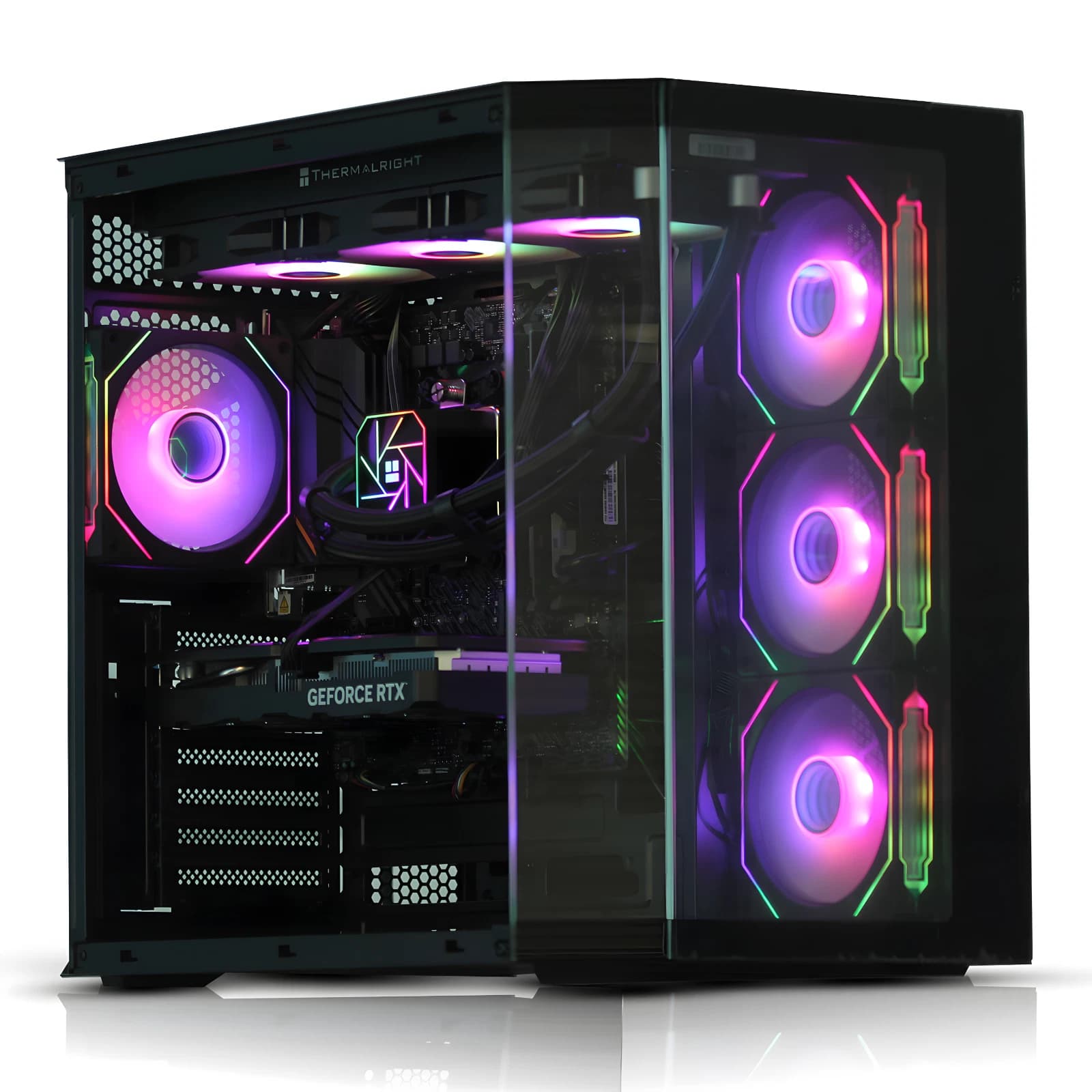
The workshop sits on a quiet industrial estate in Bromsgrove, Worcestershire. Inside, the benches run the length of the room, anti static mats laid out in a grid, monitors flickering with benchmark scores. On any given weekday the team is turning around forty to sixty custom builds, most of them destined for gamers, editors, or small studios across the UK.
This is a look at how one of those machines, a Ryzen 7 or Intel Core i9 14th gen tower with an RTX class GPU, goes from parts on a shelf to a boxed unit ready for the courier.
Intake and parts staging
Every build starts at the intake bench. When a listing sells, the ticket prints with the exact configuration. Configurations vary: 16GB, 32GB, or 64GB DDR4 or DDR5 depending on the platform, and storage from a 500GB NVMe up to a 2TB NVMe paired with a 2TB SATA SSD.
The intake technician pulls each component, checks the RMA seal on the CPU, weighs the GPU box against reference weight to catch counterfeits, and stages everything in a numbered tray. Nothing gets substituted without a ticket update.
The bench build
Assembly happens on ESD safe benches with magnetic parts trays and torque limited screwdrivers. The senior builder handles the CPU install, socket inspection under a loupe first, then paste. Birmingham AV uses a pea sized dot of Arctic MX 6 for air coolers and a five point pattern for larger AIO cold plates. Contact patch matters more than volume.
Cable routing follows a house standard. Twenty four pin and EPS through the rear channel, GPU power split when the card ships with a triple connector adapter, front panel headers labelled and tied. A tidy loom is faster to diagnose when a machine comes back for service two years later.
Boot, BIOS, and firmware
Once the tower posts, it goes to the BIOS bench. Firmware gets flashed to the latest stable release for that board, not always the newest, because a beta BIOS with an unpatched memory training bug is not something a buyer should inherit. XMP or EXPO is enabled for the rated RAM speed, fan curves are set, and the boot order is locked with NVMe first.
Windows 11 Pro installs from a clean image on a workshop deployment server. The image is stripped of bloatware, updated to the current cumulative patch, and activated against a genuine Microsoft OEM licence tied to the motherboard. Drivers install in a set order, chipset first, then GPU, then LAN and audio, to avoid the conflicts that come from letting Windows Update guess.
The burn in bench
This is where a lot of shops cut corners. Birmingham AV does not. Every custom build spends a minimum of four hours on the burn in bench before it leaves the workshop.
The stack is layered. Prime95 small FFTs for CPU thermal saturation, FurMark for sustained GPU load, and a MemTest86 pass on the RAM before Windows loops in. A Ryzen 7 7700 under a decent tower cooler should sit in the mid seventies Celsius at full load. An i9 14900K on a 360mm AIO will run hotter, but anything above 95 degrees flags the ticket for a paste redo. Roughly one in twenty builds gets a paste redo at this stage.
Storage gets a full CrystalDiskMark run to confirm rated sequential and random speeds. GPU passes a 3DMark Time Spy loop, and the score is compared against the reference for that card. A card scoring ten percent below reference gets pulled and retested on a separate rig.
QC and the final walk through
After burn in, the build moves to the QC bench, staffed by a technician who did not build the machine. Fresh eyes catch things the builder missed. The checklist runs to thirty two items: chassis screws torqued, GPU sag bracket fitted where needed, RGB headers seated, side panel gasket intact, no fingerprints on tempered glass, accessory boxes present, Wi Fi antenna threaded, activation confirmed via Settings.
The QC technician signs the ticket. If something fails, the ticket goes back to the builder with a note. Nothing ships with an open QC flag.
Packaging and courier handover
A tower with a heavy GPU can arrive with a bent PCIe slot if it is not braced properly. Birmingham AV foams the GPU with a die cut insert, wraps the chassis in a moulded polyethylene shell, then boxes it in a double walled carton with fifty millimetres of air on every face.
Accessories go in a separate compartment. Every parcel is photographed at courier handover, sealed and labelled, in case a claim needs backing evidence later.
Why the process matters
Across the sector, refurbished and custom built PCs have a reputation problem. A machine assembled quickly, tested for ten minutes on a Windows desktop, and shipped in a single wall box will fail early. The whole point of the workshop process at Birmingham AV is that the machine is stressed harder on the bench than it will be in the buyer's home. If it survives four hours of Prime95 and a Time Spy loop with clean logs, it will survive years of Fortnite, Premiere Pro, or Warhammer Total War.
Since 2017, over 87,000 units have gone out the door under this process. Failures inside the twelve month warranty window sit in low single digits, mostly storage or PSU faults, both replaced free of charge.
FAQ
How long does a custom build take from order to dispatch?
A standard configuration moves from intake to courier in two to four working days. Bespoke orders with imported parts can take up to seven. Burn in is never skipped to hit a faster time.
What thermal paste does the workshop use?
Arctic MX 6 as standard for air cooled builds. Thermal Grizzly Kryonaut Extreme for higher end AIO cooled i9 and Ryzen 9 configurations. Both are non conductive.
Is Windows 11 genuinely activated?
Yes. Every build ships with a genuine Microsoft OEM licence tied to the motherboard. Activation is confirmed on the QC bench and again during first boot at the buyer's address.
What happens if a component fails during burn in?
The ticket is held, the failing part is swapped, and the burn in restarts from the beginning. A build that has already spent four hours under load does not get a top up. It goes back through the full stack.
Can a buyer request a specific paste, cable, or cooler?
Yes, within reason. Bespoke requests are noted on the ticket at order time. Additional parts costs are quoted before the build starts, not after.
About Birmingham AV
Birmingham AV is one of the highest volume refurbished PC operations on eBay UK. Since 2017 we have sold over 87,000 items with 24,756 buyer feedbacks at 98.9 percent positive. Every custom build ships with a twelve month warranty, genuine Windows 11 activation, and full workshop test logs on file. We are registered at Companies House number 12383651, VAT number GB 348755066, and we operate from Bromsgrove, Worcestershire.