Why VRAM matters more than ever in 2026: the AI computing shift
Local LLMs, on device image generation and path traced games have turned VRAM into the single most important spec on any modern GPU. Here is how much you actually need.
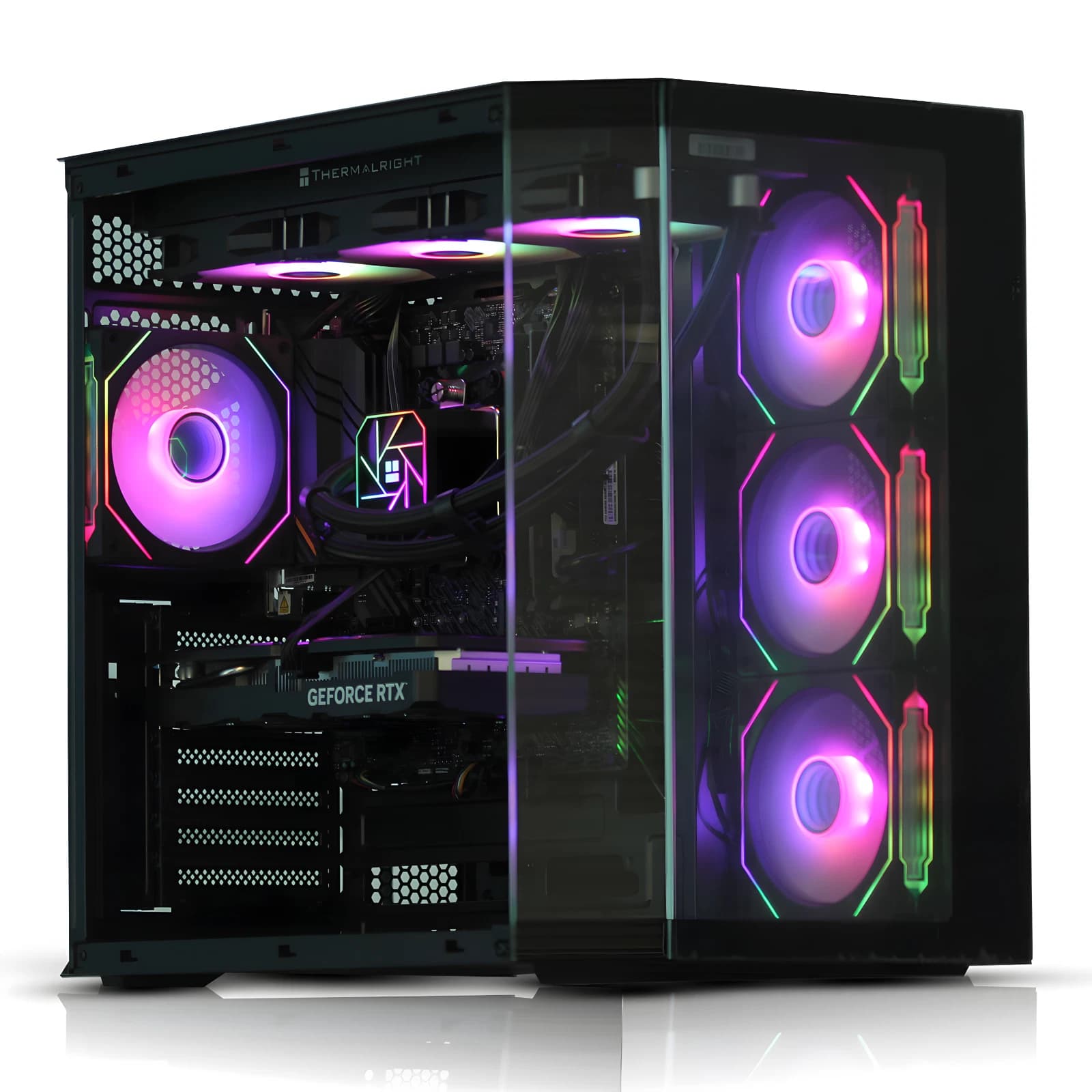
For most of the last decade, VRAM was a quiet spec, ignored by anyone not running four monitors or professional CAD. In 2026 that has changed. Local AI, generative image tools and heavier ray traced engines have pushed video memory to the front of the buying decision. Get the VRAM wrong and no amount of raw GPU horsepower saves you.
This piece breaks down what 8GB, 12GB, 16GB and 24GB actually get you in a modern hybrid workload.
What changed: from pure gaming to hybrid AI plus gaming
The old rule was simple: buy the fastest GPU you could afford and VRAM would sort itself out. That rule broke when three things happened at once.
First, local large language models moved from research toys to daily tools. Running a quantised 7B or 13B model on your own machine is now useful, and it is bounded almost entirely by VRAM.
Second, image and video generation went local. Stable Diffusion XL, Flux and the newer video models push texture, latent and model weights straight into VRAM. An 8GB card either refuses or crawls.
Third, path tracing arrived in more titles. Cyberpunk 2077, Alan Wake 2, Indiana Jones and Black Myth Wukong all eat VRAM at 1440p and above, especially with frame generation on top.
8GB VRAM in 2026: honest limits
8GB is now the floor and it feels like a floor. For esports titles at 1080p, older AAA games and light productivity, an 8GB card still works. Examples in this bracket include the RTX 4060, RTX 5060 and older RTX 3070.
Problems start the moment you push modern settings. Hogwarts Legacy, The Last of Us Part 1 and Star Wars Outlaws at 1440p high textures will spill out of 8GB and stutter. Ray tracing makes it worse because the BVH structures live in VRAM.
For AI, 8GB gets you small quantised models. Think a 7B parameter LLM at 4 bit, or basic Stable Diffusion 1.5 at 512 pixel resolution. SDXL is uncomfortable. Anything bigger is off the table.
12GB VRAM: the current 1440p baseline
12GB is where things start to feel calm. The RTX 4070, RTX 5070 and RX 7700 XT sit here. At 1440p with ray tracing, this is where VRAM warnings in modern titles stop appearing.
For AI, 12GB is a real step up. You can run 13B parameter LLMs at 4 bit quantisation, run SDXL comfortably at 1024 pixel resolution, and start experimenting with LoRA training on smaller datasets.
It is a defensible choice for a 1440p gamer who dabbles in AI, not the choice if AI is a serious part of the plan. Headroom disappears fast the moment you load a second model or push resolution.
16GB VRAM: the 2026 sweet spot
16GB is the answer for most buyers this year. The RTX 5070 Ti, RTX 4080 and RX 7900 XT all land here. It handles 4K gaming with ray tracing on almost every current title and opens the door to the AI workloads that matter.
At 16GB you can run 13B LLMs at higher precision, load quantised 30B models, generate SDXL and Flux images at full resolution, and keep a browser plus IDE plus voice model resident without swapping. Frame generation no longer feels like a VRAM tax.
The BAV RTX 5070 Ti build sits in exactly this bracket: 16GB RTX 5070 Ti, modern platform, DDR5, NVMe SSD and a 12 month warranty. Available now on eBay.
See the BAV RTX 5070 Ti build on eBay
Listings in this range often include variations across CPU, RAM and storage tiers, so the price band moves with the spec picked. Match the configuration to the workload described here.
24GB VRAM: when to actually pay for it
24GB is the domain of the RTX 4090, RTX 5090 and RTX 3090. For pure gaming, you rarely need it. Even at 4K with path tracing and frame generation, most titles fit inside 16GB.
Where 24GB earns its keep is serious AI work: running a 30B LLM at higher precision, fine tuning models locally, generating video with modern diffusion pipelines, or keeping several large models loaded at once. If the plan is to treat the machine as a small local AI workstation, 24GB pays for itself in patience saved.
The catch is price. In the UK, moving from a 16GB 5070 Ti class card to a 24GB 5090 class card is often close to a doubling of GPU cost. Rational for a professional workflow, a hard sell for a hybrid user.
How much VRAM does your workload actually need
A short field guide:
1080p gaming, no AI, no ray tracing: 8GB works, 12GB is future proof.
1440p with ray tracing, occasional AI hobby use: 12GB minimum, 16GB is the honest recommendation.
4K with ray tracing plus serious local LLM and image generation: 16GB is the sweet spot. RTX 5070 Ti class.
Local AI as a job, video generation, model fine tuning: 24GB, no shortcuts.
FAQ
Is 8GB VRAM enough for 1440p gaming in 2026?
Not comfortably. Modern AAA titles with ray tracing and high textures will exceed 8GB at 1440p and force stutter or forced texture downgrades. 12GB is the current minimum for a smooth 1440p experience in newer engines.
Can I run local AI on a gaming PC?
Yes, and this is the biggest shift of 2026. A 16GB GPU can run capable local LLMs, image generators and voice models alongside gaming. The RTX 5070 Ti class is the practical entry point, because 12GB starts to feel tight once a second model is loaded.
Does frame generation increase VRAM usage?
Yes. DLSS 3 and DLSS 4 frame generation, and AMD FSR frame generation, both add a small but real VRAM overhead on top of the base render. On borderline cards this can be the difference between a smooth game and a stuttering one.
Why not just buy the cheapest 16GB card?
Because VRAM is only half the story. A 16GB card paired with a slow GPU core will still choke in modern engines. The RTX 5070 Ti is recommended here because the core performance matches the memory, so both sides of the equation carry their weight.
About Birmingham AV
Birmingham AV is a UK refurbished and custom PC specialist based in Bromsgrove, Worcestershire. We have sold over 87,000 items on eBay since 2017 and hold 24,756 buyer feedbacks at 98.9% positive, which puts us among the highest volume refurbished PC operations on eBay UK. Every machine ships with a 12 month warranty. Companies House 12383651. VAT GB 348755066.