Refurbished server node into a home lab: guide
Dell PowerEdge R730 and HP DL380 Gen9 nodes are cheap on the used market, but the noise, heat, and power bill catch most first time buyers by surprise. Here is what actually works, and where a quieter box makes more sense.
Refurbished 2U server nodes look like a bargain when the listing shows two Xeons, 128GB of DDR4, and eight drive bays for the price of a mid range desktop. In a living room or spare bedroom, the story shifts fast. This guide covers what a Dell PowerEdge R730 or HP DL380 Gen9 actually is in home lab terms, and when a quieter mini PC does the same job.
What the R730 and DL380 Gen9 actually are
Both are 2U dual socket servers from the Broadwell generation. The Dell PowerEdge R730 takes two Intel Xeon E5-2600 v3 or v4 chips, up to 24 DDR4 DIMM slots, and eight to sixteen 2.5 inch or eight 3.5 inch bays depending on variant. The HP DL380 Gen9 is the direct HPE equivalent.
Refurbished listings on eBay UK ship a wide spec spread. Common builds run twin E5-2680 v4 (28 cores total) or twin E5-2690 v4 with 128GB to 384GB of registered ECC DDR4. The lower end starts around twin E5-2660 v3 (10 cores each) with 64GB. Both platforms support PCIe 3.0 (GPU passthrough, NVMe add in cards, 10 gigabit networking), but neither offers PCIe 4.0 or native NVMe boot without a HBA workaround.
Real world power draw
The name plate on a redundant PSU says 750 watts or 1100 watts. That is the ceiling, not the draw. At idle with two E5-2680 v4 chips, 128GB of RAM, and no add in cards, an R730 or DL380 Gen9 sits at 130 to 170 watts. Under sustained load across all 28 cores the same box pulls 380 to 480 watts. Add spinning disks and a GPU and load climbs past 550 watts.
At UK domestic rates around 25p per kilowatt hour, an always on node idling at 150 watts costs about £27 per month. Regular load at 300 watts averages closer to £54 per month, or £324 to £648 per year, before cooling implications in summer.
Rack noise, honestly
Stock cooling on an R730 or DL380 Gen9 is six or seven high static pressure 40mm or 60mm fans on a firmware controlled curve. Post boot idle noise at a metre sits around 55 to 65 dBA, which is dishwasher territory sustained. Any thermal event (warm DIMM, hot NVMe, ambient above 25C) spins the fans up. Peaks of 75 to 85 dBA are normal, louder than a petrol mower at the same distance.
iDRAC and iLO both expose fan curves, but the firmware overrides manual settings when a non standard PCIe card, a third party NVMe, or a non branded drive is detected. Mitigation options (Noctua industrialPPC swaps, garage relocation, acoustic enclosure) each add cost or complication, and none make a 2U server sound like a desktop.
See the current BAV refurbished server nodes on eBay
Use cases where the noise is worth it
Some workloads earn the compromise. Proxmox or ESXi clusters running twenty or more VMs benefit from 28 physical cores and hundreds of gigabytes of RAM. Nested virtualisation labs for VMware, Hyper V, or OpenShift need the socket count and memory ceiling. Bulk storage on ZFS or TrueNAS Scale across eight bays gives capacity no small form factor box can match. GPU compute nodes get dual x16 PCIe slots and clean power for a Tesla P40, P100, or workstation RTX card.
The common thread: the workload actually needs the cores, memory, PCIe lanes, or bays. If it does not need all four, the noise and power cost buys nothing.
Where a quieter mini PC does the same job
Most home lab tasks people buy an R730 for do not need 28 cores or 384GB of RAM. A Docker host running Home Assistant, Pi hole, Jellyfin, and a couple of game servers uses 8 to 16 threads and 32GB. A single node Proxmox box for tinkering runs comfortably on a modern i5 or i7 with 32GB to 64GB. A media server transcoding one or two streams needs quick sync, not a 145 watt Xeon.
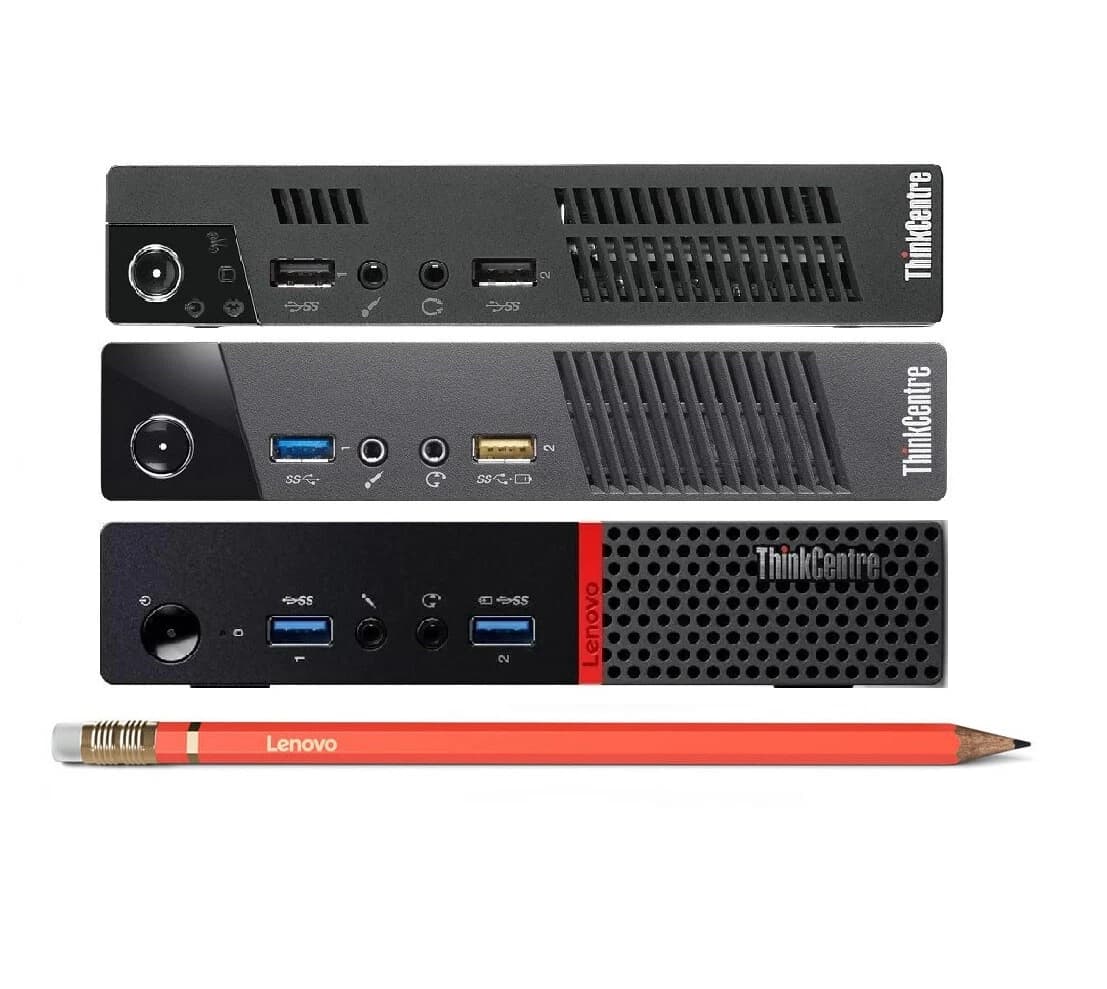
The BAV mini PC range covers this envelope. A refurbished small form factor box with a modern Intel i5 or i7, 32GB or 64GB of DDR4 or DDR5, and NVMe storage draws 15 to 45 watts under home lab load, sits at 25 to 35 dBA at a metre, and fits behind a monitor. Annual electricity delta against an idle R730 is £200 to £300 in the mini PC's favour, on the same twelve month warranty.
Buying checklist for a used R730 or DL380 Gen9
Four things to confirm before buying. CPU generation: E5-2600 v4 (Broadwell) beats v3 (Haswell) on per core performance and TDP, and the listed core count is total across both sockets, not per socket. Memory: DDR4 registered ECC (RDIMM) or load reduced (LRDIMM) only, unbuffered DIMMs will not post. Storage controller: Dell PERC H730 or H730P and HPE Smart Array P440ar are common, confirm HBA or IT mode if the plan is ZFS or TrueNAS. Warranty: a twelve month UK refurbisher warranty backed by real feedback volume beats a three month import warranty.
FAQ
Is a Dell R730 quieter than an HP DL380 Gen9?
They are broadly equivalent. Both run high static pressure fans on firmware controlled curves, and both spin up when non branded PCIe cards or drives are detected. Idle measurements put them within a few decibels of each other, so pick on price and configuration rather than expected noise.
Can I run a home lab server in a domestic garage?
Yes, provided the garage stays above 5C and below 35C, with no significant dust or damp. Run Cat6 back to the house, and use a UPS to ride out short power cuts. Condensation in winter is the main failure mode to watch for.
How much can I save by choosing a mini PC instead?
A mini PC averaging 25 watts against an R730 averaging 150 watts saves 125 watts, roughly 90 kWh a month. At 25p per kilowatt hour that is about £22 per month, or £264 per year. Over three years the saving covers a second mini PC.
Will an R730 or DL380 Gen9 run modern Windows or Linux?
Windows Server 2022 and current Ubuntu, Debian, and Rocky Linux releases install cleanly. Windows 11 desktop is unsupported on Broadwell Xeons due to the CPU compatibility gate, but Server 2022 is viable. For a home lab, Linux or a hypervisor is almost always the right pick.
About Birmingham AV
We are a Bromsgrove, Worcestershire refurbisher with 87,000 items sold on eBay since 2017 and 24,756 buyer feedbacks at 98.9% positive. Every desktop, workstation, and server node ships with a twelve month warranty. Companies House 12383651. VAT GB 348755066. One of the highest volume refurbished PC operations on eBay UK.