Refurbished graphics cards: the great debate
Ex mining cards, ex office cards, and pulled OEM cards flood the used GPU market. Here is how to tell the safe stock from the landmines, and where warranty actually matters.
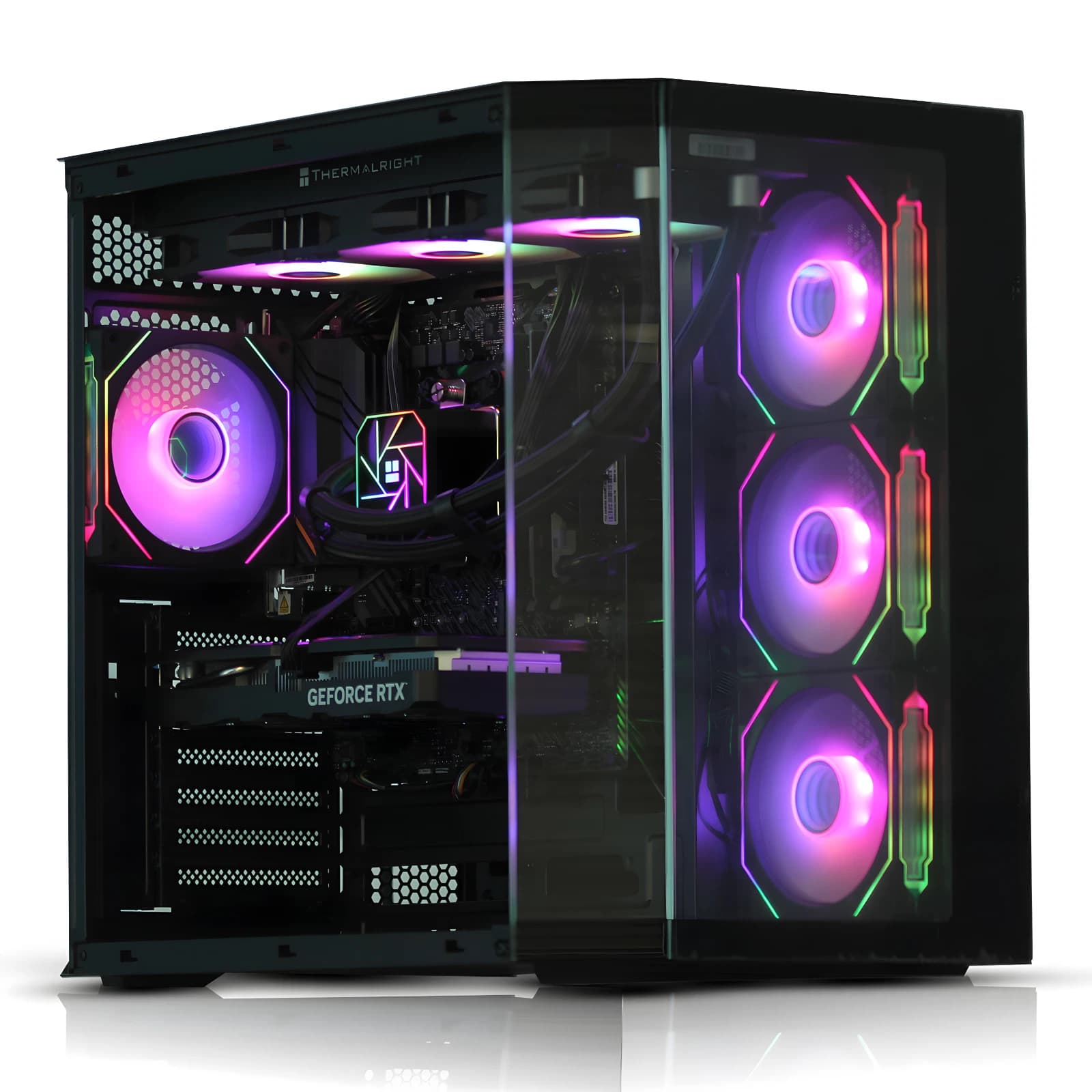
The used graphics card market in the UK has never been busier. RTX 30 series cards, RTX 40 series pulls from prebuilts, and RX 6000 series stock from crypto operations are all on offer at prices that undercut new cards by 40 to 60 percent. The reward is real. So is the risk.
The debate splits into two camps. One says used GPUs are silicon roulette. The other says a properly tested refurbished card is functionally identical to new. Both are partly right, and the truth sits in the middle.
The mining card horror story, and what it actually means
The nightmare version goes like this. A crypto farm buys a pallet of RTX 3080 cards, runs them 24/7 at 70 percent power for eighteen months, then dumps them on eBay. The buyer gets a card with worn fans, dried paste, VRAM baked at 100 degrees Celsius for a year and a half, and a BIOS flashed to a mining ROM.
There is truth in that story. Sustained hashing does age memory chips, fans, and thermal pads. But the failure profile is not what most buyers assume. Mining cards fail through fan bearings, pad degradation, and cold solder joints on the memory package, not mysterious silicon rot. Every one of those failure modes is inspectable, repairable, and testable.
A card that ran Ethereum at 70 percent power at a steady 65 degrees Celsius is often in better shape than a card that spent three years in a gamer's poorly ventilated case running Warzone at 85 degrees Celsius with dust caking the heatsink.
What to actually check on a used card
Any refurbished GPU worth buying should have been through a proper bench test, not a five minute boot check. The bench pass should cover:
- Full disassembly, new thermal paste on the die, new pads on VRAM and VRMs to the correct thickness (usually 1.0mm to 2.0mm depending on the model).
- Fan bearing test at low, medium, and full RPM. Any rattle, whine, or start up hesitation and the fans get replaced.
- VRAM stress test with OCCT or MATS. Mining wear shows up as errors under sustained memory load long before it shows up in gameplay.
- Gaming loop for at least an hour, monitoring hotspot temperature. A healthy card sits under 90 degrees Celsius at stock. Anything past 100 degrees Celsius points to bad die contact or worn thermal interface material.
- BIOS check to confirm stock manufacturer BIOS, not a mining ROM with locked power limits.
If a listing does not mention any of the above, treat the price as speculative and the seller as an assembler, not a refurbisher.
The warranty question is the whole game
A new RTX 5070 from Scan or Overclockers ships with a three year manufacturer warranty. A used RTX 3080 from a random eBay seller ships with whatever that seller offers, often thirty days, sometimes seven, occasionally nothing beyond the eBay Money Back Guarantee.
That gap is where the true cost of a cheap card lives. A £280 RTX 3080 with a seven day warranty is not really £280. It is £280 plus the option cost of the card failing in month four, which is when memory issues from mining wear tend to surface.
For a real comparison, look at cards sold with twelve month warranty as part of a full system rebuild, tested on the bench and covered end to end. That is the model Birmingham AV uses for prebuilt gaming systems.
Browse the current Birmingham AV gaming PC range on eBay
The pulled OEM card, the quiet best value
There is a third category the debate usually skips. Pulled OEM cards from Dell, HP, and Lenovo prebuilts. When a business upgrades workstations, the old cards get pulled and enter the trade channel.
These cards are almost always in excellent condition. Business users do not overclock. Machines run in air conditioned offices at 21 degrees Celsius. The card spent its life rendering Excel and the occasional CAD session, not sustained gaming at 4K.
OEM cards usually have simpler shrouds, single or dual fan designs, and blower style coolers. The PCB is typically shorter. Prices for pulled OEM RTX 3060 12GB cards sit around £150 to £180, and RTX 3070 8GB pulls around £240 to £280. Genuine value if the seller can document the source.
Where the safer path leads
For most buyers, the sensible move is not to gamble on a bare card. It is to buy the GPU as part of a fully tested prebuilt system, from an operation that stakes its reputation on the bench pass and offers a real warranty behind it.
A used GPU inside a system that has passed PSU testing, thermal validation, memory training, and a 24 hour burn in is a different proposition to a bare card shipped in bubble wrap. The system builder has absorbed the risk. If the card fails in month six, it is their problem to solve.
FAQ
Are mining cards always a bad buy?
No, but they need extra scrutiny. A mining card that has had new thermal pads, fresh paste, and passed a memory stress test is often fine. A mining card sold as is, at a suspiciously low price, with no mention of testing, is where the trouble starts.
How much should I actually save buying refurbished?
Sensible savings are 30 to 45 percent below new retail for cards from the previous generation. Anything cheaper than that usually reflects missing warranty, missing testing, or missing card box and accessories. Discounts above 60 percent are almost always a signal to walk away.
Can I tell if a card was used for mining?
Not always, but there are clues. A stock BIOS, clean warranty stickers, and matching serial numbers between card and box are good signs. Fan noise on boot, dust in the shroud, and a hotspot temperature above 100 degrees Celsius under load are warning signs. A seller who cannot answer basic questions about the card's history is the biggest warning of all.
Is warranty worth paying extra for?
Yes, almost always. On a £300 GPU, the difference between seven days of cover and twelve months of cover is the difference between an investment and a lottery ticket. Warranty is not a nice to have on used silicon. It is the product.
About Birmingham AV
Birmingham AV has sold more than 87,000 items on eBay since 2017, holds 24,756 buyer feedbacks at 98.9 percent positive, and ships every system with a twelve month warranty. We are one of the highest volume refurbished PC operations on eBay UK. Companies House 12383651, VAT GB 348755066, based in Bromsgrove, Worcestershire.