PSU wattage calculator: the honest number for 2026 builds
Modern CPU and GPU combos pull far more transient power than their TDP suggests. Here is how to size a PSU without kidding yourself.
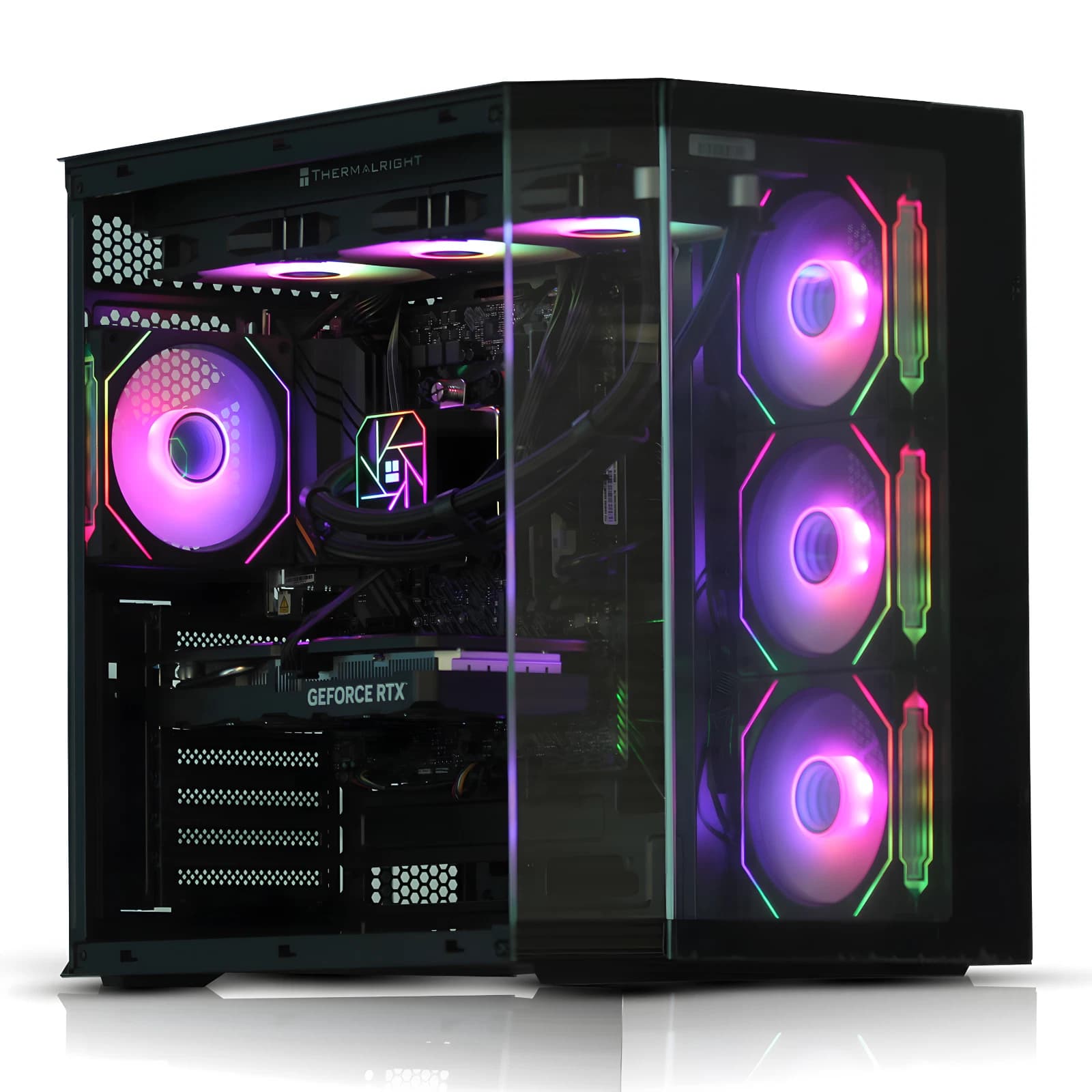
Ask five builders what wattage a Ryzen 7 7800X3D plus RTX 5070 Ti build needs and you will get five different answers. Half are quoting a marketing TDP number from 2019, the other half a PSU calculator that has not been updated for Ada Lovelace, Blackwell, or Zen 5 transient behaviour. The honest number sits in the middle, and it is almost always higher than people expect.
Sustained draw is not the number on the box
TDP is a thermal design figure, not a power draw figure. A CPU labelled 105W TDP will pull 142W in a sustained all-core workload once it hits its PPT limit. A GPU with a 220W board power rating will sit at 220W in a gaming loop, plus 15 to 25W of fan and memory activity that is not always counted.
Real numbers for common 2026 combos, measured at the wall minus PSU efficiency losses:
- Ryzen 5 7600 plus RTX 5060: 285W to 340W sustained gaming
- Ryzen 7 7800X3D plus RTX 5070: 395W to 460W sustained gaming
- Ryzen 7 9800X3D plus RTX 5070 Ti: 445W to 510W sustained gaming
- Core i7 14700K plus RTX 5080: 560W to 640W sustained gaming
- Ryzen 9 9950X plus RTX 5090: 720W to 820W mixed load
Those are steady state figures. Steady state is not what blows PSUs.
The transient spike problem
Modern GPUs, particularly Nvidia RTX 40 and 50 series cards, exhibit power excursions in the sub-millisecond range that can hit two to three times their rated board power. An RTX 5080 rated at 360W will pull 720W or more for periods of 100 microseconds during certain rasterisation loads. Cheaper PSUs interpret this as a fault, trip their over current protection, and shut down. Better PSUs ride it out because they were designed for it.
This is why a 650W PSU that runs a 400W sustained build perfectly on paper will still crash in certain games. The average is fine. The peaks are not.
Why 850W is the new 650W
Five years ago the rule of thumb was simple. Sum CPU TDP and GPU TDP, add 150W for the rest of the system, round up to the next standard PSU size. That gave you 550W or 650W for most builds.
The rule still works if you replace TDP with actual sustained draw and add a 40% headroom margin for transients. For a 9800X3D plus 5070 Ti build:
- Sustained: 445W to 510W
- Plus 20% efficiency headroom to keep the PSU in its sweet spot: 534W to 612W
- Plus 40% transient headroom: 748W to 857W
That lands squarely in 850W territory. For an RTX 5080 or 5090 build the same maths pushes you to 1000W or 1200W. This is not upselling, it is arithmetic.
See our current stock of correctly sized pre-built systems on eBay
Efficiency ratings and the ATX 3.1 spec
An 80 Plus Gold PSU rated at 850W is only 87% to 90% efficient depending on load. The sweet spot is 40% to 60% load, which is another reason to size up rather than down. Aim for 80 Plus Gold as a floor and 80 Plus Platinum above 850W. Avoid unbranded units. Seasonic, Super Flower, and Channel Well are the OEMs behind most of the reputable retail brands.
If you are building with an RTX 40 or 50 series card, the PSU needs an ATX 3.1 rating and a native 12V 2x6 connector. The older 12VHPWR connector had well documented melting issues under load when not fully seated. The 12V 2x6 revision uses shorter sense pins that require a proper connection before power flows. Adapters from older PSUs work but add points of failure.
Where the wattage actually goes
Most builders underestimate the non-GPU components. A realistic breakdown for a mid-range 2026 build under load:
- GPU: 60% to 70% of total draw
- CPU: 20% to 25%
- Motherboard, RAM, storage: 5% to 8%
- Fans, RGB, AIO pump: 3% to 5%
- USB peripherals: up to 15W
A gaming headset charging via USB, a wireless mouse dock, and a controller can add 30W before the system does any computing.
Why the pre-built approach avoids all this
Every Birmingham AV pre-built ships with a PSU sized against actual measured draw, not a spreadsheet. That means 850W on the RTX 5070 Ti tier, 1000W on the 5080 tier, and 1200W on the 5090 tier. All ATX 3.1, all Gold rated or better, all with native 12V 2x6 where the GPU needs it. Every unit is tested under sustained load before it ships.
FAQ
How do I calculate PSU wattage for my specific build?
Add the sustained draw of your CPU and GPU from independent review sites like TechPowerUp or Tom's Hardware, add 100W for the rest of the system, then multiply by 1.4 for transient headroom. Round up to the next standard size (650W, 850W, 1000W, or 1200W). Never trust manufacturer TDP as a substitute for measured draw.
Is 750W enough for an RTX 5070 Ti build?
It will work in most scenarios but leaves no margin for transient spikes or future upgrades. A 5070 Ti sustained draws around 285W, and combined with a modern CPU the total sits at 500W or so, which is 67% load on a 750W unit. That is above the efficiency sweet spot and close enough to the transient ceiling that certain games can trip protection.
Do I need ATX 3.1 specifically or is ATX 3.0 fine?
ATX 3.0 is acceptable for RTX 40 series cards and functionally fine for most RTX 50 series too. ATX 3.1 tightens the transient spike specification and mandates the 12V 2x6 connector revision, which is a genuine improvement. If you are buying new, choose 3.1.
What happens if my PSU is undersized?
The failure mode is usually a hard shutdown mid-game or during a load spike, not slow degradation. The PSU detects an over current condition, cuts power to protect the components, and the machine reboots. Repeated tripping can shorten the life of a cheap PSU, and the shutdowns will eventually corrupt something you were working on.
About Birmingham AV
We are a Bromsgrove, Worcestershire refurbisher that has sold 87,000 items on eBay since 2017, with 24,756 buyer feedbacks at 98.9% positive. Every system ships with a twelve month warranty. One of the highest volume refurbished PC operations on eBay UK. Companies House 12383651, VAT GB 348755066.