Overclocking in 2026: is it still worth it?
Modern CPUs already boost to the edge of their thermal budget. Here is where enthusiast tuning still pays, and where it just adds heat and risk.
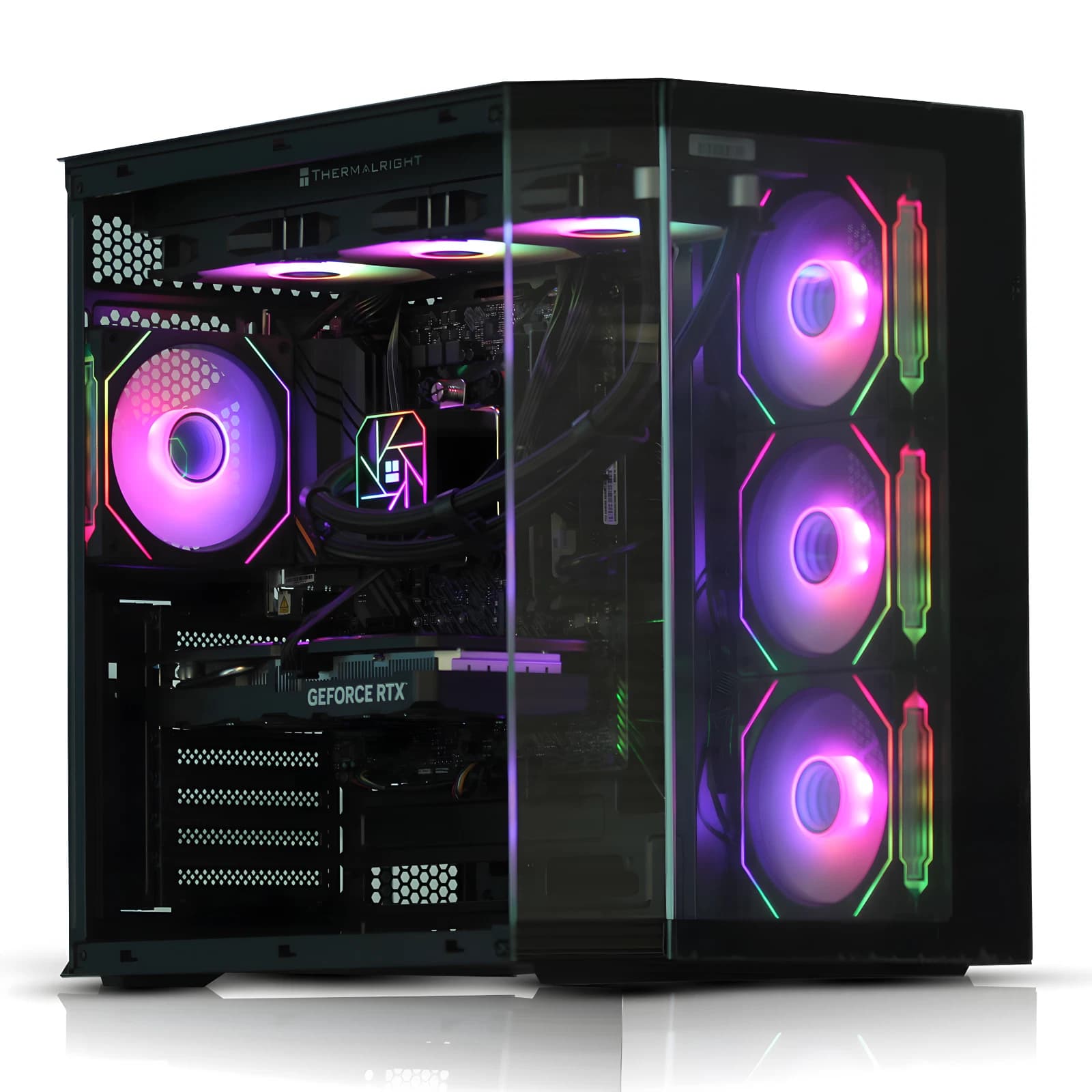
Overclocking used to be free performance. A competent tinkerer could take a locked chip, feed it more voltage, and land a 20 or 30 percent uplift. In 2026 that maths has changed. AMD and Intel both ship chips that self tune to the ragged edge of silicon quality and thermal ceiling the moment you power them on. The old headroom is largely gone. Tuning is not dead, but the questions are different.
What "overclocking" actually means now
The classic model was a fixed base clock plus a multiplier, cranked upward until stability broke. That is dated. A Ryzen 7 9800X3D or a Core Ultra 9 285K runs a dozen voltage and frequency curves at once, adjusting per core, per workload, per millisecond, against an envelope defined by the motherboard VRM and the cooler.
Overclocking today usually means one of three things. Precision Boost Overdrive on Ryzen lifts the power and current limits the chip pushes into during its own auto boost. Intel Application Optimization and unlocked P core ratios on Core Ultra allow extended turbo duration or per core multiplier bumps. A straight all core lock is now a benchmark stunt, because it costs single thread performance in daily use.
The real gains in 2026 are found under the boost curve, not above it. That is where undervolting comes in.
Where headroom still exists
Three areas still respond to careful tuning.
Memory and Infinity Fabric on AM5. A Ryzen 7000 or 9000 chip paired with a 6000 MT/s CL30 kit at a 1:1 fabric ratio out benchmarks the same silicon on stock JEDEC 4800 by double digit percentages in gaming and latency sensitive work. About 30 pounds more than a base kit, no CPU voltage tinkering required.
GPU power limits and memory. An RTX 5070 Ti or 5080 will take a plus 15 percent power target and a plus 1000 MHz memory offset on most samples for single digit but reliable framerate gains. Closer to fine tuning than overclocking, but it still moves the needle.
Cooler upgrade as a de facto overclock. Modern CPUs boost harder and longer with thermal headroom. Swapping a budget air cooler for a proper dual tower or a 360mm AIO adds sustained multi core performance without touching BIOS. On a 9800X3D, all core clocks can hold three to four hundred MHz higher under long loads than the same chip choking on a 120mm unit.
Ryzen X3D: undervolt beats overclock
The 7800X3D and 9800X3D are the gaming CPUs of this generation, and they respond badly to voltage increases. The stacked cache die sits above the compute die and thermally isolates it from the IHS. Push voltage up, the compute die gets hotter fast, boost clocks fall, gaming performance regresses.
The answer is the opposite direction. A negative curve optimiser offset, typically minus 20 to minus 30 on a 9800X3D, lets the chip hit rated boost at lower voltage. Lower voltage means lower temperature, which means the boost algorithm holds the clock longer. Real world gaming gains sit in the three to seven percent range, with no stability cost on a validated offset. Total system power drops by 15 to 25 watts under gaming load.
Not more voltage, less voltage, and let the silicon do what it already knows how to do.
If you want to skip the tinkering and just have a properly cooled Ryzen build ready to go, our Ryzen 7 gaming tower is the sensible option. Variants across the listing cover a mid range Ryzen 7 with a discrete GPU, 16 to 32GB of DDR4 or DDR5 depending on the platform, and NVMe storage from 500GB to 2TB, all under a twelve month warranty. Tuned, tested, stable out of the box.
Intel Core Ultra and Arrow Lake
Arrow Lake is a more interesting overclocking target than X3D. The K SKUs have genuine untapped power headroom and no thermal stacking problem. A Core Ultra 9 285K with lifted power limits and a solid 360mm AIO holds higher sustained all core clocks than stock. Single thread performance was already close to the ceiling from day one, so gains show up mainly in heavily threaded workloads: video encode, compile, simulation.
For pure gaming this is not the play. X3D chips remain the gaming pick regardless of tuning. For a workstation that also games, an Arrow Lake build with a mild power limit lift and a good cooler is a defensible choice.
What is not worth doing in 2026
A few practices are best abandoned. All core overclocks trade single thread boost for a slightly higher sustained clock, the wrong trade for almost every real workload. Voltage increases on X3D parts are a net negative. Pushing DDR5 above 6400 on AM5 to chase a 6800 or 7200 headline number, at the cost of dropping the fabric out of 1:1, loses performance in the exact games you were trying to speed up.
FAQ
Does overclocking void my warranty?
Aggressive overclocking can void the CPU manufacturer warranty depending on the programme AMD or Intel are running. Motherboard and memory warranties usually remain intact. A Birmingham AV twelve month warranty covers the machine as shipped, not user BIOS changes that damage components.
Is undervolting safe?
Yes, when done properly. Undervolting reduces the voltage at each boost step, lowering heat and power draw. The risk at the extreme end of the offset is instability, which shows up as a crash rather than damage. Test with a long Cinebench or OCCT run before trusting the profile.
Will overclocking my GPU brick it?
Modern GPUs from Nvidia and AMD have hard voltage locks in firmware. The worst a user can typically do through MSI Afterburner or the driver panel is trigger a crash and a driver reset. Physical damage from sanctioned tuning tools is extremely rare on 40 series, 50 series, and RDNA4 cards.
Should I buy a K or X CPU if I never plan to overclock?
Often yes. Unlocked SKUs tend to have the highest stock boost bins, so even at default they run slightly faster than the locked variants. The premium is typically 30 to 60 pounds, worth it purely for higher out of box performance and the option to tune later.
About Birmingham AV
Birmingham AV has sold over 87,000 items on eBay since 2017 with 24,756 buyer feedbacks at a 98.9 percent positive rating. Every desktop and laptop ships with a twelve month warranty, tested and configured in our Bromsgrove Worcestershire workshop. Companies House number 12383651, VAT registration GB 348755066. One of the highest volume refurbished PC operations on eBay UK, now expanding direct to buyers through bavit.co.uk.