When to upgrade motherboard vs full platform swap in 2026
AM4 to AM5, LGA 1700 to 1851, and the BIOS updates that quietly extend a board's life. A practical decision guide for UK builders in 2026.
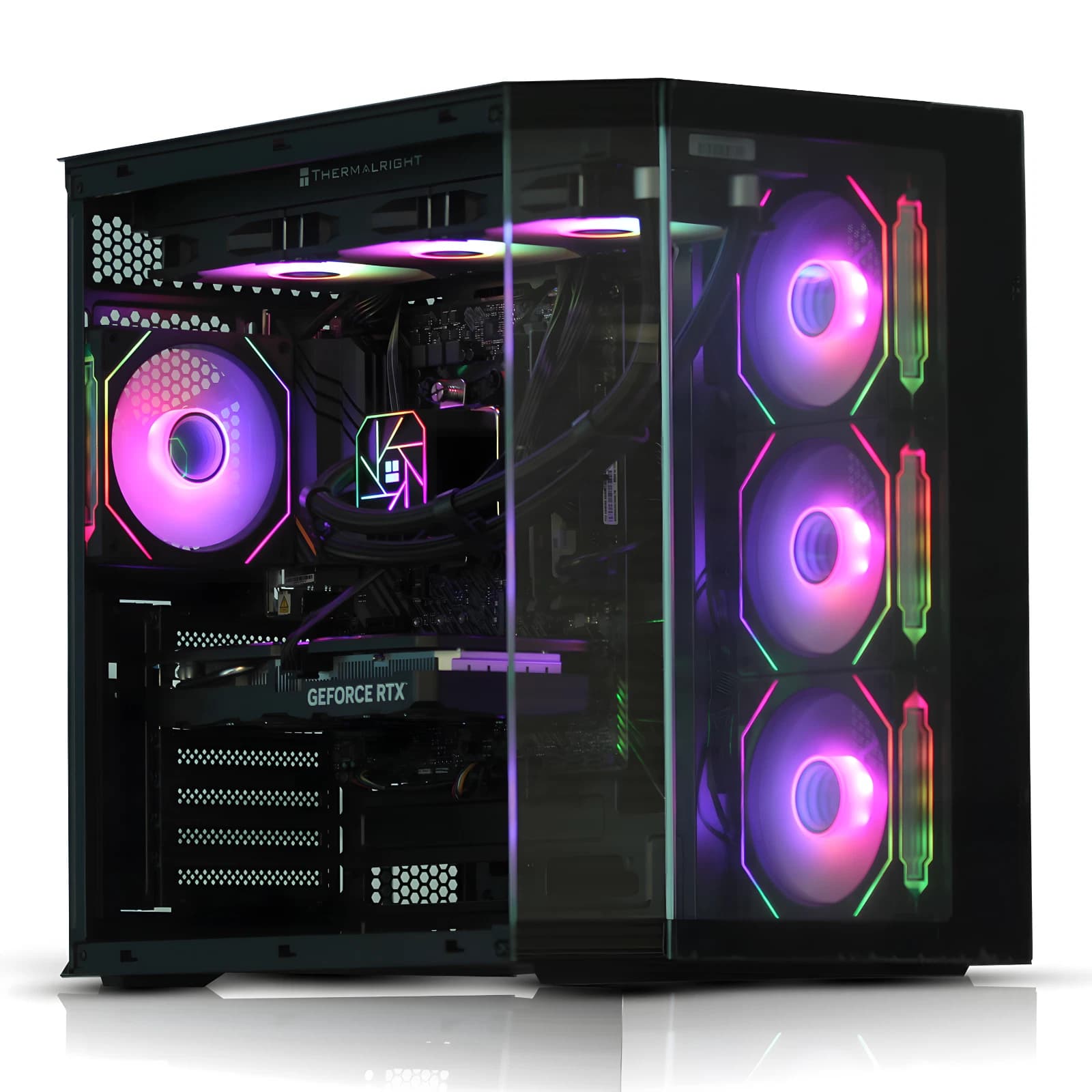
The upgrade question in 2026 rarely comes down to raw performance. It comes down to sockets. A £180 CPU on an existing board is a completely different exercise to a £180 CPU that drags a new motherboard, new memory, and often a new cooler mount into the receipt.
This guide covers the four sockets that actually matter for UK buyers this year: AM4, AM5, LGA 1700, and LGA 1851. It explains when a BIOS update alone unlocks a bigger CPU, and where a Birmingham AV refurbished desktop makes more sense than either path.
The two questions that decide it
Before touching a spec sheet, answer these in order. First, does the board physically accept the CPU you want, either now or after a BIOS update. Second, will the rest of the platform (memory, VRMs, cooler mount, PCIe lanes) actually let that CPU stretch its legs. If either answer is no, you are looking at a platform swap.
A common trap is buying a headline CPU for an ageing board, then finding the VRM throttles it under sustained load.
AM4 in 2026: still the value king
AM4 launched in 2016 and AMD kept feeding it. In 2026, a decent B550 or X570 board with a current BIOS will happily run a Ryzen 5 5600, 5700X3D, or 5800X3D. The 5700X3D in particular sits around £180 to £220 and delivers gaming performance within touching distance of parts costing twice as much.
If you own a B450 or X470 board, check the manufacturer's CPU support list before buying. Most vendors added Zen 3 support through AGESA updates from 2021 onward, but a handful of budget B450 boards were left behind. Boards from ASUS, MSI, Gigabyte, and ASRock generally handle the update cleanly through their flashback or Q-Flash tools.
The ceiling on AM4 is the 5800X3D. There is no Zen 4 or Zen 5 chip coming to the socket. If you already run a 5600X or 5700X, the X3D upgrade is the last meaningful step on that platform.
AM5: the socket with runway
AM5 (Ryzen 7000, 8000, 9000) is the AM4 of this decade. AMD has publicly committed to socket support through at least 2027, and the Ryzen 9000 series confirmed that older X670 and B650 boards can host new chips with a BIOS update. If you bought a B650 board in 2023, a Ryzen 9700X or 9800X3D drops in after a firmware flash.
For a builder sitting on a Ryzen 7600 or 7700X, the upgrade path is genuinely clean. Keep the board, keep the DDR5, swap the chip. The trap on AM5 is buying the cheapest A620 board. Some A620s cap PCIe lanes and lock out overclocking headroom, which matters if you plan to move up to a Ryzen 9 later. B650 remains the sensible floor.
LGA 1700 to LGA 1851: the awkward Intel gap
Intel is where the platform question gets painful. LGA 1700 hosted 12th, 13th, and 14th generation Core chips, which is generous by Intel standards. But LGA 1851, introduced with Core Ultra Series 2 (Arrow Lake) in late 2024, is a fresh socket. A 14th gen i7 or i9 owner cannot upgrade the CPU without replacing the board, and often the memory too if they were still on DDR4.
Worse, the 13th and 14th gen degradation issue (the oxidation and voltage problem Intel eventually acknowledged) means some LGA 1700 owners are looking at a warranty RMA rather than an upgrade. If your 13900K or 14900K has become unstable, Intel extended warranty coverage to five years for affected SKUs. That is worth pursuing before spending on new hardware.
When a refurbished desktop makes more sense
If your current build is a pre-Zen 3 Ryzen or a 10th gen Intel, the cost of a modern CPU, board, and DDR5 kit comfortably clears £450 to £600. At that point, a fully tested refurbished desktop with a warranty is often the smarter buy, especially if you also need a case, PSU, or storage refresh.
Birmingham AV's current desktop range includes machines that fall inside this window. The refurbished desktop listing here covers a range of configurations across different CPU generations, RAM sizes, and storage options, with a twelve month warranty on every unit. Buyers who compare a like-for-like DIY parts basket against these listings often find the refurbished route saves £150 to £300 once shipping and thermal paste are factored in.
A tested, warrantied machine arrives working. A parts basket arrives as homework.
A short decision framework
Use this to short-circuit the analysis. If you are on AM4 with a 5600 or 5700X, the 5700X3D or 5800X3D is a straight swap and probably the right call. If you are on AM5 with a Ryzen 7000, a 9700X or 9800X3D is a BIOS flash away. If you are on LGA 1700 with a stable 13th or 14th gen chip, sit tight, since LGA 1851 gives you nothing meaningful yet. If you are on anything older (Zen 2 and below, or 10th gen Intel and below), stop pricing motherboards and start pricing complete systems.
FAQ
Will a BIOS update really let my old board run a new CPU
Sometimes, and only within the socket. A BIOS update can unlock CPU support released after the board shipped, which is how B450 owners ran Ryzen 5000. It cannot change the socket, chipset, or memory type.
Is DDR4 still worth building on in 2026
For AM4 and older LGA 1700 builds, yes. DDR4-3600 kits at 32GB are inexpensive and perform well with Ryzen 5000 and 12th to 14th gen Intel. For any new platform (AM5, LGA 1851), you are on DDR5.
How risky is flashing the BIOS on an older board
Low risk if you use the manufacturer's official tool and a properly formatted USB stick. Most boards from the last five years include a BIOS flashback feature that works without a CPU installed. The main failure mode is power interruption mid-flash.
Should I wait for Zen 6 or Intel's next platform
If your current machine works, waiting is nearly always the right answer. Zen 6 on AM5 is expected to keep the socket alive, and Intel's second generation LGA 1851 refresh will be the sensible entry point for that platform.
About Birmingham AV
Birmingham AV has sold over 87,000 items on eBay since 2017 and holds 24,756 buyer feedbacks at 98.9% positive. We are one of the highest volume refurbished PC operations on eBay UK, based in Bromsgrove, Worcestershire. Every desktop and laptop we ship carries a twelve month warranty. Companies House 12383651, VAT GB 348755066.