Local AI vs cloud AI: the UK cost math in 2026
A refurbished workstation pays for itself faster than most developers expect. Here is the honest UK breakdown of hardware costs, API bills, and the break-even point in 2026.
The question hits most UK development teams the same way. Monthly API bills for Claude, GPT, and Gemini keep climbing, invoices land in dollars, and the finance team wants to know why the AI line grew 40 percent this quarter. Meanwhile a refurbished workstation with a decent GPU sits at a fixed one off price and runs Llama, Qwen, or Mistral locally with no per token meter ticking.
So which actually costs less over twelve months in 2026, and where is the honest break even point for a typical UK developer or small team? The answer is not the marketing pitch either camp likes to run. It depends on volume, model choice, and whether you value latency and privacy in pounds.
What the cloud actually costs a working developer in 2026
Take a realistic mid weight coding workload. A single engineer using a frontier model through an IDE assistant, running unit test generation, code review, and moderate agentic tasks, will burn through somewhere between 15 and 40 million input tokens and 3 to 8 million output tokens per month.
At current 2026 UK pricing, that lands roughly here in pounds after conversion and VAT:
- Claude Sonnet class usage: £120 to £280 per month per developer.
- GPT frontier tier usage: £150 to £320 per month per developer.
- Heavy agentic workflows with long context: £400 to £700 per month per developer.
A three person dev team on the moderate end is looking at £450 to £850 a month, or £5,400 to £10,200 a year. A five person team pushes past £15,000 annually before anyone runs a serious batch job. These are not synthetic numbers. They match invoices real UK studios have been quietly forwarding to their accountants since Q1.
What a local AI workstation actually costs
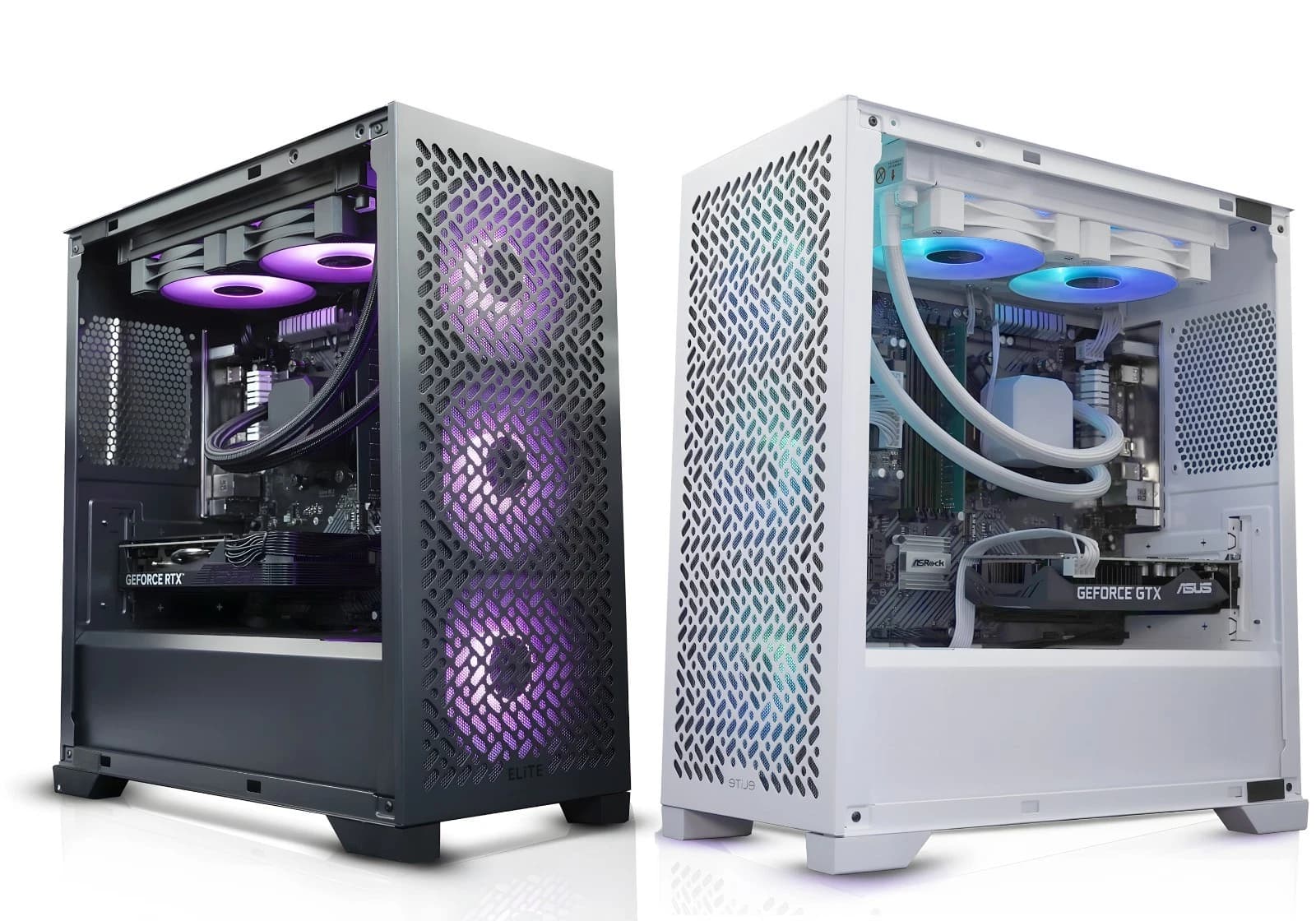
Here is where the refurbished market changes the equation. A properly specced ex enterprise workstation with a capable GPU is not a research project any more. It is a stocked shelf item.
A Dell Precision or HP Z series tower from 2019 to 2022 vintage, refurbished, with a Xeon or Ryzen Threadripper class CPU, 64 to 128 GB of DDR4 ECC, and an NVIDIA RTX A4000, A5000, or a Quadro RTX 6000 card, will run you between £800 and £1,900 depending on the exact configuration and GPU tier.
That machine will comfortably run Llama 3.3 70B quantised, Qwen 2.5 Coder 32B at full precision, or a fleet of smaller specialist models simultaneously. For code assistance, RAG pipelines, embedding generation, and most agentic scaffolding, the output quality gap versus frontier cloud models has narrowed dramatically through 2025 and into 2026.
If you want to see what current stock looks like, browse the workstation listing here. Configurations vary by CPU generation, RAM tier, and GPU, so match the spec to your model choice rather than buying the cheapest option and regretting it three weeks in.
Electricity, the honest bit
A workstation with a mid tier professional GPU pulls around 250 to 450 watts under sustained inference load, dropping to 60 to 120 watts at idle. At the UK average business electricity rate hovering around 27p per kWh in mid 2026, running it eight hours a day at 60 percent average utilisation costs roughly £14 to £24 per month. Even at 24/7 duty for a small team sharing the box, you are looking at £45 to £75 a month in power.
Add that to a £1,200 hardware outlay amortised across 24 months, and your all in monthly cost sits between £65 and £125 for the first two years, then drops to just the electricity from year three onwards.
The break even point, in plain numbers
Compare the two curves honestly. A single developer paying £200 a month for cloud AI hits £1,200 of spend in six months. That is the entire cost of the workstation, and the machine keeps running for another five to eight years with no monthly bill.
For a three person team at £600 a month combined, break even against a £1,500 workstation lands at 2.5 months. For a five person team at £1,000 a month, break even lands in six weeks. After the payback window, every subsequent month is a straight saving of £180 to £900 depending on team size.
The math gets even sharper if your workload includes bulk embedding jobs, synthetic data generation, or nightly agent runs. Those are the workloads that punish cloud pricing hardest, and they run happily overnight on a local box with the lights off.
Where cloud still wins
Not every job belongs on a local machine. If your workflow demands the absolute frontier reasoning tier for a specific task, cloud models still lead on the hardest benchmarks. If you need burst capacity, spinning up 40 parallel agents for an hour, cloud beats hardware every time. And if your data governance requires zero on premises AI infrastructure, that is a policy question the math cannot override.
The sensible pattern that most UK teams have landed on by mid 2026 is hybrid. Route 70 to 85 percent of daily traffic to the local workstation. Reserve cloud calls for the specific tasks where the extra capability is worth the token cost. Teams doing this typically cut their cloud spend by 60 to 80 percent while keeping the escape hatch for the jobs that need it.
Choosing the right refurbished spec
Match the machine to the model tier you actually want to run. If your target is 7B to 14B parameter models for code assistance, a workstation with 32 to 64 GB of RAM and an RTX A4000 class GPU handles it well. If you want 32B to 70B parameter models at usable speeds, step up to 128 GB of RAM and an A5000, A6000, or dual GPU configuration.
Refurbished ex corporate workstations are the value sweet spot because the depreciation curve on enterprise hardware is brutal. A machine that cost £4,500 new in 2021 lands in the £900 to £1,600 bracket refurbished with a full warranty in 2026, and the components are already burned in past the infant mortality phase.
FAQ
How long does a refurbished workstation typically last for AI work?
Enterprise grade workstations from Dell Precision, HP Z, and Lenovo ThinkStation lines are built for a decade of duty cycles. Expect five to eight years of active service post refurbishment, longer if you upgrade the GPU midway through. The bottleneck is usually the GPU capability curve rather than component failure.
Will a local model actually match cloud quality for coding tasks?
For day to day code completion, refactor suggestions, and mid complexity agentic work, Qwen 2.5 Coder 32B and Llama 3.3 70B are genuinely competitive with cloud offerings from a year ago. For the hardest architectural reasoning or novel problem solving, frontier cloud still edges ahead. Most working developers find the local model handles 80 percent of tasks perfectly well.
What about running local AI on a laptop instead?
A laptop with 32 GB of unified memory can run 7B to 13B models acceptably, but throughput on larger models is a fraction of what a desktop GPU delivers. If AI is central to your daily workflow, the desktop is the correct tool for the job. The laptop is fine as a secondary or travel device.
Do I need any special setup to get started?
Ollama or LM Studio handles the model download and serving in about 20 minutes. Point your IDE assistant, Continue, Cline, or a custom agent at the local OpenAI compatible endpoint, and the switch from cloud to local is a single URL change. No infrastructure team required.
About Birmingham AV
We have sold over 87,000 items on eBay UK since 2017, with 24,756 buyer feedbacks at 98.9 percent positive. Every refurbished workstation, desktop, and laptop we ship carries a twelve month warranty as standard. Companies House 12383651, VAT GB 348755066, based in Bromsgrove, Worcestershire. We are one of the highest volume refurbished PC operations on eBay UK, and we test every machine before it leaves the workshop.