How refurbishers actually test a laptop battery
Battery health is the number one thing buyers get burned on with used laptops. Here is what a proper refurbisher does before a machine ever leaves the workshop.
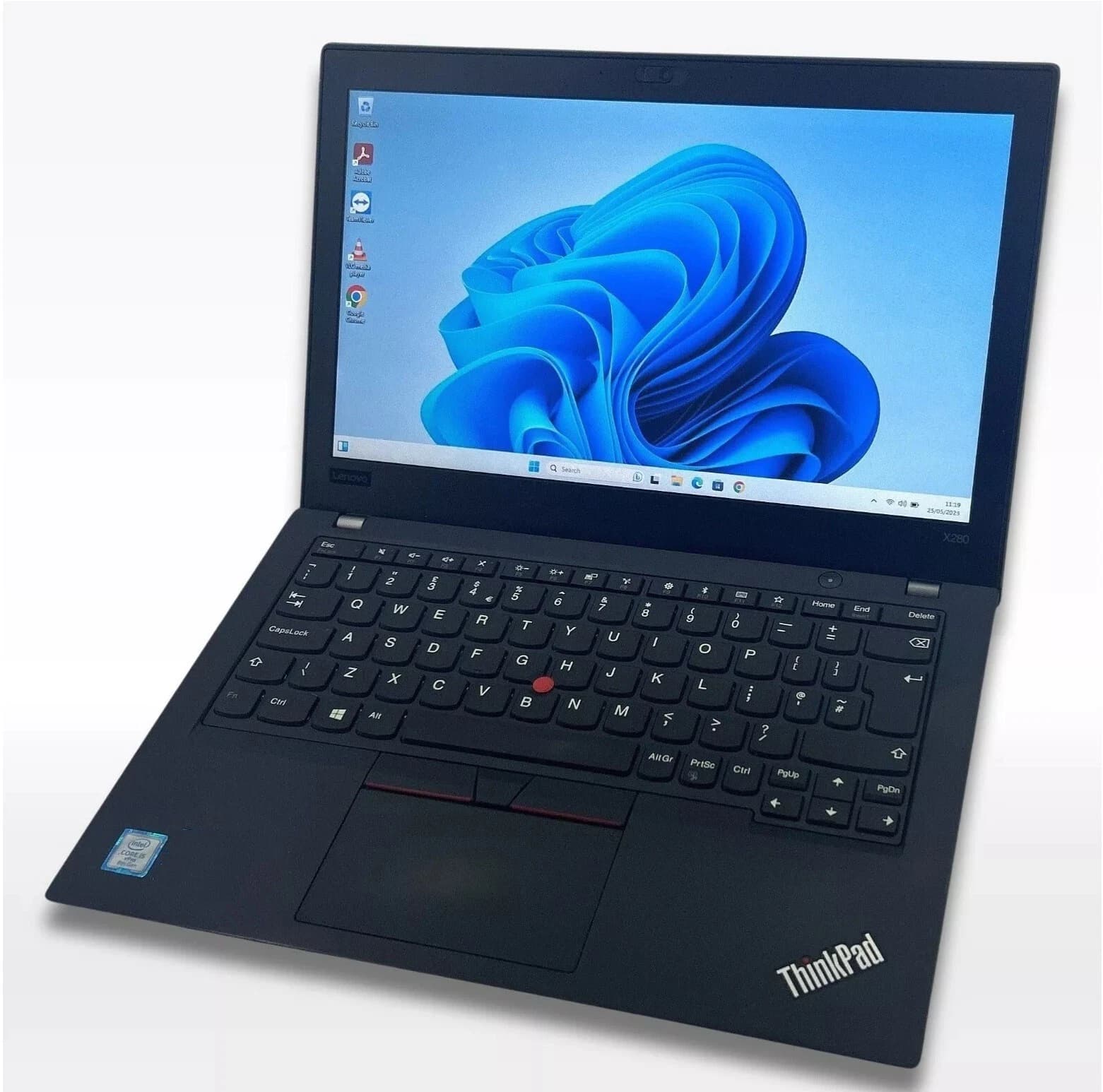
Battery health is the biggest variable in the used laptop market. A machine can have a spotless chassis, a fast SSD and a clean Windows install, but if the battery is a tired cell pretending to be healthy, the buyer finds out within a fortnight. This is what proper battery testing looks like on the bench.
Reading design capacity versus full charge capacity
Every lithium ion laptop battery reports two numbers to the operating system: design capacity (what the pack was rated at from the factory) and full charge capacity (what it holds today). The ratio between them is the honest starting point.
On Windows, powercfg /batteryreport produces an HTML file with both figures plus a recent charge history. Lenovo Vantage and Dell Power Manager expose the same numbers with more context. A pack reporting 42,000 mWh design and 39,000 mWh full charge is at roughly 92% state of health, which is a strong result on a used machine. A pack reporting 42,000 mWh design and 18,000 mWh full charge is a bin fire, regardless of what the seller claims.
The catch is that these numbers are self reported by the battery firmware, which can drift after long periods on the shelf. The software readout is only step one.
Cycle count, and why it is not the whole story
Cycle count is the number of full charge and discharge equivalents the pack has seen. A modern business laptop pack is typically rated for 500 to 1,000 cycles before it drops below 80% of design capacity. A three year old Dell Latitude with 180 cycles has been treated well. The same machine with 1,400 cycles has been hammered.
Cycle count on its own is misleading though. A pack that lived on a charger at 100% and 40 degrees C for eighteen months will show almost no cycles and be in worse shape than one that was actively used. It gets read alongside manufacture date and the discharge curve under load.
The load bank test
This is the part most volume sellers skip, and it is the part that actually catches problems.
A load bank test pulls a known current out of the battery while logging voltage against time. The tool of choice is a programmable DC electronic load such as a Kunkin KP184 or a Riden RD6018 with the sink module, set to draw between 1.5 A and 3 A depending on cell configuration. For internal batteries, the discharge is driven by running a controlled workload in Windows with the charger unplugged, logged through HWiNFO64 at one sample per second.
A healthy pack shows a long, gently sloping plateau in the middle of the discharge, then a sharp drop near the end. A tired pack shows a short plateau, early voltage sag under load, and a steep knee well before the reported percentage suggests it should end. A pack that reports 80% state of health but sags from 12.3 V to 10.9 V under a 2 A pull inside the first ten minutes is not an 80% pack. It has damaged cells and will fail suddenly.
See a BAV refurbished laptop that has been through this test bench, with a twelve month warranty on the whole machine.
Charge curve and thermals
Discharge is only half the picture. Charging behaviour tells you about the pack, charge controller, and mainboard together.
A good pack under a 65 W charger shows a constant current phase up to roughly 80% state of charge, then tapers into a constant voltage phase for the final 20%. A full charge from 5% to 100% on a 50 Wh pack should complete in 90 to 120 minutes, with surface temperature under 40 degrees C on an infrared thermometer. A pack that runs hot, or jumps from 95% to 100% and then reports lower capacity on the next discharge, has drifted cell balance. That is a reject.
Idle drain and self discharge
The last test is the least dramatic and the most useful. A fully charged laptop is left off, unplugged, for 72 hours, then rechecked. A healthy pack loses 2% to 5%. A pack that loses 15% or more has an internal short or a failing protection circuit, and will strand the buyer within six months. Pass or fail, no middle ground.
What a battery pass actually means
A refurbished laptop that passes all of the above has been verified on capacity, cycle count in context, discharge load, charge behaviour and thermals, and idle drain. That is a very different product to one where the seller looked at the Windows battery icon, saw 80%, and shipped it. The trade off is honest: a properly tested refurbished laptop will not have a brand new battery unless the listing says so. What it will have is a battery whose current condition is known, disclosed, and covered by warranty for twelve months.
FAQ
What state of health should I expect on a refurbished business laptop?
A fair range for a well graded refurbished laptop is 75% to 95% state of health, depending on age and model. Anything under 70% should be disclosed as a service candidate or replaced before sale. Above 95% is either lightly used or a genuinely new pack.
Is a high cycle count always a deal breaker?
No. A pack with 600 cycles that still holds 85% capacity and passes the load and idle tests is often more reliable than one with 50 cycles that sat flat for two years. Cycle count is one input, not a verdict.
Can I run these tests myself after I buy?
Yes, and it is a good idea. Run powercfg /batteryreport on day one, save the HTML, and run it again after a month. If full charge capacity has dropped by more than a few percent, contact the seller under warranty while there is a paper trail.
Do the same tests apply to internal, non removable batteries?
The methodology is the same but the toolset shifts. The load stage runs a controlled CPU workload in Windows with the charger unplugged, logging voltage per cell through HWiNFO64. Charge and idle tests are unchanged, and the pass or fail thresholds are the same.
About Birmingham AV
Birmingham AV is one of the highest volume refurbished PC operations on eBay UK. We have sold over 87,000 items on the platform since 2017, with 24,756 buyer feedbacks at 98.9% positive. Every machine ships with a twelve month warranty. Registered at Companies House as company number 12383651, VAT number GB 348755066, based in Bromsgrove, Worcestershire.