How Birmingham AV tests every machine before dispatch
Every refurbished PC and laptop leaving Bromsgrove goes through a fixed sequence of stress, memory, storage, thermal and cosmetic checks. Here is what actually happens on the bench.
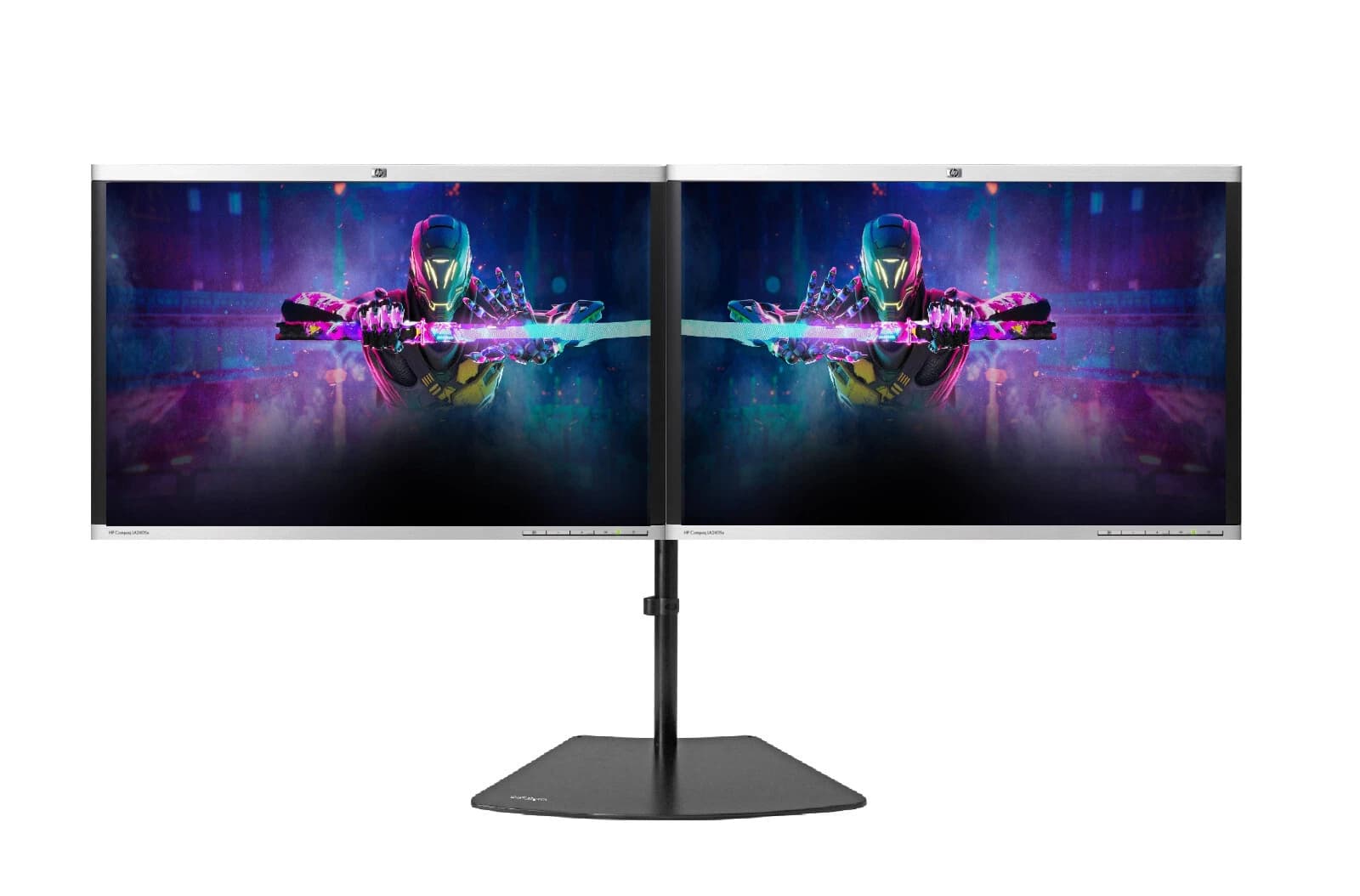
Refurbished hardware only earns trust if the testing behind it is boring, repeatable and evidenced. A machine that "boots to desktop" is not tested. A machine that has held 95 percent CPU load for an hour, passed a memory sweep, benchmarked its SSD and cleared a bright light cosmetic pass is tested. That is the standard applied to every unit leaving the Bromsgrove workshop.
Stage one: automated stress testing
The first stage after imaging is a load test that pushes CPU and GPU together. On a typical i7 desktop this means OCCT small data set at full AVX2 for 60 minutes, layered with FurMark or Unigine Heaven for the last 30 minutes. On laptops the CPU pass is capped at 45 minutes because sustained turbo behaviour matters more than raw duration, and thermal throttling is the failure signal being watched for.
The pass criteria are strict. Zero WHEA errors in the event log. No unexpected clock drops below the advertised base clock. No power delivery faults in HWiNFO64. If a Ryzen 7 5700X will not hold 4.4 GHz all core with the stock Wraith cooler, the paste is redone, the socket reseated and the test rerun.
Stage two: memory verification
Memory faults are the most common cause of an intermittent crash six weeks after delivery, so the memory pass is not skipped. Every machine runs MemTest86 for at least four full passes, which on a 32 GB DDR4 3200 kit takes roughly 90 minutes and on a 64 GB DDR5 5600 kit closer to three hours.
Four passes is not arbitrary. Single pass runs miss around 15 percent of marginal cells per PassMark's own guidance, and pattern tests 5, 8 and 13 only surface certain address line faults after multiple sweeps. Any error, even a single bit flip, means the kit is pulled and modules retested individually in slot A2 to isolate the faulty stick. Kits that fail twice are scrapped, not resold.
Stage three: storage benchmark and health check
Every SSD, whether a 512 GB SATA drive in a Latitude 5410 or a 2 TB NVMe Gen 4 in a gaming tower, is checked in two stages. First, CrystalDiskInfo pulls SMART data: power on hours, total bytes written, reallocated sectors, wear levelling count. A consumer NVMe with more than 30 percent wear remaining and under 15,000 power on hours is acceptable for resale. Anything worse is replaced at cost to the workshop.
Second, a CrystalDiskMark run confirms the drive is performing to spec. A Samsung 980 Pro 1 TB should return around 7,000 MB per second sequential read and 5,000 MB per second write on a PCIe 4.0 lane. A drive delivering half of that is either thermally throttled, misconfigured as Gen 3, or failing. All three states are flagged and fixed before the machine progresses.
See the current stock passing this exact process on the Birmingham AV eBay store, where every listing includes the specification the unit was tested against.
Stage four: thermal check under real load
The thermal pass is separate from the stress test because the goal is different. Stress testing looks for crashes. Thermal checking looks for headroom. On desktops, a 20 minute Cinebench R23 multi core loop is run with HWiNFO64 logging package temperature, VRM temperature and airflow deltas. A Ryzen 7 5700X on a Deepcool AK400 should sit at 78 to 82 degrees Celsius at 22 degree ambient. An i7 14700 on the same cooler is expected around 88 to 92 degrees under a 253 watt PL2 turbo.
Laptops get a mobile protocol. A ThinkPad T14s or Latitude 7420 runs 15 minutes of Cinebench R23 to record how sustained clocks hold. If a machine throttles from 4.2 GHz to 2.1 GHz within eight minutes and never recovers, the heatsink is stripped, pads replaced with Gelid GP Extreme, and paste redone with PTM7950. That pass buys back 400 to 600 MHz of sustained clock.
Stage five: cosmetic pass and final QA
The final stage is a bright light inspection at the packing bench. Every chassis is checked under a 6500 K daylight lamp for scratches, hinge play, keyboard wear, dead pixels and port damage. Grade A, B and C definitions match the visible condition of the unit sold, and listing photos are of that actual unit unless the listing is a bulk variation.
Where a listing covers a variation range, for example EliteBook 840 G8 units offered in i5 or i7, 16 or 32 GB RAM, and 256 GB, 512 GB or 1 TB SSD tiers, the full range is disclosed in the description and the buyer receives the exact configuration priced. The machine ships in a rigid box with foam corners, a UK plug charger and a twelve month warranty card referencing the eBay order number.
Frequently asked questions
How long does the full test process take per machine?
A standard laptop clears the pipeline in three to four hours of bench time across a working day, since the memory and storage passes run unattended. A desktop with a discrete GPU takes closer to five hours because the GPU stress pass adds a step.
Do you test used graphics cards separately before fitting them?
Yes. Any second hand GPU is bench tested on a dedicated rig with FurMark, 3DMark Time Spy and OCCT VRAM test before installation. Cards showing artefacts, memory errors, or hotspot deltas above 25 degrees are rejected.
What happens if a machine fails a test after it has been listed?
The listing is pulled the same day and the unit goes back into diagnosis. If it cannot be repaired within a reasonable parts budget, it is stripped for spares and the buyer is offered a refund or equivalent alternative at the original price.
Is the twelve month warranty tied to passing these tests?
The warranty is standard on every machine sold, regardless of grade or price. The testing exists so warranty claims stay rare, but the warranty is a buyer entitlement under the Consumer Rights Act 2015, honoured for twelve months from dispatch.
About Birmingham AV
We are a Bromsgrove based refurbisher trading since 2017. Our eBay store has sold over 87,000 items and holds 24,756 buyer feedbacks at 98.9 percent positive, making us one of the highest volume refurbished PC operations on eBay UK. Every machine ships with a twelve month warranty. Companies House 12383651, VAT GB 348755066, Bromsgrove, Worcestershire.