How AI workloads are reshaping PC buying in 2026
Local models, image generators and video upscalers have flipped the old spec priorities. VRAM now matters more than clock speed, and older buyers built for gaming or Office work need to rethink what a fast PC actually looks like.
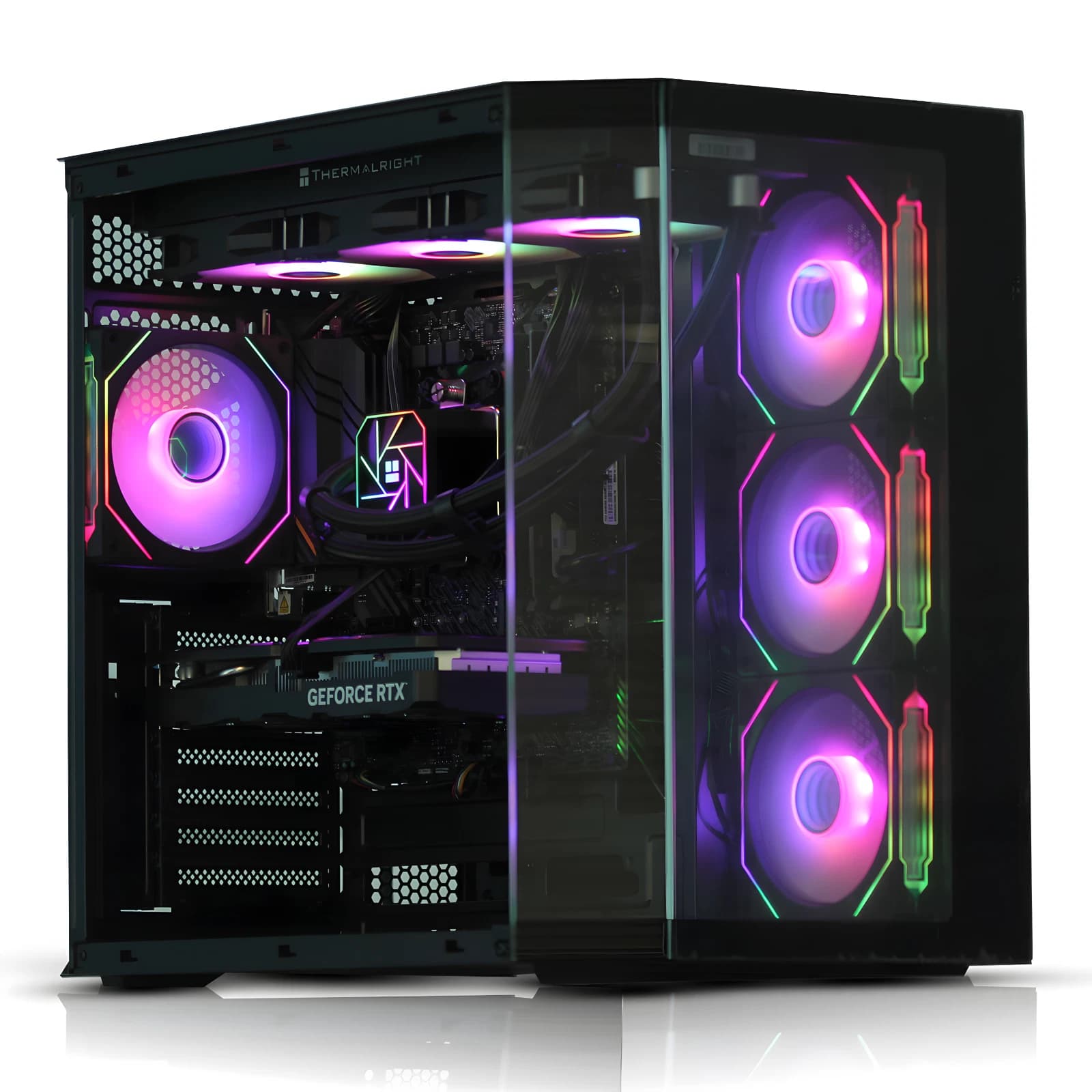
For a decade the received wisdom on buying a PC was simple. Pick a fast CPU, add 16GB of memory, drop in an SSD, and the GPU only mattered if you played games. That advice has now aged badly.
Local AI workloads have quietly rewritten the priority list. Running a mid sized language model on your own machine, generating images in Stable Diffusion, upscaling video in Topaz, or letting a coding assistant index a large repository all hit the same bottleneck. That bottleneck is video memory, and most PCs sold before 2024 do not have enough of it.
The new decision matrix
The order of priorities for a 2026 build looks nothing like the 2019 version. If your PC will touch any AI workload, the ranking is now VRAM first, core count second, storage speed third, system RAM fourth, and clock speed a distant fifth.
VRAM comes first because it is a hard wall. A 7 billion parameter language model quantised to 4 bit needs roughly 5GB of video memory to run at usable speed. A 13 billion parameter model needs closer to 10GB. Stable Diffusion XL wants 8GB minimum and behaves properly at 12GB. Cross those thresholds and the model runs. Miss them and it either refuses to load or spills into system RAM and slows to a crawl.
Core count is second because modern AI toolchains lean hard on parallel preprocessing. Tokenising a long document, batching image tiles, or running a retrieval step across a vector database all scale with threads. Eight fast cores comfortably beats four faster ones for this kind of work.
Storage speed is third because model files are large. A single Llama 3 checkpoint can be 40GB. From a SATA SSD loading takes long enough to notice. From an NVMe Gen 4 drive it is a few seconds.
What older buyers should reconsider
The buyers most caught out by this shift are the ones who spent well in 2020 or 2021. A machine built then with a Ryzen 5 5600X, 32GB of DDR4 and a GTX 1660 Super is still perfectly quick for browsing, Office, and older games. It is also almost useless for local AI. The 1660 Super has 6GB of VRAM, which puts every current image model and every language model above 7B parameters out of reach.
The same problem applies to a lot of the used ex office towers sold as "gaming ready". A Dell OptiPlex with an added RTX 3050 6GB looks like a bargain until you try to run anything modern on it. The GPU floor for meaningful local AI in 2026 is 12GB of VRAM. Below that you are limited to toy models and slow generation times.
If you are sitting on a pre 2023 machine, the honest question is not whether your CPU is fast enough. It almost certainly is. The question is whether your GPU has the memory for the workloads you actually want to run.
Where a mid range 2026 rig lands
The sweet spot for a general purpose AI capable machine in 2026 sits around an eight core CPU, 32GB of system RAM, a 1TB NVMe boot drive, and a GPU with at least 12GB of VRAM. That configuration will run any 13B language model at usable speed, handle Stable Diffusion XL comfortably, upscale 4K video without stalling, and still play current games at 1440p.
Anything less than 32GB of system RAM starts to bite the moment you keep a browser, an IDE and a model server open at once. 16GB is now a laptop spec.
See the Birmingham AV gaming rig with 32GB RAM on eBay
The listing above covers a range of variations. CPU options span Intel Core i5 and Core i7 chips from the 8th through 10th generations, storage runs from 512GB SSD up to 2TB NVMe combinations, and GPU choices include GTX 1660, RTX 2060, RTX 3060 and RTX 4060 variants. Pick the trim that matches your workload. For light AI experiments the RTX 3060 12GB is the value pick. For serious local model work step up to the RTX 4060 or above.
What has not changed
A few pieces of old advice still hold. A quality power supply still matters, and the 80 Plus Gold rating is still the sensible floor. Case airflow decides how loud the machine will be under sustained load, and sustained load is now common because AI workloads run for minutes or hours. A twelve month warranty is still the minimum you should accept on any refurbished tower.
FAQ
How much VRAM do I actually need for local AI in 2026?
For casual use, 8GB is the floor and lets you run smaller language models and Stable Diffusion 1.5 at 512 by 512. For anything you plan to use daily, 12GB is the practical minimum. 16GB opens up 13B language models and SDXL at full resolution, and 24GB lets you run 30B models and Flux without compromise.
Is it worth upgrading just the GPU in an older PC?
Usually yes, if the rest of the machine is on a modern platform. A Ryzen 5000 or Intel 11th gen or later CPU paired with 32GB of DDR4 will happily feed a modern 12GB GPU. Older platforms with DDR3 or a first gen Ryzen chip start to bottleneck the GPU and the upgrade delivers less than you expect.
Do I need liquid cooling for AI workloads?
Not for most builds. A good tower air cooler like a Noctua NH U12S or a be quiet Dark Rock 4 handles a 65W to 125W CPU under sustained load without difficulty. Liquid cooling is worth considering only on the top tier CPUs that push past 200W.
Can a laptop handle serious local AI?
A laptop with a discrete RTX 4070 or 4080 mobile chip and 16GB of VRAM will run mid sized models, but it will be loud, hot, and slower than a desktop with the same GPU. If you plan to run models daily, a desktop is the better tool. Laptops are the right choice only if portability is genuinely non negotiable.
About Birmingham AV
We have sold more than 87,000 items on eBay since 2017 with 24,756 buyer feedbacks at 98.9% positive. Every desktop and laptop ships with a twelve month warranty and full UK support. Birmingham AV Ltd is registered at Companies House under number 12383651, VAT registration GB 348755066, based in Bromsgrove, Worcestershire. We are one of the highest volume refurbished PC operations on eBay UK, and every rig leaves the workshop fully tested and ready to run.