Building a home AI server on a refurbished workstation
A refurbished HP Z or Dell Precision tower gives you multi GPU capacity, ECC memory and quiet operation for a fraction of a purpose built AI rig. Here is how to pick one.
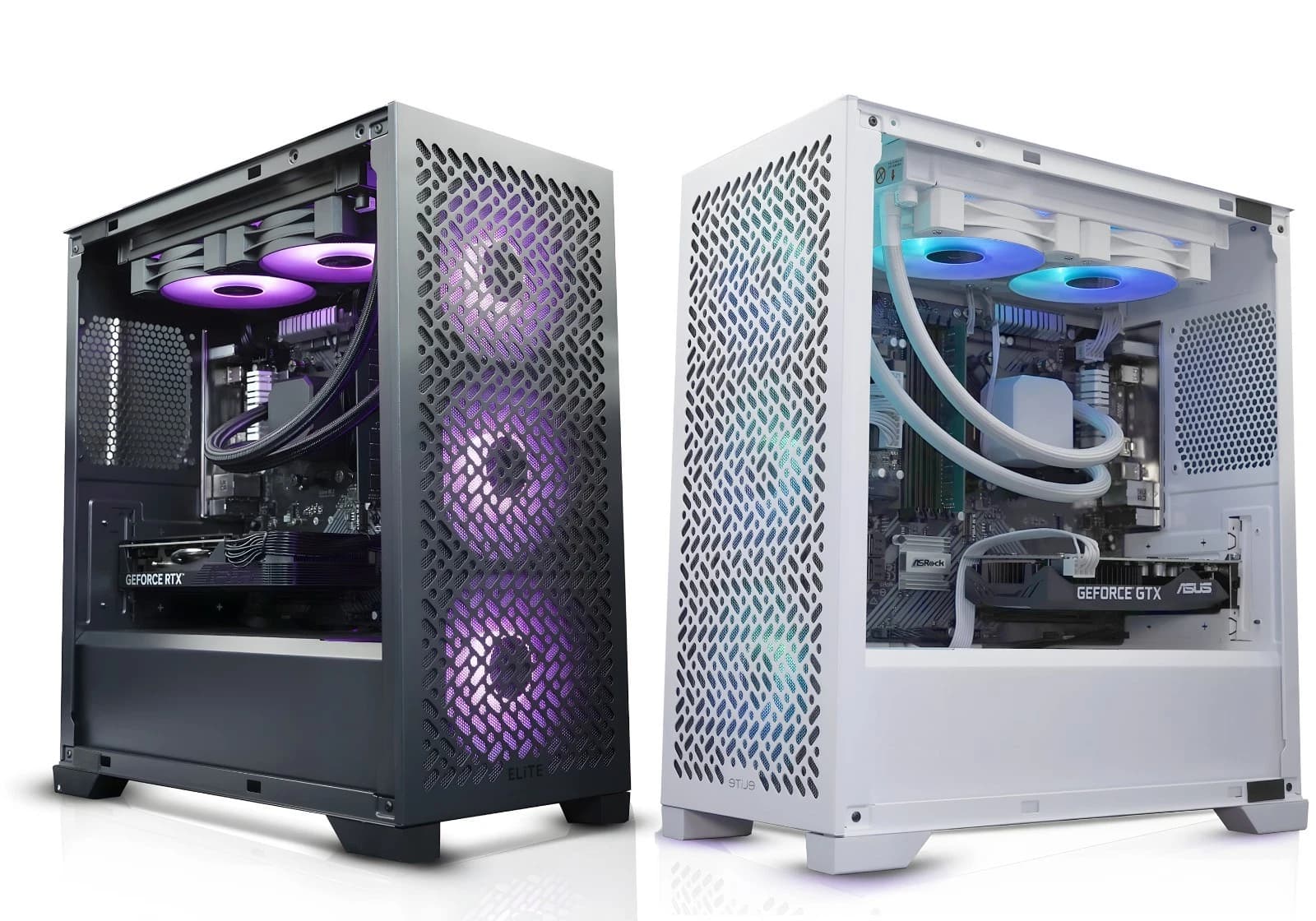
Self hosting large language models used to be the preserve of engineers with a spare rack. That changed the moment quantised 70B class models started fitting on a pair of used 24GB cards. A gaming tower will run out of PCIe lanes, thermal headroom and PSU capacity before you finish loading the model. A refurbished workstation will not.
This guide covers what to look for in an HP Z series or Dell Precision tower for running Llama, Mistral, Qwen or Stable Diffusion locally.
Why a workstation chassis, not a gaming PC
Consumer motherboards typically expose one full x16 PCIe slot and one physically x16 slot that runs at x4 electrically. The moment you add a second GPU for tensor parallelism, the second card starves.
Workstation boards are laid out differently. An HP Z6 G4 or Dell Precision 7920 with dual Xeon Scalable CPUs offers four to seven usable PCIe Gen3 x16 slots, all electrically wired. That matters because llama.cpp, vLLM and ExLlamaV2 shard a model across two or three cards and need bandwidth for KV cache and activations.
Workstation chassis also ship with 1000W to 1450W supplies and airflow built for loaded expansion slots.
HP Z6 G4 and Z8 G4: the value pick
The HP Z6 G4 takes one or two Intel Xeon Scalable CPUs (Skylake SP or Cascade Lake), up to 384GB of DDR4 ECC registered memory, and a 1000W 90 Plus Platinum PSU. Two RTX 3090s at full tilt pull around 700W, leaving margin for the CPUs, drives and fans.
The Z8 G4 is the bigger sibling: 1450W PSU, dual socket standard, and enough internal room for three double slot GPUs if you pick your cards carefully. Refurbished Z6 G4 barebones start around £450, a dual Xeon Gold config with 128GB ECC and a 1TB NVMe sits closer to £900 to £1,200, and Z8 G4 pricing runs roughly £250 to £400 above that.
Listings vary meaningfully in CPU tier, memory capacity and storage. Read the exact SKU before you buy. A Z6 with a single Bronze 3106 is a different animal to one with dual Gold 6154s.
See our current workstation stock on eBay
Dell Precision 7820 and 7920: the quiet alternative
Dell's equivalents are the Precision 7820 (single or dual Xeon W or Scalable) and the Precision 7920 (dual Scalable, up to 1.5TB RAM). The 7920 tower ships with a 1400W PSU and has a well engineered airflow path. On the bench the 7920 idles noticeably quieter than an equivalent Z8, though the two converge under load.
The Precision line is easier to find with NVMe support on the motherboard directly, which saves a PCIe slot compared to older Z series that need an add in card for boot NVMe. That matters when every slot is spoken for.
Multi GPU: what actually fits
The practical GPU choices at current used pricing are the RTX 3090 (24GB, roughly £650 to £800), the RTX A5000 (24GB, blower cooler, around £950 to £1,100), and the older Tesla P40 (24GB, passive, needs a shroud and a fan) for tight budgets.
A pair of RTX 3090s in a Z6 G4 or Precision 7820 gives you 48GB of aggregate VRAM, enough to run Llama 3.1 70B at 4 bit quantisation with a generous context window. Three cards in a Z8 G4 or 7920 gets you into 90B and 120B territory.
Blower style cards (A5000, A6000, RTX 6000 Ada) are strongly preferred over triple fan gaming cards in a workstation. They exhaust hot air out the back rather than dumping it into the chassis.
Power draw and running cost
A realistic dual Xeon plus twin RTX 3090 setup draws:
- Idle: 180W to 240W at the wall
- Light inference (7B to 13B model, single card active): 260W to 340W
- Heavy inference (70B model, both cards active): 620W to 780W
- Training or fine tuning burst: 850W to 950W
At UK domestic rates (roughly 27p per kWh in mid 2026), leaving the box idle 24/7 costs around £1.20 to £1.60 per day. Eight hours of heavy inference plus sixteen idle sits at £3 to £4 per day, materially cheaper than the equivalent token spend for anyone running agentic workloads at volume.
Fan noise: the honest numbers
Workstation fans are variable speed and temperature aware. At idle with 22C ambient, an HP Z6 G4 sits around 34 to 38 dBA at one metre, quiet enough to sit under a desk. Under sustained GPU load with two blower cards, expect 48 to 54 dBA. Dell's Precision 7920 runs 2 to 4 dBA quieter across the range.
Two things move the needle. Repaste the CPUs (both HP and Dell used dry paste on many units by 2020) and swap in fresh Noctua or Arctic case fans if the originals are worn.
FAQ
Can I run this on a single power circuit?
Yes. Even a heavily loaded dual GPU workstation peaks under 1000W, within a UK 13A ring main allowance. The caveat is not sharing the circuit with a kettle or a space heater, both of which can trip the breaker under sustained load.
Do I need ECC memory for local AI?
For inference alone, no. ECC catches bit flips that would corrupt long running processes, which matters more for multi day training runs than for chat sessions. Workstation boards require registered ECC anyway, so a Z6 or Precision 7820 gives you ECC by default.
Will Windows 11 support these workstations?
The Xeon Scalable generation is officially unsupported for Windows 11 in some SKUs, though most Z6 G4 and Precision 7820 machines pass the check. For AI serving, Ubuntu 22.04 LTS or 24.04 LTS is the sensible choice regardless, given CUDA driver maturity.
What about noise if it lives in the same room as me?
Run a 10 metre HDMI and USB extender and stash the tower in a cupboard with airflow. If it must share your room, prioritise blower GPUs and cap power limits at 80% via nvidia-smi. That change alone typically drops peak fan speed by 15 to 20%.
About Birmingham AV
We have sold over 87,000 items on eBay since 2017 with 24,756 buyer feedbacks at 98.9% positive, and every workstation we ship carries a twelve month warranty. Birmingham AV Ltd is Companies House 12383651, VAT GB 348755066, based in Bromsgrove, Worcestershire, and is one of the highest volume refurbished PC operations on eBay UK.