The gaming PC bottleneck problem: balancing CPU and GPU in 2026
A practical guide to matching processor and graphics card for real frame rates at 1080p, 1440p and 4K, with three tested pairings that avoid wasted spend.
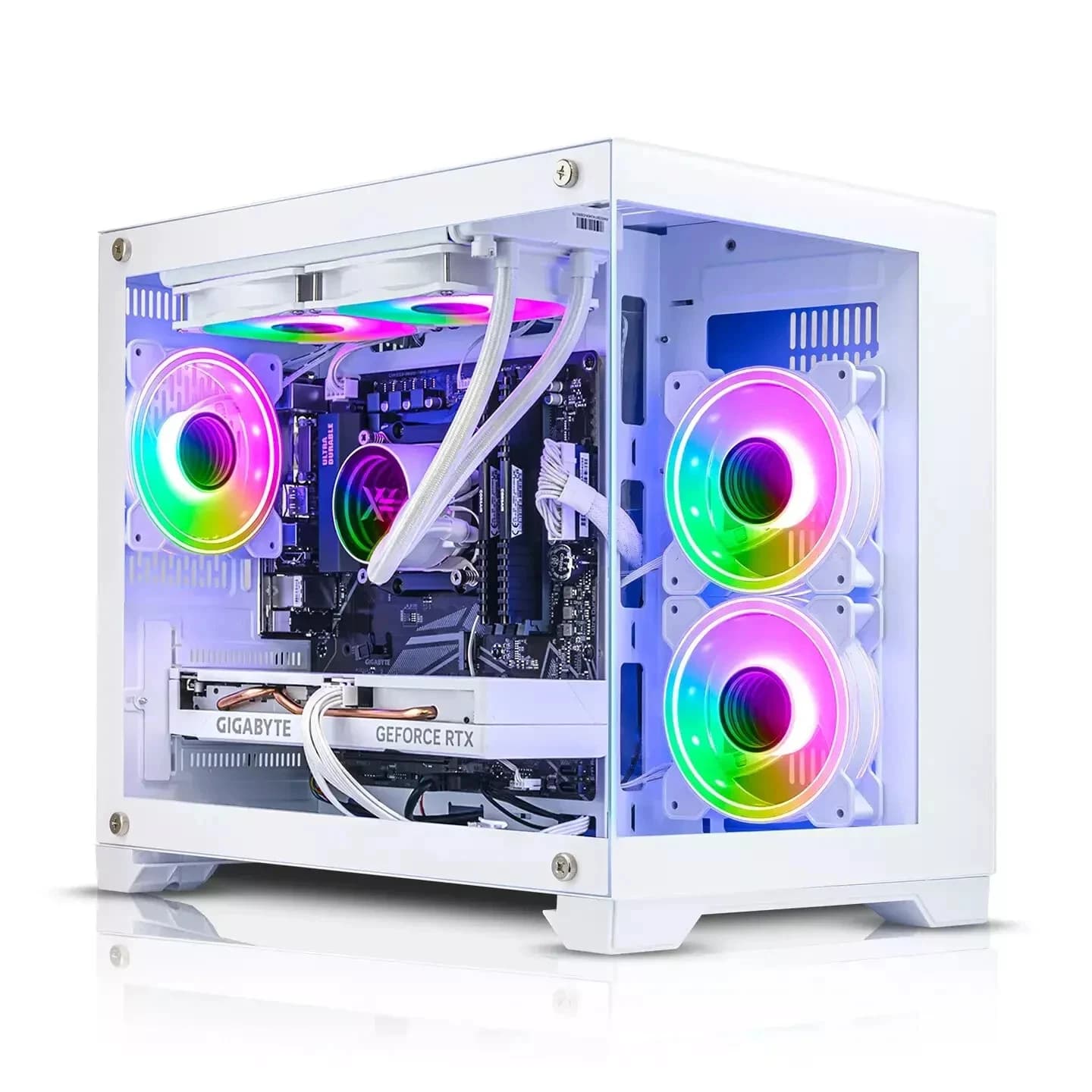
Buying a gaming PC in 2026 is easier than it has been for years. The hard part is stopping the algorithm from selling an unbalanced build. A £1,200 machine with an RTX 5070 Ti and a tired i5 will feel slower than a £900 machine that respects the ratio between processor and graphics card. This article covers what a bottleneck looks like, how it shifts from 1080p to 4K, and three pairings that make sense.
What a bottleneck actually is
A bottleneck happens when one component finishes its work and waits for another. The CPU prepares each frame (physics, AI, draw calls) and hands it to the GPU, which renders pixels. If the CPU cannot prepare frames fast enough, the GPU sits idle. The bottleneck is the slower of the two.
A balanced system in MSI Afterburner shows GPU usage between 95 and 99 percent and the CPU between 40 and 70 percent. If the GPU is stuck at 60 percent while a CPU core pins at 100 percent, that is a CPU bottleneck. Reversed figures point to a GPU bottleneck, which is the healthier of the two.
How resolution changes the picture
Resolution is the biggest lever. As pixel count rises, the GPU works harder per frame while the CPU workload stays roughly constant. That is why an ageing processor can look acceptable at 4K.
At 1080p on a 240Hz panel the CPU matters enormously. Counter-Strike 2, Valorant and Fortnite push above 300 fps, and each frame is a draw call the processor must prepare. A Ryzen 5 5600 hits around 340 to 380 fps in CS2 at 1080p low; a Ryzen 7 7800X3D can push past 550 fps.
At 1440p the balance evens out. In Cyberpunk 2077 with ray tracing medium and DLSS Quality, a 5600 paired to an RTX 5070 Ti lands between 78 and 92 fps. Upgrading only the processor to a 5800X3D moves the average to roughly 95 to 105 fps.
At 4K the GPU dominates. That same Cyberpunk scene lands in the mid 50s on a 5070 Ti regardless of whether the CPU is a 5600 or a 7800X3D. Anything beyond a modern six core is largely wasted unless video work is also on the table.
Pairing one: Ryzen 5 5600 with RTX 4060
The 5600 remains the value champion of 2026. Six Zen 3 cores at 4.4GHz boost, 32MB of L3, DDR4-3200. Paired with an RTX 4060 it delivers 100 to 140 fps at 1080p high in Call of Duty, Apex Legends and Fortnite, and 60 to 80 fps in Cyberpunk 2077 at high with DLSS Quality. GPU utilisation sits at 96 to 99 percent. A tuned build lands around £650 to £780.
Buy this pairing for a 1080p 144Hz or 165Hz monitor. The extra £120 for a 5800X3D delivers negligible gains in the games this GPU can drive.
Pairing two: Ryzen 7 5700X with RTX 5070 Ti
The 5070 Ti is the card most buyers should be looking at in 2026: 16GB VRAM, competent ray tracing, and it slots into an AM4 platform without the DDR5 tax. The 5700X (eight Zen 3 cores at 4.6GHz boost) keeps up with it well at 1440p. Expect 140 to 170 fps in Warzone, 110 to 130 fps in Battlefield 2042 at ultra, and 85 to 100 fps in Cyberpunk 2077 with ray tracing medium and DLSS Quality. A balanced build lands around £1,050 to £1,250.
The 5700X is chosen over the 5800X3D deliberately. In pure gaming the X3D is faster, but the £90 gap is better spent on a 1440p 180Hz panel.
Buy the tested unit
The configuration above, Ryzen 7 5700X and RTX 5070 Ti with 32GB DDR4-3600, 1TB NVMe and a twelve month warranty, is available now.
View the tested Ryzen 7 with RTX 5070 Ti gaming PC
Pairing three: Intel i7-14700 with RTX 5080
At 4K the calculation changes. Ray tracing pushes the GPU to the front of the queue, so an RTX 5080 makes sense. The i7-14700 (twenty cores at up to 5.4GHz) is chosen for productivity, not a raw gaming lead. In Alan Wake 2 at 4K with DLSS Balanced and path tracing on, expect 55 to 68 fps. In Baldur's Gate 3, 90 to 110 fps at 4K ultra. In Flight Simulator 2024 the 14700 pulls ahead of a 5800X3D on single thread performance.
A cooled 14700 with an RTX 5080, 32GB DDR5-6000 and a 2TB Gen4 NVMe lands between £1,850 and £2,150 refurbished. If 4K video editing is also on the table, the productivity headroom justifies the premium.
When to prioritise CPU over GPU
At 1080p 240Hz for competitive shooters, prioritise the CPU: a 5800X3D with a modest RTX 4070 will feel snappier than a 5600 with a 5070 Ti. At 1440p 165Hz, aim for balance, roughly two thirds of the budget on the GPU. At 4K, put every spare pound into the graphics card. Simulators and grand strategy are the exceptions, both are CPU heavy at any resolution.
Frequently asked questions
Do bottleneck calculators on the web actually work?
Not reliably. Most use a blended score that ignores resolution and game engine. A calculator might report 22 percent bottleneck between a 5600 and a 5070 Ti at 1080p, which is true in CS2 but meaningless in Cyberpunk at 4K. Treat them as a rough sanity check, then look up real benchmarks.
Will faster RAM fix a CPU bottleneck?
Sometimes. On AM4, moving from DDR4-2666 to DDR4-3600 with tightened timings can add 5 to 12 percent in CPU limited titles. On AM5 and modern Intel, DDR5-6000 CL30 is the sensible target. It will not close the gap between a 5600 and a 7800X3D, but it is close to free performance.
Is a used 5800X3D still a good buy in 2026?
Yes, for pure gaming at 1080p and 1440p high refresh. The 96MB of stacked L3 cache continues to punch above its weight in titles that lean on cache locality. Second hand prices sit around £180 to £220. Pair it with an existing AM4 board rather than jumping to AM5.
How do I check if my current PC is bottlenecked?
Install MSI Afterburner with RivaTuner Statistics Server and enable the on screen display for per thread CPU usage, GPU usage and frame rate. Run a demanding scene. If GPU usage sits below 95 percent while a CPU thread pins at 100 percent, that is a CPU bottleneck. Otherwise the graphics card is the limit.
Does DLSS or FSR change the bottleneck calculation?
Yes. Upscaling reduces the internal render resolution, shifting workload back to the CPU. DLSS Quality at 4K renders at 1440p, so a slow CPU hidden by GPU limitation may become visible. On paired hardware this is rarely a problem.
About Birmingham AV
Birmingham AV is a refurbished PC and laptop specialist in Bromsgrove, Worcestershire. We have sold over 87,000 items and hold 24,756 buyer feedbacks at 98.9 percent positive on eBay. Every desktop and laptop ships with a twelve month warranty, is tested against a fixed benchmark suite before dispatch, and leaves our workshop with a fresh Windows installation. Companies House 12383651. VAT GB 348755066.