Dust filters, positive pressure, and long-term cleanliness
Dust is the quiet killer of thermals and fan bearings. Positive pressure with the right mesh keeps a case genuinely clean for years, not weeks.
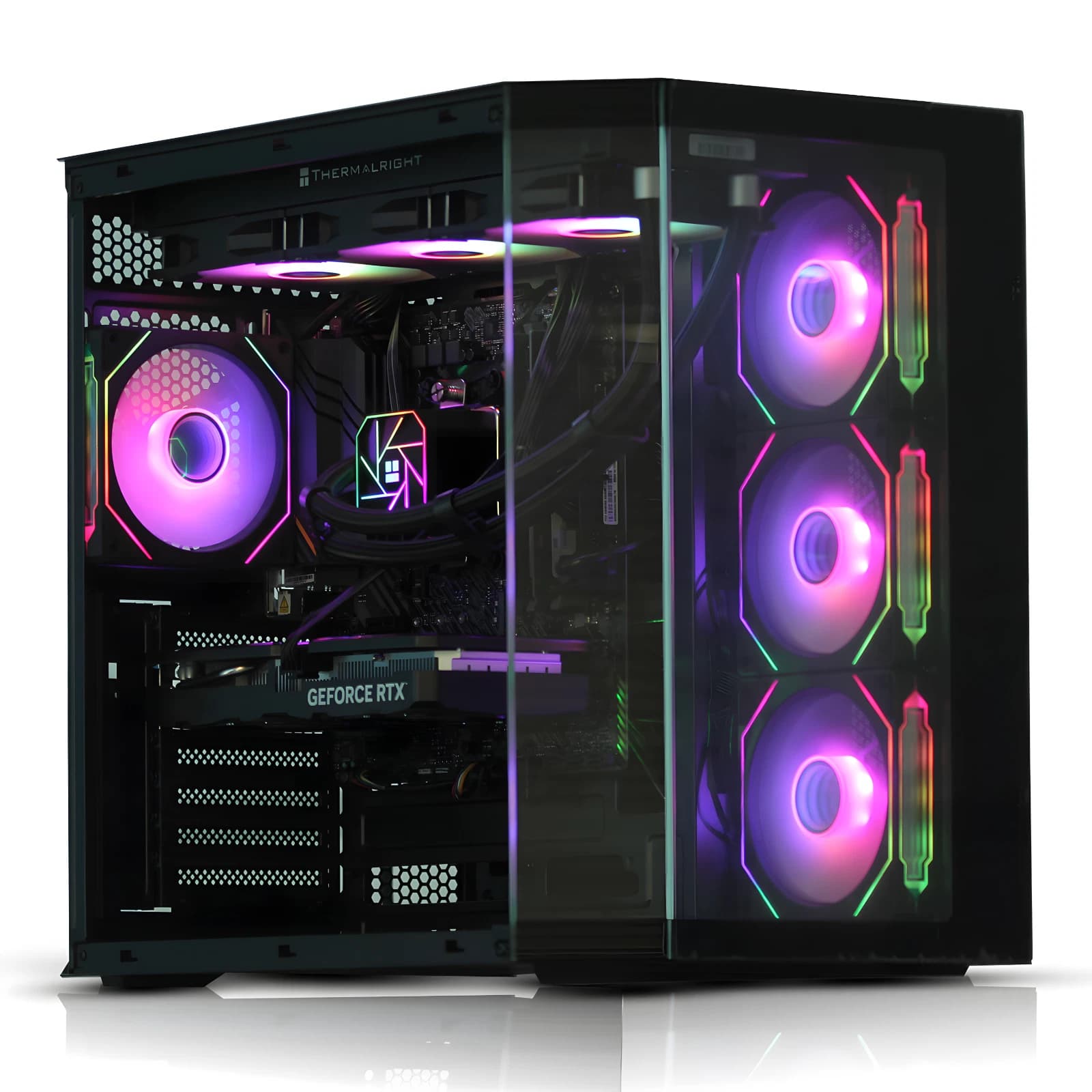
Every PC pulls in air, and therefore pulls in dust. A tower on carpet accumulates more debris in six months than a shop display sees in two years. Filtration is one of the cheapest, highest impact upgrades available, provided the airflow physics is set up correctly.
Why negative pressure is a mistake
Negative pressure means the case exhausts more air than it intakes. The differential fills by air sneaking in through every gap available: the rear I/O shield, unused PCIe slot covers, the seam between side panel and frame, gaps around the front USB header, and any unpopulated fan mounts. None of those gaps have filters. Every one is a dust intake.
The result is grey fuzz on heatsink fins, the GPU shroud, and inside the PSU within weeks. Owners blame the case or the location. The real culprit is airflow direction: a negative pressure build guarantees dust bypasses whatever filter is fitted at the front, because air enters through the back and sides instead.
Positive pressure inverts this. Intakes exceed exhausts, the case pressurises very slightly, and air only leaves through deliberate exhaust points. Every cubic centimetre of incoming air is forced through the chosen filter mesh.
Getting the fan balance right
A workable starting point is two 120 mm intakes at the front and one 120 mm exhaust at the rear. If the case has a top mount, leave it empty or fit a blanking plate. Top exhausts pull heat efficiently but push the balance back toward neutral or negative.
If a hot CPU cooler demands a top fan, add a third front intake or step the front fans up to 140 mm. Keep the ratio at roughly 1.3 to 1.5 units of intake per unit of exhaust.
Static pressure matters more than raw CFM once filters are fitted. A fan rated at 65 CFM with low static pressure loses a third of its throughput behind fine mesh. Noctua NF-P12 or Arctic P12 class fans, both above 2.0 mm H2O, hold their numbers far better through filter material.
Filter mesh types, ranked by real world use
Four mesh categories turn up on consumer cases and aftermarket panels.
Coarse steel mesh, stamped into the front panel of budget cases, blocks pet hair and lint but lets fine household dust through. Treat it as a pre filter and add something behind it.
Nylon mesh, typically 200 to 400 microns, is the most common magnetic filter material. It catches the majority of visible dust, cleans easily under a tap, and lasts for years. Airflow loss is around 5 to 10 percent. This is the sweet spot for most builds.
PET foam, sometimes marketed as reticulated foam, blocks finer particles at the cost of 15 to 25 percent airflow reduction and a shorter service life. Foam degrades under UV and heat, going brittle after two or three years. Use it only in workshop environments with sawdust or plaster dust.
HEPA grade material (H11 to H13) is overkill for a domestic PC and will strangle intake fans below usable range.
Cleaning frequency, honestly stated
A positive pressure build with nylon magnetic filters in a normal UK household needs the front panel filter rinsed every 8 to 12 weeks. Kitchen or open plan living rooms with cooking grease in the air pull that closer to 6 weeks. Homes with two or more shedding pets, closer to 4 weeks. Bedrooms with hard flooring and no pets can stretch to 16 weeks.
The internal deep clean (heatsink fins, GPU fans, PSU intake) drops from an annual chore to a two or three year job on a properly filtered positive pressure build. That is the payoff.
Rinse filters under warm water, no detergent. Air dry before refitting. Never run a filter through a dishwasher: the mesh distorts and the magnetic strip delaminates.
Why BAV pre-built systems get this right
Every refurbished tower that leaves the Bromsgrove workshop is dust cleaned end to end before rebuild: fresh thermal paste on the CPU, GPU shroud pulled and fan blades wiped, PSU internals blown out with compressed air, and a fresh filter panel where the case supports one. Fan configuration is set to positive pressure at the bench.
The current refurbished tower range, spanning entry level office builds through i7 gaming towers, includes either front mounted magnetic filters or removable dust guards on the primary intake. Variations cover storage from 256 GB SSD up to 2 TB NVMe, RAM from 8 GB DDR4 up to 32 GB DDR5, and GPU options from integrated graphics through to RTX 3060 and 4060 class cards. Filtration is consistent across the range regardless of price point.
FAQ
How often should filter mesh be replaced rather than rinsed?
Nylon magnetic filters last five to seven years of fortnightly cleaning before the mesh softens and sags. Foam panels need replacement every two to three years because the material breaks down. Coarse steel mesh effectively lasts the life of the case.
Can positive pressure work without any filters?
Yes, and it still helps because exit points are deliberate rather than random gaps, but most of the cleanliness benefit is lost. The point is that all incoming air passes through the chosen filter medium. Without a filter, all that has been achieved is a more predictable dust deposition pattern.
Does positive pressure hurt cooling performance?
Not measurably in a balanced build. The 1.3 to 1.5 intake to exhaust ratio still moves plenty of air, and temperatures typically sit within one or two degrees of a neutral setup. The trade off is heavily in favour of positive pressure once long term dust buildup on the heatsink is factored in.
What if a case only has one front intake mount?
Add filtered side or bottom intakes with magnetic panels, or upgrade to a case that supports at least two front fans. Small form factor cases with a single 120 mm intake are the hardest to run positive, and in those a foam pre filter is often the best compromise.
About Birmingham AV
We have sold over 87,000 items on eBay UK since 2017 under the Midlands AV storefront, with 24,756 buyer feedbacks running at 98.9 percent positive. Every refurbished tower ships with a twelve month warranty. Birmingham AV Ltd is Companies House 12383651, VAT GB 348755066, based in Bromsgrove, Worcestershire. We are one of the highest volume refurbished PC operations on eBay UK, and every unit passes through the same bench process regardless of ticket price.