DLSS 4 vs FSR 4 vs XeSS 3: frame gen explained in 2026
Multi frame generation has landed on all three vendors. Here is how DLSS 4, FSR 4 and XeSS 3 actually compare in 2026, and which GPU to buy for each.
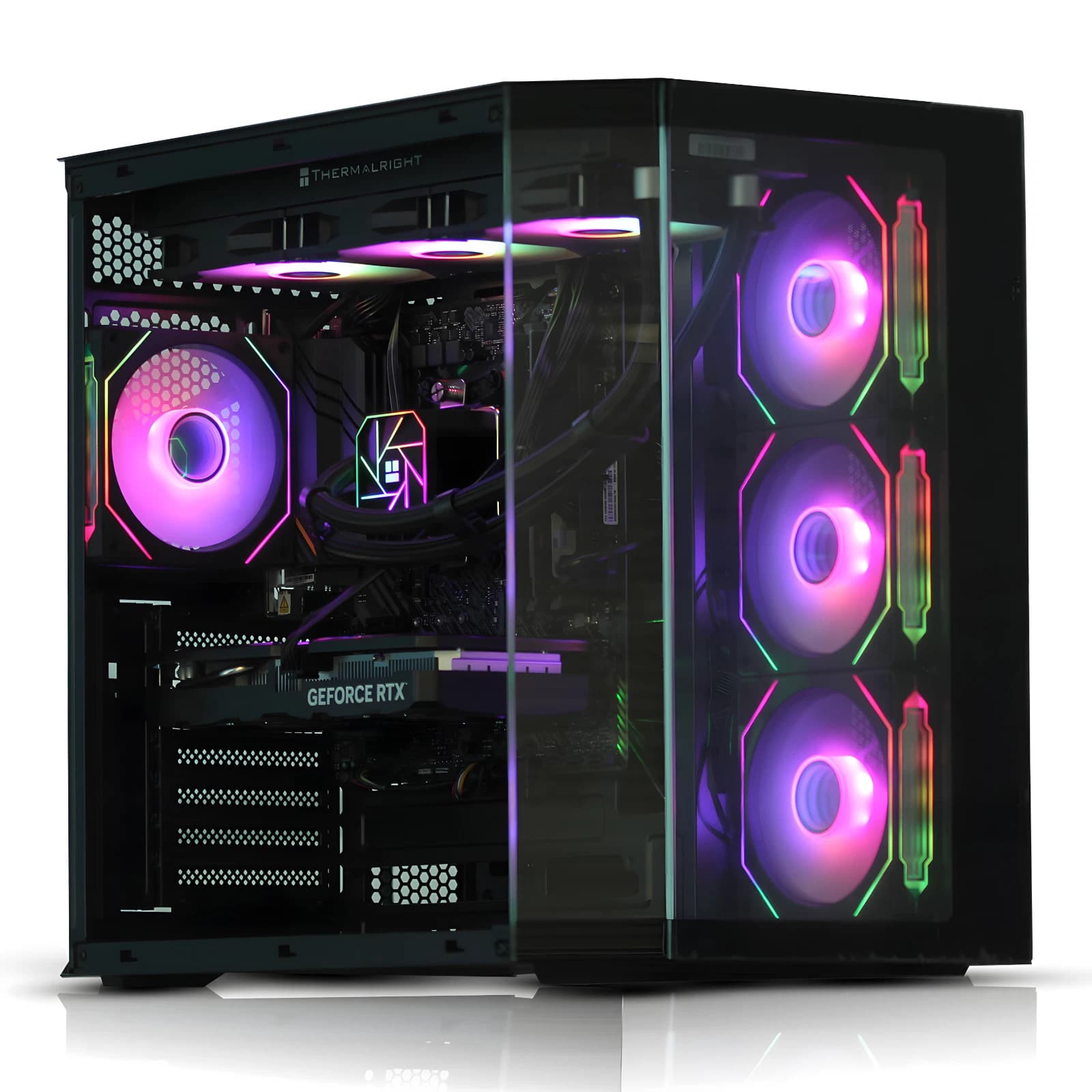
Frame generation is now the load bearing feature that lets a mid range card push 4K at high refresh, and every vendor ships a multi frame variant in 2026. Buyers ask three things: which looks best, which runs on my card, and is the uplift real. Here is where DLSS 4, FSR 4 and XeSS 3 stand today.
What multi frame generation actually is
Single frame generation, which shipped in 2023, inserted one AI generated frame between every pair of rendered frames. Multi frame generation inserts up to three, so a game rendering natively at 40fps can present at 120fps or, in aggressive modes, 160fps.
Rendered frames still do physics, hit detection and input sampling. Generated frames are pure visuals from an optical flow model. That is why base framerate still governs how the game feels.
DLSS 4: still the reference implementation
DLSS 4 runs on GeForce RTX 50 series cards, with multi frame mode gated to Blackwell silicon. The transformer model that arrived with the 4 series is now mature, and the frame pacing work in the 576 driver family removed most of the judder that plagued early builds.
DLSS 4 with multi frame gen produces the cleanest output of the three, particularly on fine detail like chain link fences, distant foliage and UI text over motion. Ghosting on transparent particles is close to invisible. Reflex 2 keeps latency responsive, typically 35 to 55 milliseconds end to end at 4K on an RTX 5070 Ti.
The catch is availability. DLSS 4 is Nvidia only, and the multi frame mode is Blackwell only, so RTX 40 owners get the improved upscaler but not the 3x or 4x frame gen.
FSR 4: AMD finally shipped a neural upscaler
FSR 4 closed the visual gap. Previous FSR generations relied on hand tuned filters that struggled with disocclusion and shimmering. FSR 4 uses a neural network trained on rendered ground truth, and the stability improvement is immediately visible.
Multi frame generation on FSR 4 supports 2x and 3x modes. Frame pacing is good on Radeon RX 9000 series cards. On older RDNA 3 cards the 2x mode is available but the 3x mode is not, and pacing can wobble on high refresh panels.
AMD kept the open standard commitment, so FSR 4 runs cross vendor on any DirectX 12 GPU that meets the shader model requirement, though best results are on RDNA 4. If you are buying a Radeon RX 9070 or RX 9070 XT, FSR 4 is the intended pairing and image quality is genuinely close to DLSS 4 in most engines.
Working out which card fits your budget? See the current RTX 5070 Ti build on our eBay store for a ready to run configuration with the current DLSS 4 stack in place.
XeSS 3: the vendor agnostic sleeper
Intel XeSS has two paths: XMX on Arc GPUs, and DP4a on everything else. XeSS 3 keeps that split and adds multi frame generation for the Arc B series (Battlemage) cards.
On an Arc B580 or B770 the XMX path produces upscaled output clearly ahead of the DP4a fallback and, in some titles, within touching distance of DLSS 4. Frame generation on Battlemage is limited to 2x today, with a 3x preview flagged in Intel's driver notes.
The genuinely useful trait of XeSS 3 is the DP4a mode. On a GeForce RTX 4060 or a Radeon RX 7600, if a game ships XeSS but not FSR 4, you get a working upscaler that beats older FSR builds. That makes XeSS a quiet insurance policy on non Arc systems.
Which one wins in which game
Vendor choice is often decided by the games you actually play. Cyberpunk 2077, Alan Wake 2 and Black Myth Wukong lean hardest into DLSS 4. Battlefield and Call of Duty ship all three, and the gap between DLSS 4 and FSR 4 in those engines is small enough that GPU price decides the buy. Starfield, Avatar and the Ubisoft catalogue have solid FSR 4 support and patchy DLSS integration, so a Radeon RX 9070 XT often outperforms a similarly priced GeForce.
Competitive shooters (Counter Strike 2, Valorant, Apex Legends) run at framerates where frame generation adds latency without visual benefit. Turn it off and the vendor debate stops mattering.
The BAV RTX 5070 Ti build
For most buyers the sensible landing spot in 2026 is a GeForce RTX 5070 Ti build. It handles 4K with DLSS 4 multi frame gen on every major title, drops to 1440p native without upscaling, and pairs cleanly with a Ryzen 7 9700X or Core Ultra 7 265K.
Prices at Birmingham AV for a full RTX 5070 Ti build sit in the £1,299 to £1,699 range depending on CPU, storage and memory. Listing variations cover 32GB and 64GB DDR5, 1TB and 2TB NVMe, and both Ryzen and Core Ultra platforms. Every unit ships with a twelve month warranty and is tested against the DLSS 4 workload before dispatch.
FAQ
Does frame generation make games feel smoother?
Above roughly 40fps base render rate, yes. Below that, input latency feels worse than the frame count suggests, because inputs are tied to the real render loop. Aim for a base of 45 to 60fps before enabling multi frame gen.
Can I use DLSS 4 on my RTX 4070?
You get the DLSS 4 upscaler and Ray Reconstruction, but not multi frame generation. Multi frame gen is Blackwell only. Single frame gen still works on the RTX 40 series and is a substantial uplift on its own.
Is FSR 4 worth switching to a Radeon for?
If you already own a recent GeForce, no. If you are buying new in the £500 to £800 bracket, an RX 9070 XT is competitive with an RTX 5070 in raster and pairs with FSR 4 that most players will not distinguish from DLSS 4 in motion.
Should I use multi frame gen for online shooters?
Not for competitive play. The generated frames add 8 to 15 milliseconds of latency, and in Counter Strike 2 that is enough to notice. Use native rendering with Reflex or Anti Lag 2 instead.
About Birmingham AV
Birmingham AV has sold over 87,000 items on eBay since 2017 with 24,756 buyer feedbacks at 98.9% positive, making us one of the highest volume refurbished PC operations on eBay UK. Every build ships with a twelve month warranty and is tested to full load before dispatch. Companies House 12383651, VAT GB 348755066, based in Bromsgrove, Worcestershire.