Building a small form factor PC: 2026 guide
A confident walkthrough of the ITX cases worth buying in 2026, the thermal maths behind them, and the components that actually fit.
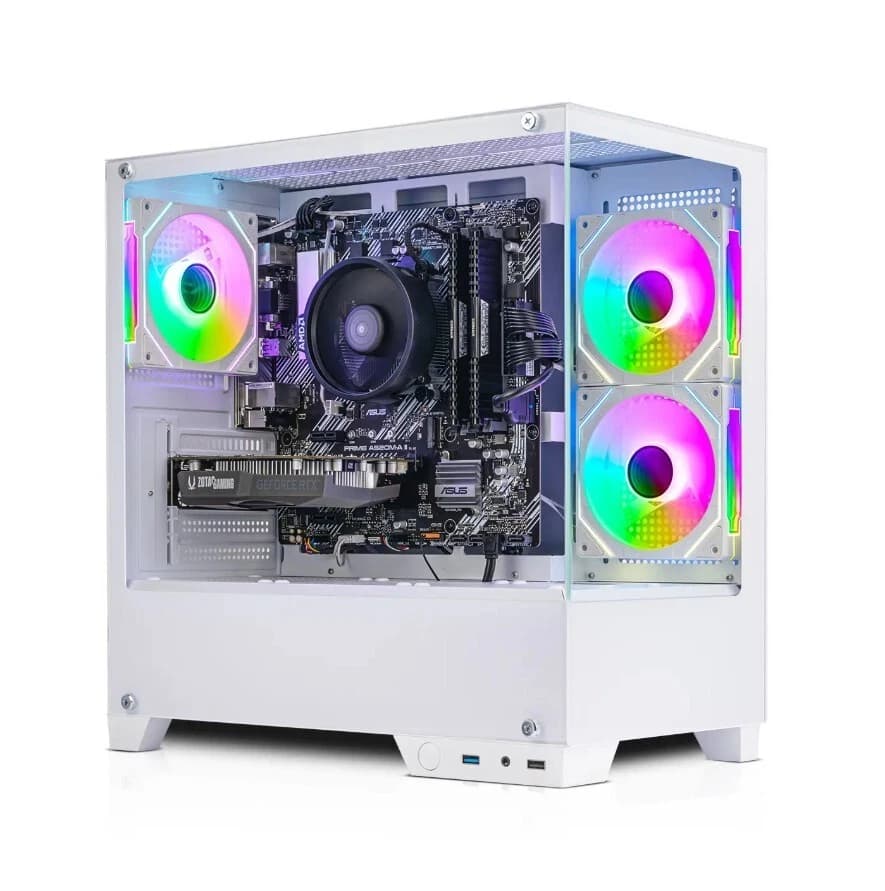
Small form factor building has moved from niche hobby into something close to mainstream. In 2026 you can fit a Ryzen 9 or an RTX 5080 into a shoebox-sized case and keep noise below 40 dBA under load. Trade-offs have shrunk, but not disappeared. This guide covers the ITX cases worth considering, the thermal reality behind each, and the components that actually fit.
Why small form factor in 2026
The pitch has changed. A few years ago SFF was about cramming a mid-range build into a cube for LAN parties. Today it is about desk footprint, cable tidiness, and shifting a desktop off the floor. GPU length and cooler height are no longer the constant blockers they once were, because both AMD and Nvidia have released shorter reference-length cards, and low-profile coolers have caught up with the 200 watt to 230 watt envelopes modern chips demand.
Prices have settled too. A quality ITX case now sits between £110 and £260, an ITX motherboard between £200 and £380, and an SFX or SFX-L power supply between £130 and £220. Budget slightly above a standard ATX build.
The three cases that matter
Three chassis dominate serious SFF conversations in 2026, and each solves a different problem.
Fractal Design Terra is a 10.4 litre wood-and-aluminium case with a sandwich layout, a repositionable spine that trades GPU room for CPU cooler height, and support for GPUs up to 322 mm long. It is the case for someone who wants a PC that looks like furniture. Thermals are respectable rather than exceptional, because airflow relies on side ventilation.
Louqe Ghost S1 remains the boutique choice at around 8.2 litres in its base configuration, scaling up with Top Hat extensions if you need extra cooling volume. Build quality is exceptional, the aluminium is thick, and the internal chimney design pulls heat through the case predictably. It costs more (typically £260 on the current MK III revision) and demands patience during assembly.
Cooler Master NR200P and its V2 refresh are the sensible entry point. At around 18.25 litres it is closer to mini-tower than true SFF, but it accepts standard ATX power supplies, air coolers up to 155 mm tall, and 330 mm GPUs. Street price sits between £95 and £120, which makes it the first case most builders should look at.
Thermal considerations
Volume dictates thermal headroom. In an 8 to 10 litre case, expect CPU package temperatures 8 to 15 degrees higher than the same parts in a mid-tower, and GPU hotspot temperatures 5 to 10 degrees higher. That is not a fault, it is physics.
Two rules matter:
- Match your CPU cooler to realistic wattage, not the chip's peak. A Ryzen 7 9700X pulling 105 watts sustained cools comfortably in a Noctua NH-L12 Ghost S1 edition or a Thermalright AXP120-X67. A 9950X pulling 200 watts needs a 240 mm AIO.
- Keep GPU intake unobstructed. In sandwich cases like Terra and Ghost S1, leave at least 60 mm clearance behind the side panel or expect a 4 to 6 degree hotspot penalty.
Undervolting is the SFF builder's best friend. The RTX 5070 Ti and 5080 hold within 2 percent of stock at 85 percent power target, cutting exhaust temperatures by 4 to 7 degrees and dropping fan noise by roughly 6 dBA.
Component selection
For a balanced 2026 SFF gaming build in the 10 to 20 litre range, the following combinations are defensible.
Entry: Ryzen 5 7600, B650I motherboard, 32 GB DDR5 6000, RTX 5060 Ti 16 GB, 1 TB Gen4 NVMe, 750 W SFX. Around £1,150 in parts.
Mid: Ryzen 7 9700X, X670E ITX motherboard, 32 GB DDR5 6400, RTX 5070 Ti, 2 TB Gen4 NVMe, 850 W SFX-L. Around £1,750 in parts.
High: Ryzen 9 9950X or Core Ultra 9 285K, X870E or Z890 ITX, 64 GB DDR5 6400, RTX 5080, 2 TB Gen5 NVMe, 1000 W SFX-L. Around £2,600 in parts.
If component sourcing, testing and warranty admin are worth avoiding, take a look at the current Birmingham AV small form factor pre-built listings. Configurations vary by stock, covering both mid and high tier specs above, all built, tested and burned-in before dispatch, with a twelve month warranty attached.
Power supply and cables
SFX and SFX-L units from Corsair (SF750, SF1000L), Silverstone (SX1000), and Cooler Master (V850 SFX Gold) are the tested picks. Avoid unbranded modular kits. Custom-length cables from CableMod or Pexon add £50 to £90 but resolve most airflow complaints in sandwich cases.
Assembly order that saves time
Build outside the case first. Mount CPU, cooler, RAM and NVMe on the motherboard, then test-boot on a bench. Only after POST should you commit to the chassis. In tight cases like the Ghost S1 and Terra, disassembly to fix a bent pin or a bad memory stick costs 30 to 45 minutes each time.
FAQ
Is an SFF build louder than a mid-tower?
Under identical component load, yes, by roughly 3 to 5 dBA. Smaller fans spin faster to move the same volume of air. Choosing 120 mm fans over 92 mm where the case allows, and undervolting the GPU, closes most of the gap.
Can I fit an RTX 5090 in an ITX case?
In practice, no. The reference 5090 is 304 mm long and 137 mm wide, but the width breaks compatibility with almost every true sub-15 litre chassis. The NR200P will accept it with a 3-slot riser workaround. The Terra, Ghost S1, and similar sandwich designs will not.
Do I need liquid cooling for a Ryzen 9 in SFF?
For the 9950X, yes if you want sustained all-core boost. A 240 mm AIO in an NR200P holds package temperatures around 82 degrees during Cinebench R23. Air cooling in a Ghost S1 will hit thermal throttling at 95 degrees within two minutes of the same workload.
What is the cheapest sensible SFF build in 2026?
An NR200P with a Ryzen 5 7600, B650I board, 32 GB DDR5, RTX 5060 Ti and a 750 W SFX Gold PSU lands around £1,100 in parts. Below that budget the value case for SFF weakens, and a standard micro-ATX build in a Fractal Pop Mini becomes the more sensible choice.
About Birmingham AV
We have sold over 87,000 items on eBay since 2017, hold 24,756 buyer feedbacks at 98.9% positive, and back every desktop and laptop we ship with a twelve month warranty. Companies House 12383651, VAT GB 348755066, based in Bromsgrove, Worcestershire. One of the highest volume refurbished PC operations on eBay UK.