Best PC for emulation: Yuzu, Cemu, RPCS3 in 2026
Emulation punishes weak single thread performance and stingy memory. A Ryzen X3D build with proper VRAM headroom fixes both, and it does not need to cost a fortune.
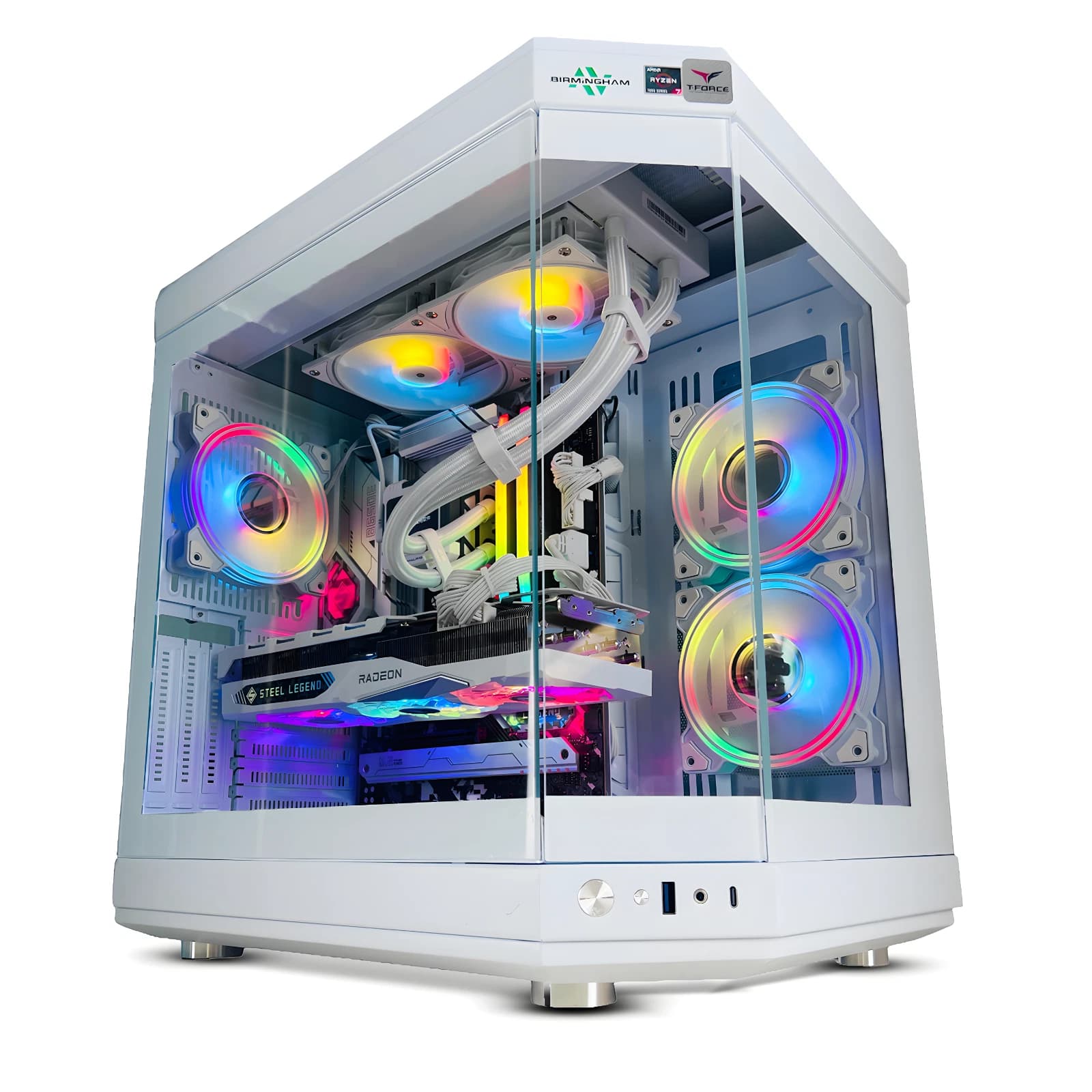
Emulation has quietly become one of the most demanding workloads a home PC will face. A modern console game running through Yuzu, Cemu, or RPCS3 is recompiled on the fly, translated across instruction sets, and pushed through a graphics API never designed for it. Get the hardware wrong and you get stutters, shader hangs, and audio pops. Get it right and you get Nintendo Switch, Wii U, and PlayStation 3 titles at resolutions the original hardware could never dream of.
This guide covers what matters in 2026, why AMD's X3D chips have pulled ahead, and what to look for in a build that will last the next few years.
Why emulation is a single thread problem first
Emulators spend most of their time on one or two very hot threads. The dynamic recompiler (dynarec) that translates guest CPU instructions into host x86 cannot easily be parallelised. Yuzu, Cemu, and RPCS3 live or die by how fast your CPU chews through that hot thread.
Raw core counts matter less than you might expect. A 16 core chip with weak per core throughput loses to an 8 core chip with excellent single thread performance in almost every emulator benchmark. What you need is high instructions per clock, high sustained boost, and plenty of L3 cache close to those cores.
The Ryzen X3D advantage explained
AMD's 3D V-Cache chips stack extra L3 directly on top of the CCD. The 5800X3D shipped with 96MB of L3, and the 7800X3D and 9800X3D pushed the same idea onto newer platforms. In gaming this is a five to twenty percent uplift over non X3D siblings. In emulation the gap is often larger.
Recompilation workloads thrash the cache constantly. The dynarec generates new code, invalidates old code, and jumps around a large working set of translated blocks. When that working set fits inside L3 rather than spilling to main memory, latency drops through the floor. RPCS3 in particular has been documented showing thirty to forty percent frame time improvements on X3D chips at the same clock. For Yuzu, Cemu, and RPCS3, an X3D chip is the single biggest performance decision you will make.
RAM: 32GB is the new floor
Sixteen gigabytes was enough for emulation five years ago. It is not now. Yuzu with high resolution mods, texture packs, and a browser open in the background will consume 12 to 14GB on its own. RPCS3 with Demon's Souls at 4K internal resolution pushes past that.
The sensible target for a 2026 build is 32GB of DDR4 3200 or DDR5 6000, depending on the platform. Dual channel is mandatory. Single stick configurations cripple memory bandwidth, and emulation notices immediately. 32GB also leaves room for shader caches and the inevitable creep in emulator memory footprints as accuracy improves.
VRAM headroom, not raw GPU power
The GPU story is different from native gaming. Emulators upscale internal resolution, which multiplies the memory required for framebuffers and textures. A Switch game at 4x is effectively rendering at 3840x2160, and texture mods push VRAM higher still.
Eight gigabytes of VRAM is the practical minimum. Twelve gigabytes gives comfortable headroom for texture packs and higher upscales. A midrange card with 12GB often outperforms a faster card with 8GB in emulation, because the smaller card starts swapping textures across PCIe and grinds to a halt. Buy for the memory pool first, the core count second.
The Birmingham AV Ryzen tower on eBay UK is available in several specification variants covering different Ryzen chips, RAM tiers, and GPU pairings, all sized to this brief.
The retro handheld angle
A growing number of buyers pair an emulation tower with a retro handheld. Devices like the Steam Deck OLED, ROG Ally X, and Legion Go handle older systems beautifully but struggle with Switch and PS3 titles at higher settings. The desktop does the heavy lifting for save states, shader compilation, and configuration, and the handheld syncs the resulting profiles for portable play. Yuzu and Ryujinx sync user directories cleanly, and RPCS3 configurations transfer with a single folder copy.
The BAV Ryzen build recommendation
The current BAV recommendation sits around a Ryzen 7 X3D chip, 32GB of dual channel memory, an NVMe boot drive of at least 1TB, and a GPU with 12GB or more of VRAM. Prices typically land between £700 and £1,200 depending on GPU pairing and storage tier.
That specification runs Yuzu and Ryujinx Switch titles at 4x comfortably, Cemu Wii U games at 4K with texture packs, and RPCS3 titles at native 1080p to 1440p depending on the game. It has plenty of headroom as a general purpose gaming rig, which most buyers want as a second use case. The BAV Ryzen tower on eBay is built to this brief, with a full twelve month warranty and real emulator workload testing before dispatch.
FAQ
Is an Intel build a bad choice for emulation in 2026?
Intel's 14th and 15th generation chips are competitive on raw performance but usually lose to X3D Ryzens on cache sensitive workloads like RPCS3 and Yuzu. A cheaper used Intel build can still make sense, but for a new purchase at similar money the X3D chip is the safer bet.
How much SSD storage do I need for emulation?
A 1TB NVMe is the sensible minimum. Switch and PS3 libraries are large, and shader caches add 20 to 40GB per emulator over time. If you plan to keep multiple systems alongside a Windows Steam library, 2TB is worth the upgrade.
Do I need Windows 11 or will Linux work?
Both work well. Yuzu, Cemu, and RPCS3 all have mature Linux builds, and some users report slightly better frame pacing under Linux. Windows 11 remains the easier path for most buyers because driver and anti cheat compatibility with the rest of your Steam library are simpler.
Can I use an older X3D chip like the 5800X3D?
Yes, and it is often excellent value. The 5800X3D on AM4 with 32GB of DDR4 3600 is still a strong emulation platform in 2026, especially secondhand. The 7800X3D and 9800X3D are faster but the price gap does not always justify the uplift.
About Birmingham AV
We have sold over 87,000 items on eBay since 2017, with 24,756 buyer feedbacks running at 98.9% positive. Every PC ships with a full twelve month warranty and is tested against real workloads, not synthetic benchmarks alone. Birmingham AV Ltd is registered at Companies House under 12383651, VAT number GB 348755066, based in Bromsgrove, Worcestershire. We are one of the highest volume refurbished PC operations on eBay UK.