Best motherboard for a dual GPU AI inference rig in 2026
A workshop guide to picking a board that actually feeds two full length GPUs, with sensible PSU and chassis calls for a refurbished workstation build.
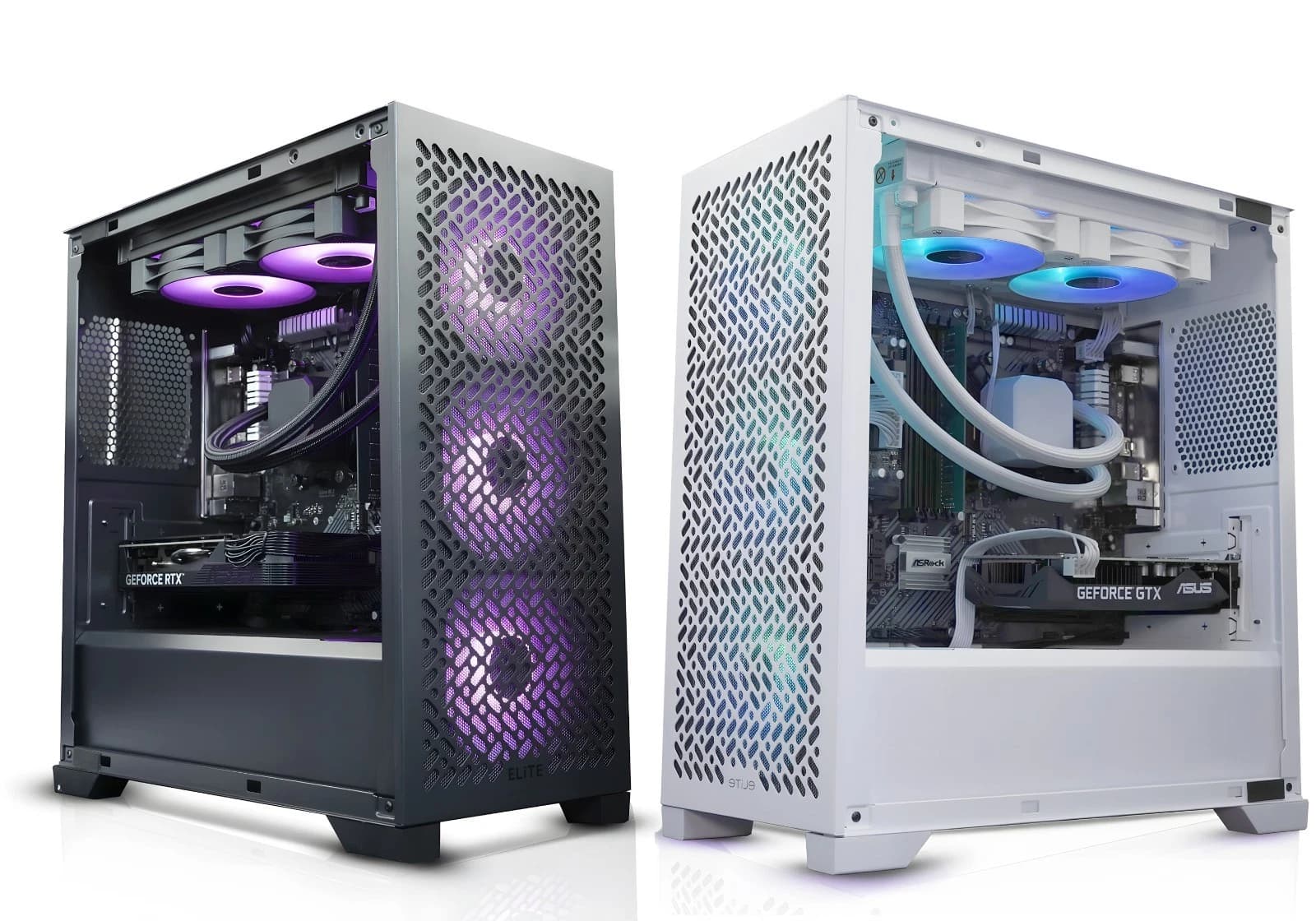
Running a pair of GPUs for local inference in 2026 is no longer fringe. A quantised 70B model on two 24GB cards, or a diffusion pipeline split across two RTX 3090s, is a realistic workshop build. The motherboard decides three things that matter more than clock speed: PCIe lanes per card, whether the cards physically coexist, and whether the platform holds under sustained load.
What dual GPU inference asks of a motherboard
Two full length GPUs consume two mechanical x16 slots, but the electrical wiring behind them varies wildly. On a consumer AM5 or LGA1700 board, the top slot is usually x16 from the CPU and the second is either x4 from the chipset or shares lanes with the top, splitting to x8/x8. For inference, x8/x8 PCIe 4.0 is fine. Chipset x4 routing for the second card is not fine if you plan to shard a model with tensor parallelism, because the interconnect becomes the bottleneck. If the second card only ever runs a separate model, even a x4 slot will hold. Know which pattern you are building for.
Consumer boards worth a look
On AM5, the ASUS ProArt X670E Creator remains the practical pick. Its top two PCIe 5.0 slots run at x8/x8 when populated, with real spacing between them, dual Thunderbolt 4, and a VRM that handles a Ryzen 9 7950X or 9950X. Street price £480 to £540 in 2026. The Gigabyte X670E Aorus Master is the alternative if Thunderbolt is not a priority: same x8/x8 split, stronger rear IO, £380 to £430.
On LGA1700 (still viable second hand), the ASUS ProArt Z790 Creator WiFi mirrors the same approach with PCIe 5.0 x8/x8 across the top two slots. Refurbished units land at £250 to £320 and pair well with a used i9 13900K or 14900K.
None of these are true workstation boards. They run two 3090s or two RTX 4090s cheerfully, but for three cards or full PCIe 5.0 x16 to each slot with ECC, step up to HEDT.
Browse workstation grade dual GPU capable barebones and boards on our Midlands AV eBay store.
HEDT boards for anyone going past two cards
If the roadmap includes a third card, look at Threadripper 7000 (TRX50 or WRX90) or refurbished Xeon W-3400. The ASUS Pro WS TRX50-SAGE WiFi runs four PCIe 5.0 x16 slots and gives every card the lanes it wants, £900 to £1,100 new. For a leaner budget, refurbished Xeon W-2400 and W-3400 barebones get you 48 to 64 PCIe 5.0 lanes for well under the cost of a new HEDT board alone.
PCIe lane allocation, plainly
The workshop rule of thumb:
- Two cards, single model sharded across both: insist on x8/x8 from the CPU.
- Two cards, one model each, no cross card traffic: x16/x4 is acceptable for the smaller workload.
- Three or more cards: consumer platforms run out of runway. Move to Threadripper or Xeon W.
PCIe 4.0 x8 delivers around 16 GB/s and 5.0 x8 doubles that. For a llama.cpp or vLLM workload at 4 bit, the interconnect matters most during model load and tensor parallel steps. Batched serving on one model per card and you will barely notice x8 versus x16.
PSU headroom that will not clip
Two RTX 3090s can pull 700W between them under sustained inference, and transient spikes on Ampere and Ada cards are notorious. Sizing rules:
- Two 3090s or two 4090s: 1300W minimum, 1600W comfortable. ATX 3.1 with native 12V-2x6.
- Two RTX 5080 or 5090 class cards: 1600W is the floor. Do not stretch a 1000W unit.
- Two RTX 3060 12GB or 4060 Ti 16GB (a sensible budget pair): 850W to 1000W is plenty.
Corsair AX1600i, Seasonic PRIME PX-1600, and be quiet Dark Power Pro 13 come back for repeat builds. £320 to £480 depending on wattage.
Chassis fit: why refurbished workstation cases win
Most consumer cases will not comfortably fit two triple slot cards with any air between them. The top card cooks. Three families worth hunting refurbished:
- HP Z840 and Z8 G4: full ATX capable with an adapter, 1125W and 1450W redundant PSUs, and space for two full length cards with a slot gap between them. Bare chassis £120 to £220.
- Dell Precision T7910 and 7920: sold as barebones (chassis, PSU, motherboard tray) from £180 to £320. Xeon socketed, so the platform comes with the case.
- Lenovo ThinkStation P720 and P920: excellent thermals, tool free bays, and a rear duct that helps the top GPU breathe. £250 to £400 for a complete barebones.
The catch: HP and Dell chassis often use proprietary PSU and motherboard form factors. If you are buying just the case for a consumer board, verify the standoffs and PSU cutout first. Buy the full barebones and the problem goes away. Two full length GPUs stacked directly together will thermal throttle, so aim for at least one empty slot between them, or use a vertical mount for the second card with a PCIe 4.0 riser.
FAQ
Is PCIe 5.0 worth paying for on an inference rig?
For two cards running one model each, no. For two cards running one sharded model with tensor parallelism, PCIe 5.0 x8 gives real headroom over 4.0 x8. Take it if the board and CPU support it, but do not pay hundreds of pounds extra for a data parallel workload.
Can I use two different GPUs in the same rig?
Yes, for independent workloads: two different cards can each host a separate model. For a single sharded model, mixed GPUs cause pain because VRAM asymmetry forces uneven sharding and mismatched compute stalls the faster card. Match cards where possible.
Do I need ECC memory for local inference?
Not for inference itself. Model weights are read only during serving, and a bit flip produces a slightly wrong output rather than a crash. ECC becomes worth it if you are fine tuning or hosting the rig as a shared service.
Is a refurbished workstation really cheaper than building new?
For a two GPU chassis with a proper PSU already fitted, yes, often by £300 to £500 versus a new mid tower plus new PSU. The trade off is slightly older silicon and, in HP and Dell cases, proprietary form factors. Buy the barebones as a unit to sidestep the compatibility risk.
About Birmingham AV
We have sold 87,000 items on eBay since 2017 with 24,756 buyer feedbacks at 98.9% positive, which puts us among the highest volume refurbished PC operations on eBay UK. Every machine ships with a twelve month warranty. Birmingham AV Ltd, Companies House 12383651, VAT GB 348755066, based in Bromsgrove, Worcestershire.