Best CPU for AI inference alongside a small GPU in 2026
Picking the right processor for local AI is less glamorous than choosing the graphics card, but it decides whether your tokens per second are respectable or embarrassing.
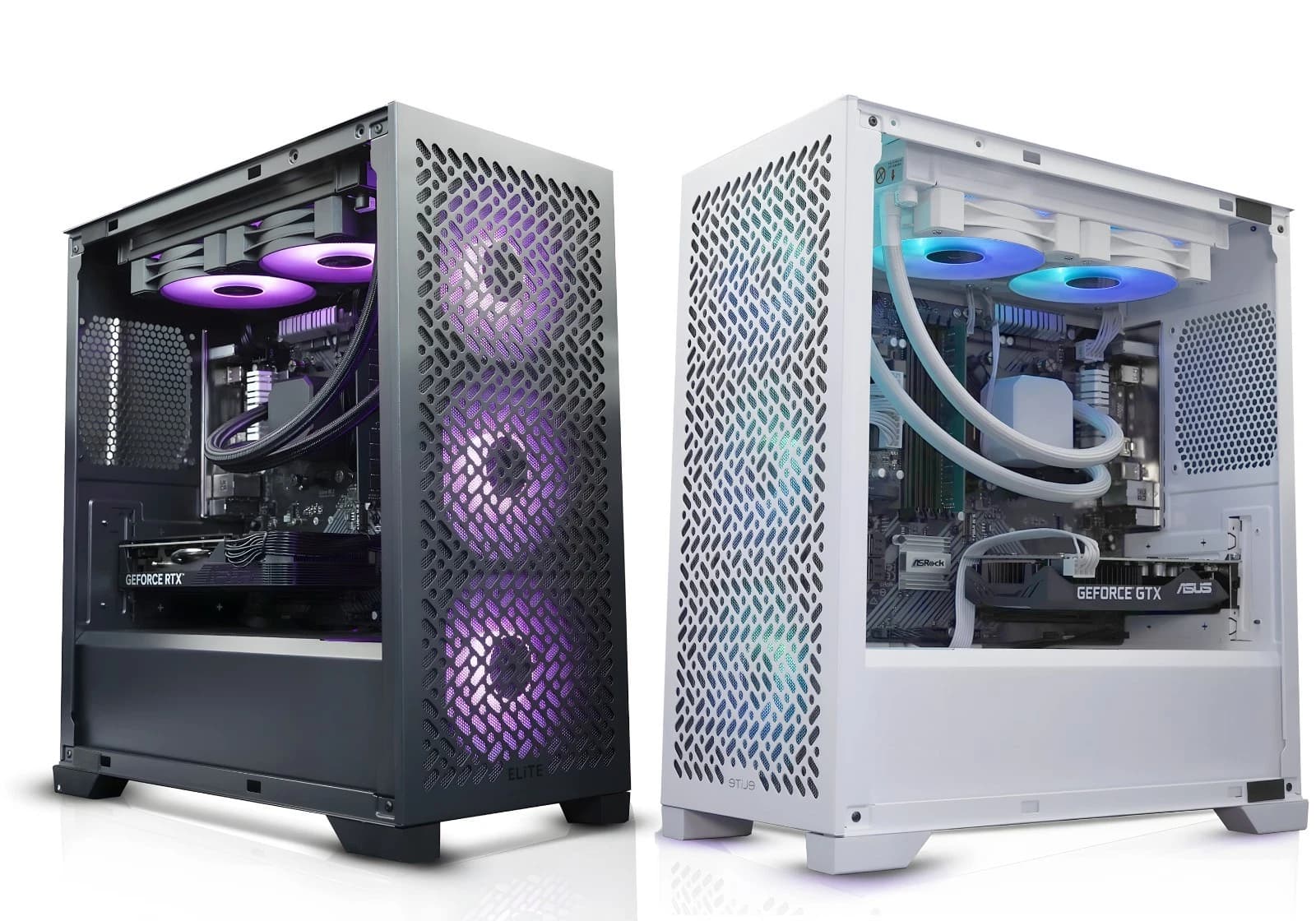
Local AI inference in 2026 is no longer a curiosity. Open weights models in the 7B to 14B range run on a mid tier GPU, and quantised 30B models are within reach if the rest of the machine is sensibly specified. The graphics card gets attention, but the processor decides what happens when layers spill out of VRAM. This guide compares the three CPUs UK buyers cross shop: the Ryzen 7 5700X, the Ryzen 7 7700X, and the Intel Core i5 12400.
What the CPU actually does during inference
When a small GPU such as the RTX 5070 Ti is doing the heavy lifting, the processor still has three jobs. It loads model weights from disk into memory. It handles the tokenizer, the sampler, and any orchestration layer (Ollama, LM Studio, llama.cpp). And it processes layers that cannot fit into VRAM.
That last point is where budget builds fall over. A 16GB card like the RTX 5070 Ti holds a Q4 13B model with headroom, but push into a 30B Q4 model and you will be offloading 15 to 20 layers to the CPU. At that point single thread performance, memory bandwidth, and thread count all matter.
Ryzen 7 5700X: the pragmatic choice
The Ryzen 7 5700X is an eight core, sixteen thread Zen 3 part with a 4.6GHz boost. It slots into any AM4 board with a BIOS update, and pairs with cheap DDR4 3200 or 3600. Around £110 to £135 used, it is the best value processor on this list for AI workloads.
Eight physical cores matter here. Llama.cpp and Ollama scale well up to eight threads on Zen 3, and the 5700X sustains boost clocks without cooking itself. With 32GB of DDR4 3600 and an RTX 5070 Ti, a Q4 13B model runs entirely on the GPU at 40 to 55 tokens per second. Push to a Q4 30B with partial offload, and the 5700X holds around 6 to 9 tokens per second, usable for chat and code assistance.
If you want a machine built around this pairing already tested and ready, the Birmingham AV Ryzen 7 5700X with RTX 5070 Ti build is available on our eBay store with variations across RAM and storage tiers, all covered by a twelve month warranty.
Ryzen 7 7700X: faster, pricier, more platform cost
The 7700X is also eight cores and sixteen threads, but Zen 4, with a 5.4GHz boost and IPC uplift around 13 percent over Zen 3. On CPU offload workloads it is roughly 20 to 25 percent quicker than the 5700X. It unlocks DDR5, and memory bandwidth is the primary bottleneck once layers spill to the CPU: DDR5 6000 delivers around 60 to 70 percent more bandwidth than DDR4 3600.
The catch is total platform cost. AM5 boards start around £140, DDR5 32GB kits sit at £95 to £120, and the 7700X runs £220 to £260. That is £200 to £300 more than an equivalent AM4 build for maybe 20 percent more throughput on partial offload, and no difference when the model fits entirely in VRAM.
Intel Core i5 12400: quietly competitive at the low end
The 12400 is six P cores, twelve threads, no E cores, at £95 to £115 used. For pure GPU inference it is fine. The tokenizer and sampler barely tickle a modern CPU, and if your workflow keeps the model inside 16GB of VRAM, the 12400 will not hold you back.
Where it falls short is partial offload. Six cores against eight is a meaningful gap once llama.cpp saturates threads, and DDR4 bandwidth on LGA 1700 is no better than AM4. Expect 20 to 30 percent slower throughput than the 5700X on a Q4 30B partial offload workload. For a GPU only inference box on a tight budget, it is valid. Otherwise, the extra two cores on the 5700X are worth the small premium.
When CPU offload helps, and when it hurts
CPU offload is a rescue mechanism, not a feature. It exists so a model slightly too large for VRAM can still run, at a heavy speed penalty. The rule of thumb: as long as 80 percent of layers stay on the GPU, offload is tolerable. Below that, throughput collapses.
Offload hurts most on prompt processing. Long context prompts (4k tokens and up) fed to a partially offloaded model can take fifteen to thirty seconds before the first token appears. If your workflow is agentic, keep the whole model on the GPU.
The recommended 2026 build
For UK buyers wanting local inference at sensible money, the Ryzen 7 5700X paired with an RTX 5070 Ti (16GB) is the sweet spot. Add 32GB of DDR4 3600 in dual channel, a 1TB NVMe Gen 4 drive for model storage, and a 650W 80 Plus Gold PSU. Total build cost lands well under £1,000 through the refurbished market, and you get a machine that runs 13B models at real time speeds and handles 30B partial offload usably.
FAQ
Does more RAM help AI inference?
Only up to the point where the whole model plus context fits comfortably in system memory. 32GB is the sensible minimum for a machine touching 30B models. 64GB is only worth the money if you regularly load two models at once. Beyond that, faster RAM beats more RAM.
Should I disable SMT or hyper threading for llama.cpp?
Usually yes. Llama.cpp and Ollama perform slightly better with thread count set to the number of physical cores rather than logical cores. On the 5700X and 7700X, set threads to eight. On the 12400, set it to six.
Is a used server CPU with lots of cores a better idea?
For most people, no. Xeons and Epycs from three or four generations back have plenty of threads but weak single thread performance and old platform memory. Modern eight core desktop parts beat them on tokens per second per pound.
Can I get away with an RTX 4060 or 5060 instead of the 5070 Ti?
You can, but you will be capped at 8GB of VRAM, which forces smaller models or heavier quantisation. A Q4 7B runs beautifully; a Q4 13B is tight; anything bigger needs substantial CPU offload. If AI is a priority, the 16GB on the 5070 Ti is the single most useful upgrade you can make.
About Birmingham AV
Birmingham AV has sold over 87,000 items on eBay since 2017, with 24,756 buyer feedbacks at 98.9 percent positive. We are one of the highest volume refurbished PC operations on eBay UK. Every machine leaves our workshop with a twelve month warranty. Companies House 12383651, VAT GB 348755066, based in Bromsgrove, Worcestershire.