The 24GB VRAM problem in 2026 and the affordable options
Why 24GB has become the practical floor for local AI in 2026, and how to hit it without paying flagship prices.
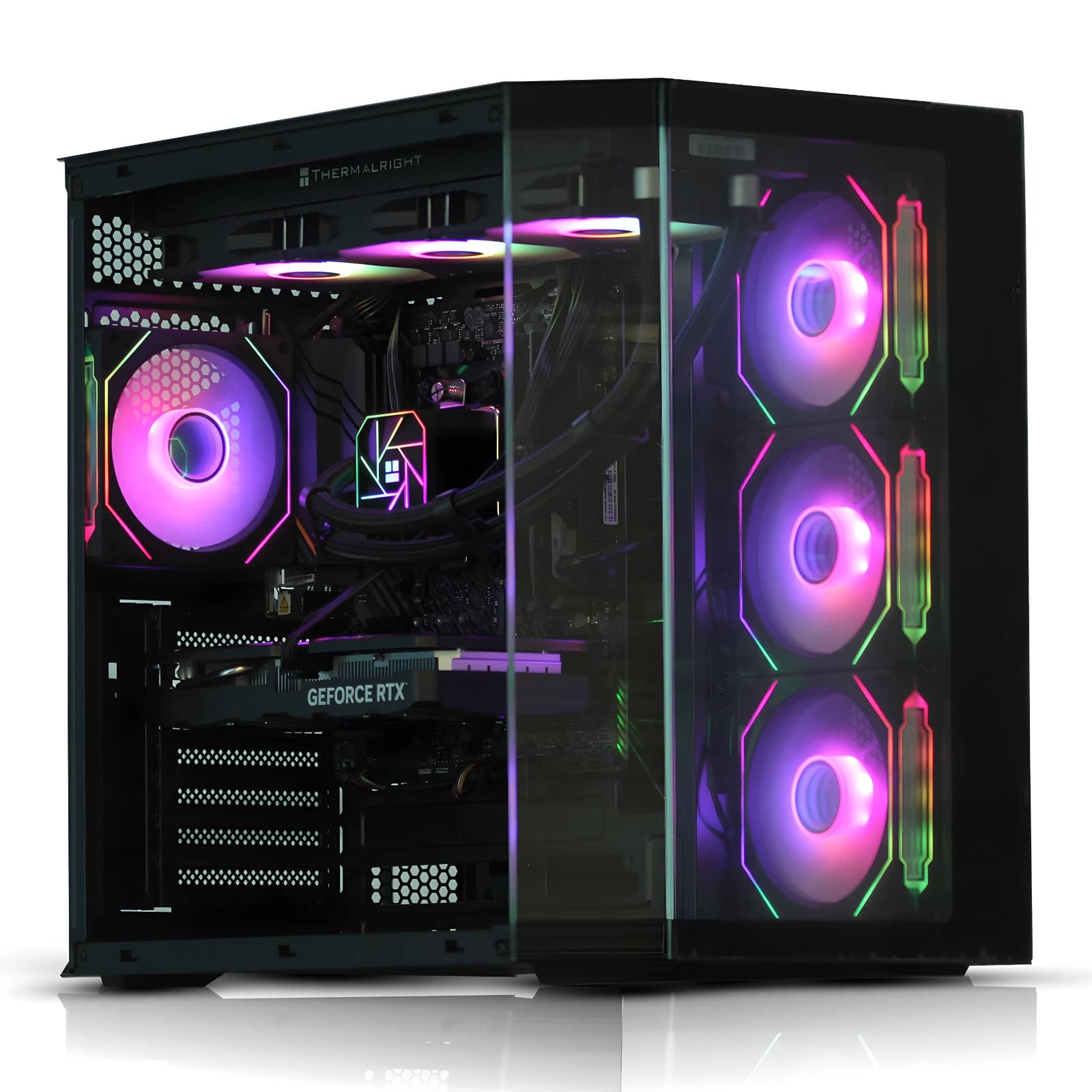
Local AI has moved the goalposts. A year ago, 16GB of VRAM was enough for most open weight models at usable quality. In 2026, that number is 24GB, and the jump has caught a lot of buyers off guard. Releases from Meta, Mistral, Alibaba and DeepSeek now assume you have room to load a 20 to 30 billion parameter model in 4 bit quantisation, plus a healthy context window, plus KV cache headroom. If your card cannot hold that, you fall back to CPU offload and lose most of the speed advantage that made local inference attractive.
Why 24GB is the sweet spot in 2026
The maths is blunt. A 30B parameter model at Q4_K_M weighs roughly 18GB on disk. Load it into VRAM, add a 16k to 32k token context with a decent KV cache, and you are at 22 to 23GB of resident memory before the OS takes its share. 16GB cards cannot hold it. 20GB cards are borderline. 24GB gives you room to run Qwen3 30B, Llama 4 Scout at reduced context, or a Mixtral variant at Q5, without spilling to system RAM.
The same logic applies to image and video generation. Flux and newer SDXL turbo derivatives want 20GB plus for production resolutions. Wan 2.2 and the Hunyuan video pipelines expect similar. Anything less and you are queueing tiles, not generating in real time.
The used RTX 3090 route
The RTX 3090 remains the folk hero of local AI. Ampere generation, 24GB of GDDR6X, 936 GB/s memory bandwidth, and a price on the UK used market that has stabilised at £550 to £700 depending on condition and cooler. For pure inference throughput per pound it is still hard to beat.
There are trade offs. The 3090 draws 350W under load, runs hot, and earlier Founders Edition cards have well documented VRAM thermal issues that need repasting to survive extended workloads. Fan bearings on three year old cards are also a lottery. Buy from a seller who has run it under sustained AI load and can show temperature logs, not a gamer offloading a card that spent three years hitting 85 degrees on the memory junction.
RTX 4090: the flagship that never got cheaper
Ada Lovelace was supposed to soften in price after the next generation launched. It did not. The 4090 held value throughout 2024 and 2025, and even now, with the 5090 shipping, a used 4090 in the UK sits at £1,300 to £1,600. New stock, where you find it, is £1,800 plus.
You get 24GB of GDDR6X at 1,008 GB/s, roughly 60% more raw compute than the 3090, and a saner 450W power draw for the performance on offer. For serious inference it is genuinely faster. For most home lab users, the price gap over a 3090 is hard to justify unless you are training LoRAs or running long generation batches.
See our current 24GB VRAM ready builds on eBay
RTX 5090: more VRAM, more money
The 5090 changed the conversation by shipping with 32GB of GDDR7 at 1,792 GB/s, a genuinely large jump in memory bandwidth. It is the first consumer card that comfortably runs 70B models in 4 bit without heroic quantisation. UK pricing sits at £2,100 to £2,400 new, with used examples yet to soften meaningfully.
If you need 32GB, this is the only consumer path that gets you there without going to a workstation card like the RTX 6000 Ada, which starts at £6,000. If 24GB is enough for your workload, and for most people it still is, the 5090 is overkill.
The dual RTX 3060 12GB alternative
The most underrated option. Two RTX 3060 12GB cards, at £190 to £230 each used, give you 24GB of pooled VRAM for £400 to £460. Frameworks supporting tensor parallelism (llama.cpp with the newer CUDA backend, vLLM, ExLlamaV2) can split model layers across both cards.
The catches are honest. You need a motherboard with two PCIe x8 slots, a chassis with room for two dual slot cards, and a 750W PSU. Inference latency is slightly higher than a single 24GB card due to cross card transfers, and image generation workloads that do not shard well see minimal benefit. For text inference on a budget, it is the cheapest legitimate route to 24GB.
The BAV RTX 5070 Ti build: the value pick
For anyone who wants a complete workstation without the used card gamble, the RTX 5070 Ti build sits in the sensible middle. Blackwell architecture, 16GB of GDDR7 at 896 GB/s, and full support for the newer FP4 and FP8 quantisation formats that reduce memory pressure for the same model quality.
At around a third of the cost of a 5090 build, it handles the 14B and 20B parameter models that cover most practical use cases, image generation at production resolutions, and gives you a modern platform with warranty coverage. For users who are not chasing 30B plus models, it is the best value complete system on the market today.
FAQ
Do I really need 24GB, or can I get by with 16GB?
16GB still runs 7B to 13B models comfortably, which covers coding assistants, chat and most agent workflows. If you plan to run 20B plus models, longer context windows, or image generation at higher resolutions, 16GB will force compromises that hurt daily use.
Is a used 3090 safe to buy for AI work?
Yes, provided you buy from a seller who has verified the VRAM temperatures under load, replaced thermal pads if needed, and can show the card runs sustained workloads without throttling. Ex mining cards are not automatically bad, but ex gaming cards from hot builds often are.
Can I mix a 3090 and a 4090 in the same system?
Technically yes, and llama.cpp will happily use both for split inference. In practice, the mismatched memory bandwidth and compute means the faster card waits for the slower one on each token, so you rarely get better throughput than the 4090 alone.
Will the 5090 make 24GB cards obsolete?
Not for years. The 32GB threshold matters for 70B models, but the 20B to 30B class covers the vast majority of practical workloads, and those fit comfortably in 24GB. The 3090 and 4090 will remain useful cards well into 2028.
About Birmingham AV
Birmingham AV has sold 87,000 items on eBay since 2017, with 24,756 buyer feedbacks at 98.9% positive. Every build ships with a twelve month warranty. Companies House 12383651, VAT GB 348755066, based in Bromsgrove Worcestershire. One of the highest volume refurbished PC operations on eBay UK.