240Hz OLED monitor pairing guide for 2026
The GPU maths behind driving a 240Hz 1440p OLED panel, plus where refurbished hardware makes the numbers work without the launch day price tag.
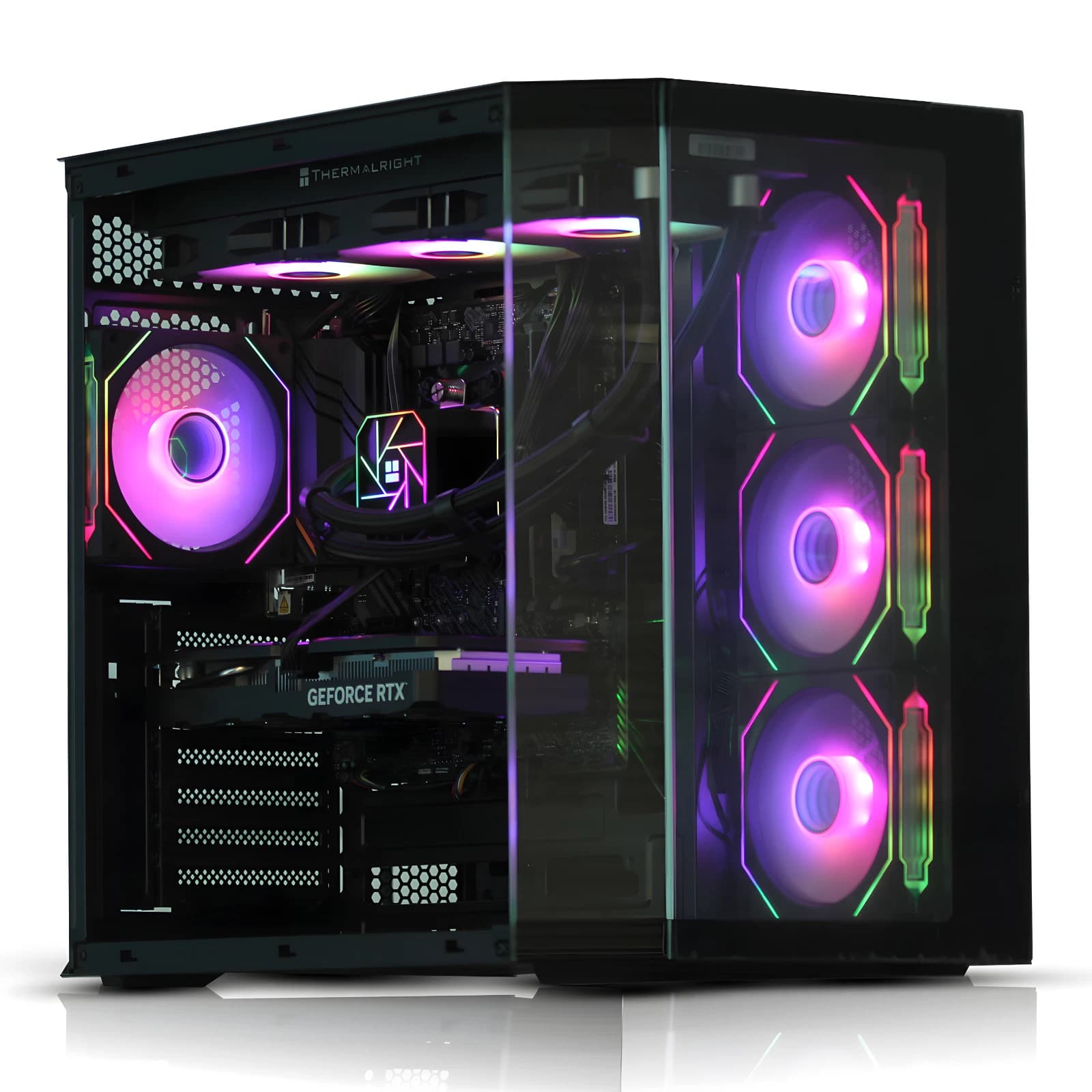
A 240Hz OLED is the most demanding display a mainstream gaming PC has to feed. The pixel response is close to instant, contrast is functionally infinite, and the refresh rate asks for 240 unique frames per second. Getting one on the desk is the easy part. Building the rig that can saturate it, without the settings screen turning into a compromise sheet, is where most upgrade plans fall over.
This guide covers the honest GPU requirements, the QD OLED versus WOLED question, and where the refurbished market currently offers the strongest value in mid 2026.
What 240Hz at 1440p actually asks of a GPU
The number to remember is 240fps at 2560 by 1440. That is roughly 885 million pixels shaded per second before post processing, ray tracing, or upscaling overhead. In raster games (competitive shooters, racing sims, older AAA titles on high), that ceiling is reachable on current hardware. In modern path traced titles without frame generation, it is not.
The realistic tiers, based on independent benchmark data through Q2 2026:
- RTX 4070 Super or RX 7800 XT: comfortable 165Hz to 200Hz at 1440p high in most titles. Hits 240Hz in esports and older engines. Struggles in Cyberpunk, Alan Wake 2, or Wukong at native resolution.
- RTX 4070 Ti Super or RX 7900 XT: the true sweet spot. Saturates 240Hz in the majority of AAA titles with DLSS Quality or FSR Quality, and pushes above 300fps in Valorant, CS2, and Overwatch 2.
- RTX 4080 Super, RTX 5070 Ti, or RX 7900 XTX: headroom for path tracing plus frame generation while still holding the panel's ceiling.
Anything below an RTX 4070 Super or RX 7800 XT will bottleneck a 240Hz panel in modern releases. That is not a controversial claim. It is what the frame time graphs show.
QD OLED versus WOLED, in practical terms
Both technologies produce true blacks. The differences that matter day to day sit in three places.
Colour volume: QD OLED (Samsung Display panels used by Alienware, MSI, Asus PG series) hits roughly 99% DCI P3 with higher saturation at peak brightness. WOLED (LG Display panels used by LG UltraGear, Corsair Xeneon, Asus PG27AQDM) reaches around 98% DCI P3 but rolls off slightly earlier in bright HDR highlights.
Text rendering: WOLED uses an RWBG subpixel layout, QD OLED uses a triangular RGB structure. Both cause mild colour fringing on text at 27 inches 1440p. QD OLED tends to show a faint magenta or green tint on edges, WOLED shows a subtle rainbow. Neither is unusable. Both are worth seeing in person before committing.
Brightness in a bright room: QD OLED's polariser is less aggressive against ambient light, so blacks can look purple in direct sunlight. WOLED holds a cleaner black in daylight but has slightly lower peak HDR brightness. If the desk sits opposite a south facing window, WOLED is the safer pick.
Where refurbished monitors change the equation
New 27 inch 240Hz 1440p OLEDs sit between £650 and £950 at RRP. Refurbished stock on the UK market, when it clears QC properly, sits £180 to £320 lower for the same panel generation. The catch is that OLED is the one panel type where honest refurb grading actually matters, because burn in risk resets from whatever hours the previous owner already put on it.
The three things to check before buying a refurbished OLED:
- Panel hours logged on the OSD (most 2024 and 2025 models expose this).
- Warranty length on burn in specifically, not just electronics.
- Pixel refresh cycle count, which indicates real usage patterns rather than shelf time.
A twelve month burn in warranty on a refurbished unit with under 500 panel hours is a genuinely strong buy. Anything without a stated hour count on an OLED refurb is a gamble worth avoiding.
View the current refurbished gaming PC listing pairing well with 240Hz OLED
The pairing that actually works in 2026
For a buyer aiming at a 27 inch 1440p 240Hz OLED (regardless of QD or WOLED brand), the sensible GPU floor for a five year ownership window is an RTX 4070 Ti Super or RX 7900 XT, paired with a Ryzen 7 7700X or Core i5 14600K, 32GB of DDR5 6000, and a Gen 4 NVMe drive of at least 1TB. That configuration holds 240fps in competitive titles at native, and 120fps to 200fps in AAA titles with quality upscaling.
Anything more powerful is welcome. Anything less will visibly cap the panel in the games most buyers justify the purchase with.
Cable, port, and firmware notes
DisplayPort 1.4 with DSC handles 1440p 240Hz 10 bit HDR cleanly. HDMI 2.1 also works but some early panel firmwares had VRR flicker that DisplayPort avoids. Always update monitor firmware on first setup.
FAQ
Can an RTX 4070 (non Super) drive a 240Hz 1440p OLED?
In esports titles, yes, comfortably. In modern AAA at high, it holds between 90fps and 140fps native. With DLSS Quality plus frame generation it can reach 200fps to 240fps, but coverage is not universal. Workable, not ideal.
Is burn in still a real risk on 2025 and 2026 OLED panels?
The risk exists but has been reduced substantially through pixel shifting, logo dimming, and panel refresh cycles. Rotating taskbars, hiding HUD elements where possible, and using dark mode UIs cuts risk further. A three year burn in warranty from a reputable seller effectively removes the financial concern.
Does 4K 240Hz make more sense than 1440p 240Hz?
Only if the GPU is an RTX 5080 or higher. At 4K 240Hz the pixel throughput more than doubles, and no current GPU below that tier saturates it without heavy upscaling. For anyone spending under £2,000 on the tower, 1440p 240Hz is the mathematically honest choice.
Should the PC be bought new or refurbished?
Refurbished from a graded seller with warranty gives roughly 30% to 45% off equivalent new build cost, on parts that are already burnt in and stability tested. For a 240Hz OLED pairing, that saving pays for the monitor.
About Birmingham AV
We have sold over 87,000 items on eBay since 2017, with 24,756 buyer feedbacks at 98.9% positive. Every gaming PC and workstation ships with a twelve month warranty and full UK support. Birmingham AV Ltd is registered at Companies House under number 12383651, VAT registered as GB 348755066, and based in Bromsgrove, Worcestershire. It is one of the highest volume refurbished PC operations on eBay UK.